How to Choose Foil Laminate for Different Tea Packaging Formats
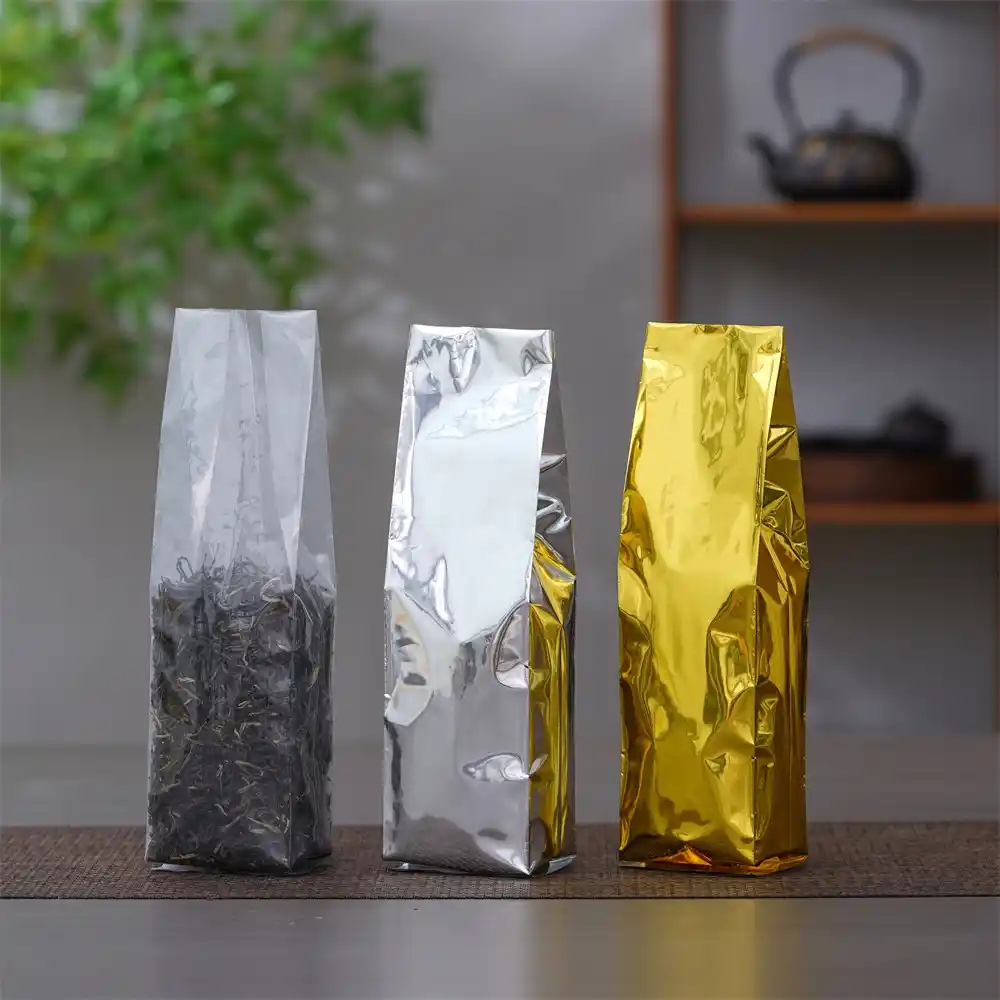
Tea producers know a simple truth: great tea starts in the field, but great packaging starts with the right foil. From factory to consumer, tea may spend anywhere from a few days to several weeks in transit, enduring express sorting, shelf display, and ocean freight along the way. A bag of Longjing that breaks open during courier sorting, absorbs moisture on a supermarket shelf, or loses its aroma by the time it reaches port — all three problems trace back to the same root cause: the foil laminate was not matched to the packaging scenario.
Many tea factory buyers request "a roll of tea foil" without specifying the tea format. But loose-leaf sachets, pressed tea cakes, tea extract tubes, and gift box inner pouches each demand different laminate structures. Layer on the distinct logistics of e-commerce, retail, and export channels, and the sourcing logic becomes more nuanced. This article breaks down the selection criteria from the perspective of a tea factory procurement team.
I. Four Tea Formats, Four Laminate Structures
1. Loose-Leaf and Sachet Pouches — AL/PE Heat Seal Foil Laminate
Loose-leaf tea and sachets are the most fundamental format. A 5g to 50g pouch must solve three problems: reliable heat seal, good oxygen barrier, and low cost. The most common choice is AL/PE heat seal foil laminate, typically a two-layer AL/PE or three-layer AL/PE/PE structure.
The critical variable here is the PE heat seal layer. Tea filling machines run sealing bars at 160°C to 190°C, and the PE layer must melt uniformly and seal rapidly at that temperature without damaging the aluminum foil layer. The key specification is not foil thickness but heat seal strength — aim for peel force ≥3.5N/15mm, otherwise a single impact during courier sorting can split the seal.
2. Pressed Tea Cake Wraps — PET/AL/PE Trilayer Film
Pu-erh cakes, white tea cakes, and dark tea bricks require individual wrapping at the factory. Tea cake surfaces are rough and edges are rigid. If wrapped in a thin AL/PE laminate, the cake corners can puncture the foil layer during transit, causing barrier failure.
PET/AL/PE trilayer composite film addresses this: the outer PET layer provides stiffness and puncture resistance (12μ to 16μ), the middle AL layer blocks oxygen and moisture (7μ to 9μ pure aluminum foil), and the inner PE layer handles heat sealing while protecting the foil. Total thickness ranges from 70μ to 100μ, with puncture resistance at least 30% higher than two-layer AL/PE film.
One detail matters: many factories apply matte or printed finishes on the outer PET. Matte PET and standard PET have different bonding characteristics. Confirm that lamination peel strength is ≥3N/15mm — otherwise the print layer can blister or delaminate.
3. Tea Extract and Instant Tea — PET/AL/PE Tube Film
Tea extract and instant tea powder represent a fast-growing premium category. These products are extremely moisture-sensitive — once exposed to humidity, they clump and deteriorate irreversibly. The barrier requirement is the highest among all tea formats.
Typical structures are PET/AL/PE or PET/AL/PET/PE multilayer composites, with foil thickness often increased to 9μ or even 12μ. Total film thickness can reach 120μ or more. Small tube-format packaging also requires adequate film stiffness and clean slit edges for high-speed filling equipment. Two specifications are essential: WVTR ≤0.5g/m²·24h and OTR ≤0.5cm³/m²·24h.
4. Gift Box Inner Pouches — Metallized Film Heat Seal Laminate
Mid-Autumn and Spring Festival gift boxes typically use a rigid outer carton containing multiple small inner pouches. The priority here is not extreme barrier performance but shelf-life stability for 30 to 60 days — preventing aroma loss and color change.
Metallized film heat seal laminate (VMPET/PE structure) offers the best cost-performance ratio. The vacuum-deposited aluminum layer (approximately 30 to 60nm) provides barrier properties inferior to pure foil but far superior to plain plastic film, at a cost 20% to 30% lower than PET/AL/PE — ideal for high-volume gift box pouches.
II. Three Distribution Channels, Three Challenge Profiles
Selecting the right film structure is only the first step. The final delivery method determines what the film must withstand.
E-commerce Express Channel: The primary threat is mechanical impact. During courier sorting, pouches endure repeated drops and compression loads. Seal strength is the top priority, foil thickness secondary. Recommend heat seal strength ≥4N/15mm, seal width ≥8mm, and drop testing (1-meter free fall without bag rupture). E-commerce packaging often uses individual boxes, so film stiffness matters — overly soft film can crack the foil layer at fold lines during box packing.
Retail Shelf Channel: The primary threats are light exposure and extended shelf duration. Tea may sit on retail shelves for 3 to 6 months under fluorescent lighting, accelerating oxidation and color fading. Foil thickness and light-blocking properties are top priorities. Recommend aluminum foil ≥7μ (pure foil), light transmittance ≤0.5%, and avoid substituting pure foil with metallized film. If brand design requires a transparent window, use high-barrier coated PET for the window area rather than bare transparent film.
Export Ocean Freight Channel: The primary threats are temperature variation and transit duration. A container from China to Europe may take 30 to 45 days, passing through equatorial high-temperature zones before arriving at cooler destination ports. Internal temperature differentials can exceed 30°C. This drives a container "breathing effect" — daytime heat causes air expansion and outward leakage, while nighttime cooling draws in moist air. Export tea packaging must use PET/AL/PE trilayer structures with foil ≥9μ, plus a secondary moisture barrier of aluminum foil woven composite liner for the entire consignment.
III. Quick Reference: Four Formats and Key Parameters
| Tea Format | Recommended Structure | Foil Requirement | Heat Seal Strength | Key Test Items |
|---|---|---|---|---|
| Loose-leaf sachet | AL/PE laminate | 6-7μ | ≥3.5N/15mm | Seal uniformity, seal width |
| Tea cake wrap | PET/AL/PE trilayer | 7-9μ | ≥3N/15mm | Puncture force, lamination peel |
| Tea extract tube | PET/AL/PE multilayer | 9-12μ | ≥4N/15mm | WVTR ≤0.5, OTR ≤0.5 |
| Gift box inner pouch | VMPET/PE laminate | Metal layer 40-60nm | ≥3N/15mm | Light block rate, shelf-life aroma retention |
IV. Three Common Sourcing Pitfalls
Pitfall 1: Using trilayer for loose-leaf, bilayer for tea cakes. Many factories cut costs by wrapping tea cakes in AL/PE two-layer film. Cake edges puncture the foil, and three months later the cake edges show aroma loss and color darkening. Tea cakes require PET/AL/PE trilayer structures — the extra PET layer provides a critical puncture-resistant barrier.
Pitfall 2: Using the same film for domestic and export tea. Domestic express delivery takes 3 days; export ocean freight takes 30 to 45 days. Temperature swings and durations are entirely different. Using domestic-grade AL/PE film for export packaging leads to foil oxidation and film embrittlement by the time the container reaches port. Export tea requires PET/AL/PE trilayer with foil ≥9μ.
Pitfall 3: Focusing on foil thickness while ignoring peel strength. Even with thick foil, if the bonding strength between aluminum and PE/PET layers is insufficient, the film will delaminate and blister during folding and transit. Procurement contracts should specify peel strength values in addition to foil thickness, and incoming inspections should include manual tear tests and T-peel testing.
V. Conclusion
There is no universal solution for tea packaging film sourcing. Loose-leaf demands fast sealing and low cost. Tea cakes demand puncture resistance and robust barrier. Tea extract demands ultra-low WVTR. Gift box pouches demand shelf-life aroma retention. Layered on top are the distinct logistics challenges of e-commerce, retail, and export channels. The sourcing logic must be segmented by scenario. The advantage of sourcing from an upstream manufacturer lies in the ability to customize laminate structures by tea format and fine-tune formulations by distribution channel — matching the film to the scenario is what protects tea shelf life and appearance.
Hangzhou Hongcheng Technology Co., Ltd. specializes in aluminum foil composite materials, offering AL/PE heat seal foil laminate and PET/AL/PE trilayer composite film with customizable structures and specifications for tea packaging formats and distribution channels.
+86 13758223270 Email: wendy@hcdxcl.com.cn
How Automotive Wiring Harness Manufacturers Choose Aluminum Mylar Tape by Application Scene
Decorative Aluminum Foil for Wood Doors: A Procurement Guide for Door Manufacturers