Precautions for Using Aluminum Foil Woven Film
2025-06-25
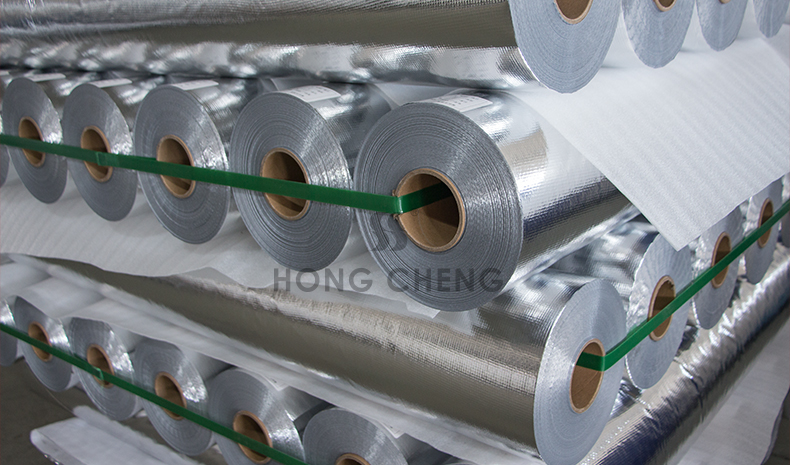
Aluminum foil woven film, a multifunctional material composed of aluminum foil and woven fabric, is widely used in various fields such as packaging, construction, and agriculture due to its excellent barrier properties, flexibility, and durability. However, to fully utilize its performance advantages and ensure safety, there are many key precautions that cannot be overlooked during use.
1. Control of Storage Environment and Conditions
When storing aluminum foil woven film, a dry and well-ventilated environment is preferred. The relative humidity in the warehouse should be controlled between 40% - 60%, and the temperature should be maintained at 15°C - 25°C. Direct sunlight can accelerate the aging of the film, especially ultraviolet rays, which can damage the fiber structure of the woven fabric, reducing its strength and toughness. For example, a company once stored aluminum foil woven film outdoors. In just one month, the surface of the film faded and became brittle, making it extremely prone to damage during subsequent use. A humid environment not only causes the woven fabric part to become moldy but may also form a water film on the aluminum foil surface, leading to electrochemical corrosion and affecting the overall moisture and oxidation resistance. At the same time, the film must be kept away from fire sources and high-temperature objects, as high temperatures can soften and deform the polymer materials in the film, or even cause melting. Once the temperature exceeds 60°C, its physical properties will change significantly, and the protective function will be greatly reduced. In addition, avoid stacking too high during storage. It is recommended that the height of each stack does not exceed 1.5 meters to prevent deformation, adhesion, and other problems of the bottom film due to long-term pressure.
2. Tools and Methods for Cutting and Use
Appropriate tools should be selected for cutting aluminum foil woven film. Sharp utility knives or special cutting scissors are ideal choices. In the packaging industry, for example, when using a dull knife for cutting, not only will the cut be rough and uneven, but burrs are also likely to occur. These burrs will gradually expand during subsequent use, leading to a decrease in protective performance. Before cutting, accurately measure the size according to actual needs, and auxiliary tools such as tape measures and rulers can be used to ensure that the cutting size error is controlled within ±5mm. At the same time, maintain a uniform cutting speed during the cutting process to avoid tearing the film surface due to excessive speed or uneven force. In addition, clean up the cut scraps in a timely manner to prevent scratching the unused film. When heat sealing is required during use, strictly control the heat sealing temperature and time. Generally, the heat sealing temperature is between 180°C - 220°C, and the heat sealing time is controlled at 1 - 3 seconds. Excessive temperature or time will cause the separation of the aluminum foil layer from the woven fabric, while too low a temperature or too short a time will result in poor sealing and affect the protective effect.
3. Consideration of Compatibility with Packaged Items
The compatibility between aluminum foil woven film and the packaged items is crucial. When used for packaging electronic products, since electronic components are extremely sensitive to static electricity, even a very weak electrostatic discharge can cause a decrease in component performance or even damage. Therefore, it is necessary to select aluminum foil woven film with anti-static properties. Such films usually have an anti-static coating on the surface, and the surface resistance value should be controlled between 10⁶ - 10¹¹Ω. In the field of food packaging, aluminum foil woven film must meet strict food hygiene and safety standards, such as China's GB 4806 series of standards, which require that the material should not contain migratable toxic and harmful substances. For example, the content of heavy metals such as lead and cadmium should be lower than specific limits, and it should also have good oil and water resistance to prevent food deterioration caused by the penetration of grease and moisture. In addition, if used to package foods with special odors, such as durians and stinky tofu, the film should have high-efficiency odor barrier properties to prevent the odor from spreading and affecting other products.
4. Protection During Handling and Transportation
When handling aluminum foil woven film, it must be handled gently to avoid rough operations. When multiple people are handling it, keep the movements coordinated to prevent the film roll from twisting and deforming due to uneven force. During transportation, the vehicle compartment should be kept clean and dry. A moisture-proof pad can be laid at the bottom of the compartment to prevent the film from getting damp. At the same time, avoid mixed loading with sharp objects, such as metal pipes and glass products. Once scratched, the aluminum foil layer will be damaged, and its barrier properties will be greatly reduced. In addition, during long-distance transportation, fix the film rolls firmly with ropes to prevent mutual collision during bumpy rides, causing surface damage. If encountering severe weather during transportation, such as heavy rain or sandstorms, take timely covering measures and use waterproof tarpaulins to cover the goods tightly to ensure that the aluminum foil woven film is not affected by the external environment.
5. Environmental Protection Treatment After Use
The treatment of used aluminum foil woven film is related to environmental protection. For recyclable aluminum foil woven film, it should be classified and collected and sent to professional recycling plants. During the recycling process, the pollutants attached to the film surface, such as dust and oil stains, need to be removed first, and then the aluminum foil and woven fabric are separated by physical or chemical methods to achieve resource reuse. For non-recyclable aluminum foil woven film, such as those that are severely contaminated or have complex composite structures that are difficult to separate, they cannot be discarded casually. They should be sent to designated incineration plants for harmless incineration treatment in accordance with the requirements of the local environmental protection department. During the incineration process, strictly control the temperature and exhaust gas emissions to ensure that the emissions of harmful substances such as dioxins meet environmental protection standards.
Analysis and Preventive Measures for Spots on the Appearance of Aluminum Foil Bags
How to Judge the Quality of Aluminum Foil Packaging Bags?