Troubleshooting and Solution Guide for Common Faults of Composite Films
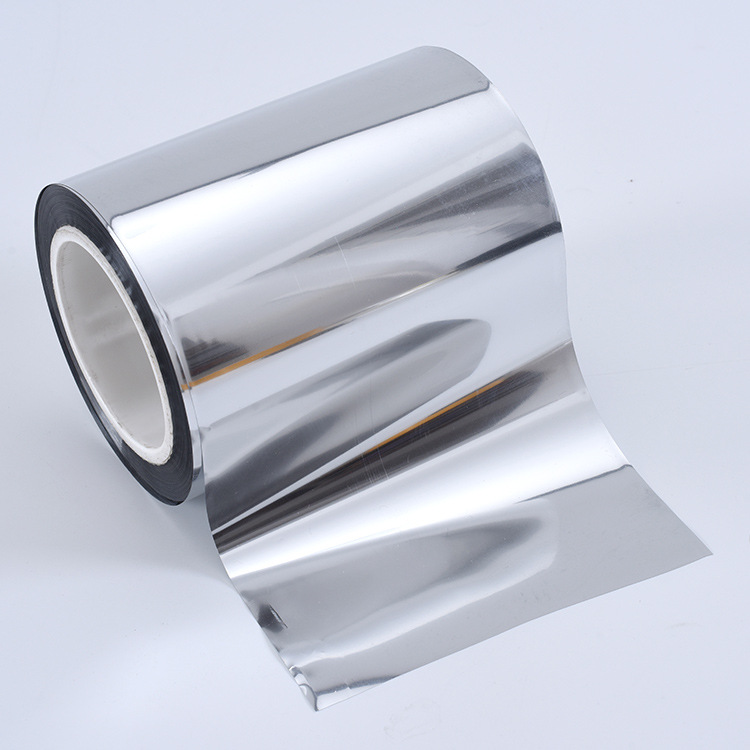
With the synergistic advantages of multi-layer materials, composite films are widely used in packaging, building insulation, industrial protection and other fields. However, during production, storage, transportation or use, they are prone to faults such as delamination, wrinkling, and decreased barrier properties due to the influence of material selection, process parameters, environmental conditions, etc., which directly affect product performance and service life. This article sorts out six high-frequency faults, analyzes the causes in depth and provides targeted solutions to help enterprises and users troubleshoot problems efficiently.
1. Delamination (separation of composite layers): This is the core fault of composite films, manifested as peeling and hollowing between two or more layers of materials. The main causes are three categories: first, improper selection of adhesives during compounding (e.g., not matching the characteristics of the base material) or insufficient coating amount (less than 1.5g/㎡); second, substandard surface treatment of the base material (e.g., the corona treatment strength of PE film is less than 38dyne/cm, leading to poor adhesion of the adhesive); third, harsh storage/use environment (high temperature and humidity leading to aging of the adhesive, or frequent vibration causing interlayer separation). Solutions: The production end should select special adhesives according to the type of base material (e.g., polyurethane adhesive for PET and aluminum foil compounding), ensure uniform coating and sufficient coating amount, and strictly control the surface treatment parameters of the base material; avoid excessive stacking during storage and transportation, and keep away from heat sources and humid environments; if local delamination occurs during use, special composite adhesive can be used for local repair, and large-area delamination requires product replacement.
2. Wrinkling (uneven film surface): Manifested as wavy lines and wrinkles on the film surface, affecting subsequent processing and appearance. The causes include uneven tension control of the base material during production (e.g., unwinding tension fluctuation ±5N), uneven temperature distribution of the composite roller; inclined extrusion and moisture expansion of the film roll during storage and transportation; excessive temperature difference in the use environment (e.g., moving directly from a low-temperature warehouse to a high-temperature workshop, resulting in uneven thermal expansion and contraction of the film surface). Solutions: The production end optimizes the tension control system to ensure that the temperature deviation of the composite roller is ≤±2℃; keep the axis of the film roll perpendicular to the ground during storage and transportation, with a stacking height ≤1.5 meters, and control the ambient temperature and humidity (5℃-30℃, humidity ≤60%); preheat the film roll in the use environment for 2-4 hours before use to avoid wrinkling caused by temperature difference.
3. Decreased barrier properties (excessive oxygen/water vapor transmission rate): It mainly affects the packaging freshness preservation and thermal insulation protection effect. The main causes are oxidation of the aluminum-plated layer (white spots and blackening on the surface), pinholes/scratches on the film surface (impurities on the base material not removed during production, or scratched by sharp objects during storage and transportation), and improper heat sealing process (insufficient heat sealing temperature leading to loose sealing). Solutions: Select aluminum-plated composite films with anti-oxidation coatings, and do a good job in scratch prevention during storage and transportation (retain the outer PE packaging); strictly clean the impurities on the base material before production, and check that there are no pinholes or scratches on the surface of the composite film; adjust the parameters according to the type of film material during heat sealing (e.g., the heat sealing temperature of PE composite film is 120℃-140℃) to ensure tight sealing.
4. Poor heat sealing (unfirm sealing, easy to crack): Common in composite films for packaging. The causes include too low heat sealing temperature, insufficient pressure, too short heat sealing time, or improper selection of heat sealing layer materials (e.g., failure to select heat-sealable PE films). Solutions: Determine the optimal heat sealing parameters (temperature, pressure, time) through experiments to ensure that the width of the heat-sealed edge is ≥5mm; select suitable heat-sealing layer materials according to packaging needs, such as EVA-modified PE heat-sealing layers for low-temperature heat-sealing scenarios; clean impurities (dust, oil stains) at the sealing before heat sealing to avoid affecting the bonding effect.
5. Migration/falling off of the printing layer: Manifested as blurred and discolored printing patterns, or transfer to other object surfaces. The causes are poor compatibility between printing ink and base material, incomplete drying, or excessive temperature during compounding leading to softening and migration of ink. Solutions: Select special inks matching the base material (e.g., polyamide ink for PET base material); ensure full drying after printing (drying temperature 60℃-80℃, time ≥24 hours); optimize the compounding process parameters and reduce the compounding temperature (e.g., control the compounding temperature of printed films at 80℃-100℃).
6. Electrostatic adsorption (film surface adsorbs dust, easy to stick): Mostly occurs in dry environments or plastic composite films. The cause is that the material has strong insulation, and static electricity generated by friction during processing/use cannot be released. Solutions: Install static eliminators in the production workshop to control the ambient humidity (40%-60%); add antistatic agents during film production; blow the film surface with an ion air gun before use to remove static electricity and adsorbed dust.
In summary, most faults of composite films are caused by "improper selection, out-of-control processes, and inappropriate environments". The core solution is "prevention in advance + troubleshooting in the process + repair afterwards". The production end must strictly control material selection and process parameters, and the user end must standardize storage, transportation and use operations. If a fault occurs, first locate the cause through the phenomenon, then handle it targeted, which can greatly improve the use effect and service life of the composite film.
An Important Means to Suppress Electromagnetic Interference - Shielding!
Application Value and Industry Adaptability of Self-Adhesive Aluminum Foil AL+PET+EMAA for Cables