Types and Working Principles of Common EMI Electromagnetic Shielding Materials
With the rapid development of science and technology and the electronics industry, various digital and high-frequency electronic and electrical equipment radiate a large number of electromagnetic waves of different wavelengths and frequencies into space during operation, leading to a new type of environmental pollution, namely Electromagnetic Interference (EMI). Electromagnetic waves interact with electronic components, causing interference phenomena, which is referred to as EMI for short. When electronic equipment is in operation, it is neither desired to be interfered by external electromagnetic waves, nor to radiate electromagnetic waves itself to interfere with external equipment, nor to cause radiation hazards to the human body. Therefore, electromagnetic shielding is required to block the propagation path of electromagnetic waves. The attenuation of electromagnetic waves by an electromagnetic shield is mainly based on the principles of reflection and absorption of electromagnetic waves. Electromagnetic shielding uses shielding materials to block or attenuate the transmission of electromagnetic energy between the shielded area and the outside. The working principle of electromagnetic shielding lies in the reflection, absorption, and guidance of electromagnetic energy flow by the shield, which is closely related to the charges, currents, and polarization phenomena induced on the surface of the shield structure and inside the shield.
Shielding is classified by its principle into electric field shielding (electrostatic shielding and alternating electric field shielding), magnetic field shielding (low-frequency magnetic field and high-frequency magnetic field shielding), and electromagnetic field shielding (shielding of electromagnetic waves). The commonly mentioned electromagnetic shielding refers to the latter, that is, shielding both electric and magnetic fields simultaneously. According to the working principle of shielding, the contribution of a shield to shielding effectiveness is divided into three parts:
- Reflection loss caused by impedance mismatch on the surface of the shield;
- Transmission loss or absorption loss caused by the absorption of electromagnetic energy when electromagnetic waves propagate inside the shielding material;
- Multiple reflection loss caused by multiple reflections of electromagnetic waves between the inner surfaces of the shielding material. From this, three basic factors affecting the shielding effectiveness of materials can be derived, namely the electrical conductivity, magnetic permeability, and thickness of the material. These are also the key issues and breakthrough points that must be focused on in the research of shielding materials. Of course, for the structure of an electromagnetic shield, its shielding effectiveness is also related to the structure, shape, airtightness, etc. For specific problems, factors such as the frequency of the electromagnetic waves to be shielded and the nature of the field source also need to be considered.
Introduction to Common Shielding Materials
Different materials and different material thicknesses have different absorption effects on electromagnetic waves. Electromagnetic shielding materials mainly include three categories:
- Metal-based materials: Directly using metal materials, such as tin-plated copper, bare copper, copper-clad steel, etc.;
- Braided nets of copper/copper-clad steel wires (metal shielding): Metal shielding is formed by weaving metal wires into a certain braided structure using weaving equipment. The materials for metal shielding are generally copper wires (tin-plated copper wires), aluminum alloy wires, copper-clad aluminum, copper tapes (copper-plastic tapes), aluminum tapes (aluminum-plastic tapes), steel tapes, etc. Corresponding to metal weaving, different structural parameters result in different shielding performances. The shielding effectiveness of the braided layer is not only related to structural parameters such as the electrical conductivity and magnetic permeability of the metal itself but also, the more layers there are, the higher the coverage rate, and the smaller the braiding angle, the better the shielding performance of the braided layer. The braiding angle should be controlled between 30° and 45°. For single-layer weaving, the coverage rate is preferably above 80%. In this way, it can convert unwanted energy into other forms of energy such as heat energy and potential energy through mechanisms like hysteresis loss, dielectric loss, and resistance loss, thereby achieving the effect of shielding and absorbing electromagnetic waves. Braided nets are generally woven from tin-plated round copper wires or aluminum-magnesium alloy wires, mainly used to prevent low-frequency electromagnetic wave interference, and their working principle is the same as that of aluminum foil. Shielded network cables using braided nets require the density of the braided net to be at least greater than 80%. This type of braided net is mainly used in places where a large number of cables (such as network cables) are laid in the same wire trough, which can reduce external crosstalk between a large number of network cables. In addition, it can also be used for shielding between wire pairs to increase the twisting length of the wire pairs and reduce the requirement for the twist pitch of the cables.
- Filled materials: Adding a certain proportion of conductive materials to non-conductive materials to make the materials conductive. The base material can be PET, plastic, etc., and the conductive part can be materials such as aluminum, copper, and metal fibers;
- Surface coatings or conductive paints: These are used to modify the base material. Common manufacturing methods include attaching metal copper foil, aluminum foil, etc.;
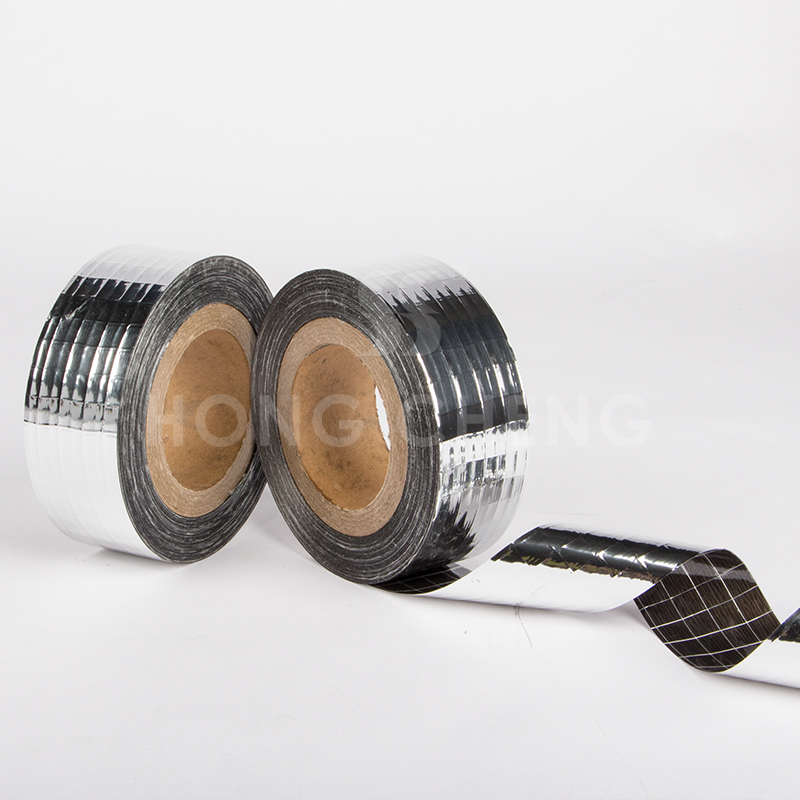
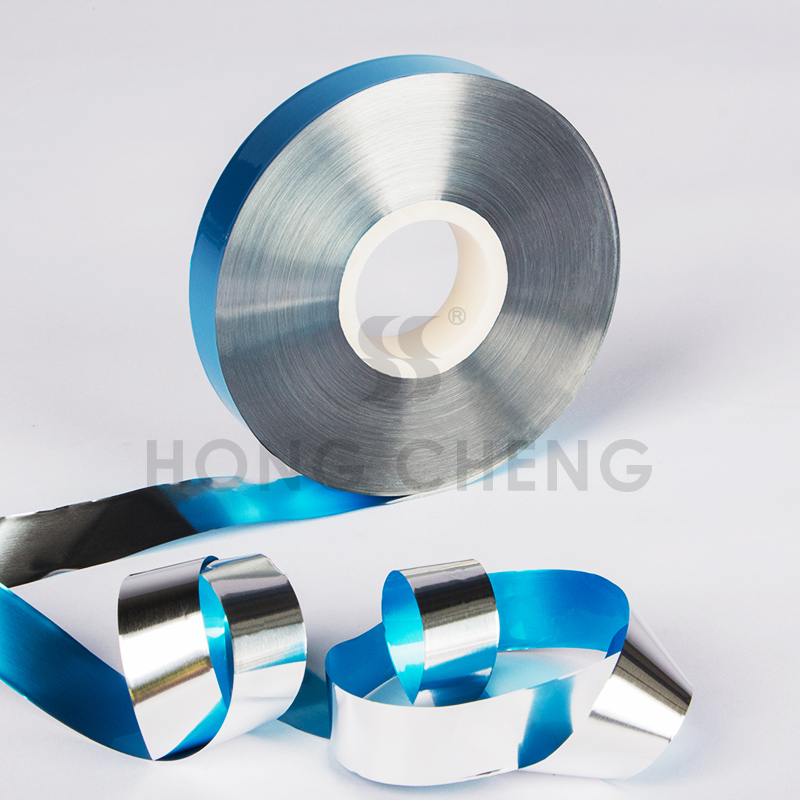
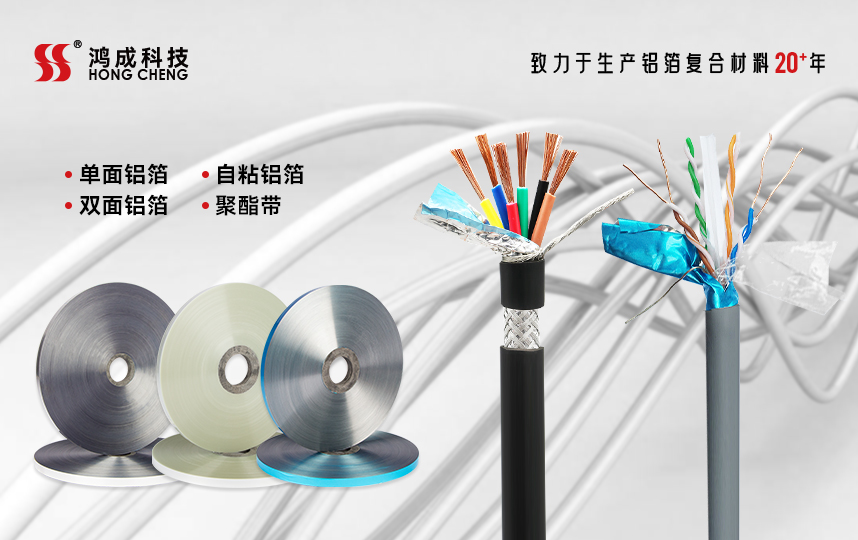
- Aluminum Foil Mylar: Aluminum Foil Mylar is made by using soft aluminum foil and polyester film as raw materials, compounding them through gravure coating, and then slitting and winding the aluminum foil Mylar after maturation. The adhesive can be formulated, and after die-cutting, aluminum foil Mylar can be used for assembly shielding and grounding. Aluminum Foil Mylar tapes are mainly used for interference shielding of communication cables. Aluminum Foil Mylar includes: single-sided aluminum foil, double-sided aluminum foil, expanded aluminum foil, hot-melt aluminum foil, aluminum foil tape, and aluminum-plastic composite tape. The aluminum layer provides excellent electrical conductivity, shielding effectiveness, and corrosion resistance, which can meet the requirements of various different ranges, with the main shielding range being 100K-3GHz. Among them, the hot-melt aluminum foil Mylar is coated with a layer of hot-melt adhesive on the side where the aluminum foil is in contact with the cable. Under the condition of high-temperature preheating, the hot-melt adhesive can be tightly wrapped together with the cable core insulation, which is beneficial to the shielding performance of the cable. In contrast, ordinary aluminum foil has no adhesiveness and is only simply wrapped around the cable core insulation, resulting in poor shielding performance of the cable. Aluminum Foil Mylar is mainly used to shield high-frequency electromagnetic waves and prevent high-frequency electromagnetic waves from contacting the conductors of the cables to generate induced currents and increase crosstalk. When high-frequency electromagnetic waves come into contact with the aluminum foil, according to Faraday's Law of Electromagnetic Induction, the electromagnetic waves will be attracted to the surface of the aluminum foil and generate induced currents. At this time, a conductor is needed to conduct the induced current to the ground to avoid the induced current interfering with the transmitted signal. For wires using aluminum foil as the shielding layer, the overlap rate of the aluminum foil is generally required to be no less than 25%. Currently, the largest application scenario is still in network cabling. This type of network cable is mainly used in places such as hospitals and factories that have strong electromagnetic wave radiation or a large number of high-voltage electrical equipment; in addition, it is also used in areas such as government departments that have high requirements for network security.
Electromagnetic shielding materials will develop towards higher shielding effectiveness, wider shielding frequency range, and better comprehensive performance. The innovative application of various new materials in electromagnetic shielding will achieve greater development. In terms of future technological development, electromagnetic shielding will move towards directions such as good electrical conductivity, simple processing technology, high cost-effectiveness, and suitability for mass production. Moreover, more and more types of electronic equipment will be included in the standards of electromagnetic compatibility management in the future, and the standards for electromagnetic compatibility will become increasingly strict. It can be predicted that the continuous upgrading trend of process materials in the cable industry will be a definite direction.
Since its establishment in 2008, Hangzhou Hongcheng Technology Co., Ltd. has been deeply engaged in the field of aluminum-plastic composite materials and has continued to innovate and develop. In 2017, it expanded its business scope and added a PE laminating composite material production line, which can produce laminating composite materials such as aluminum foil, aluminum foil woven cloth, aluminized film, kraft paper, and non-woven fabric, forming a rich and diverse product portfolio.
The company is equipped with 10 sets of dry laminating machines, 1 set of printing machine, 15 sets of slitting machines, 2 sets of laminating machines, and 1 set of imported German shaft winding machine, with an annual production capacity of over 15,000 tons, ensuring efficient order delivery. Relying on professional production, quality inspection, pre-sales, and order following teams, the company has established a full-process quality control system and has obtained ISO9001 Quality Management System Certification, ISO45001 Occupational Health and Safety Management System Certification, and ISO14001 Environmental Management System Certification, providing customers with safe, reliable, and high-quality products and services.
The products of Hangzhou Hongcheng Technology Co., Ltd. are widely used in various fields such as cable electronic shielding, ventilation hoses, building thermal insulation, and packaging. Relying on its strong R&D and production capabilities, the company can also provide customers with personalized customization solutions and tailor-made exclusive products. Over the years, relying on profound technical accumulation, rich industry experience, and a good reputation, the company has established a high brand awareness and influence in the industry.
Looking forward to the future, Hongcheng Technology will continue to drive development through innovation, continuously improve product quality and service levels, and work hand in hand with customers to create a better future.
How to Choose Shielding Aluminum Foil for Automotive Cables?
Amid the Solid-State Battery Wave, Aluminum-Plastic Film: The Irreplaceable Key Incremental Material