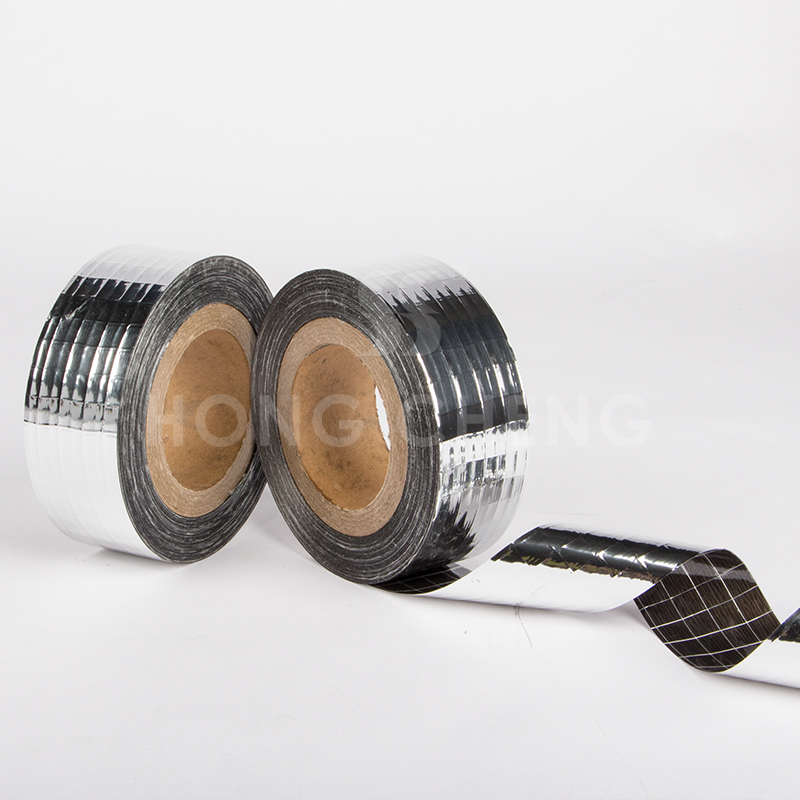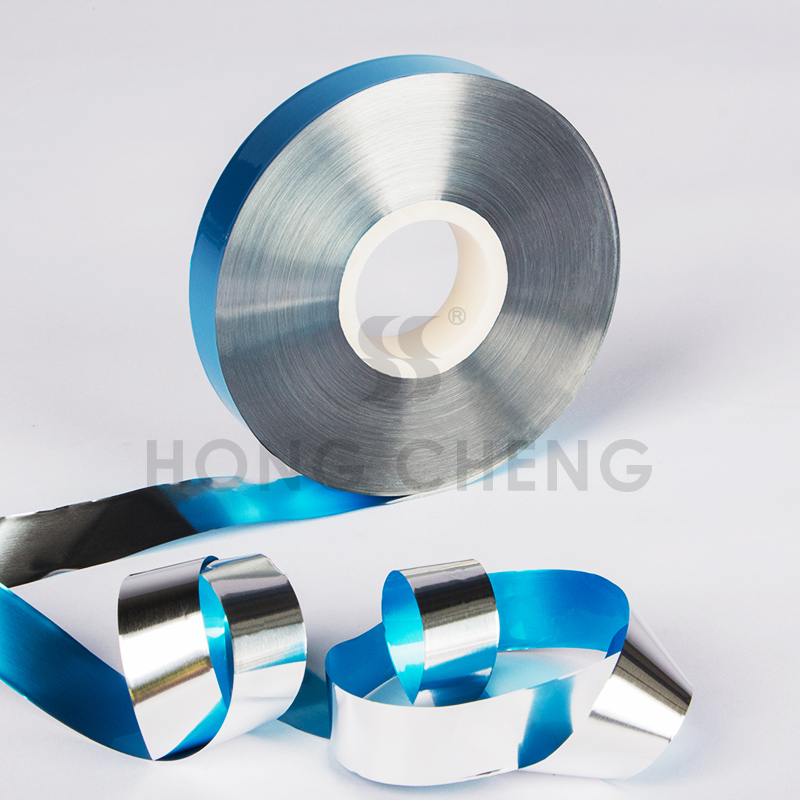
Black glue foil (PET+HDPE+VMPET)
We usually choose Aluminum type 1235 because it is very soft, making it better for expansion and bending. This inherent softness is a key attribute that sets it apart from other aluminum alloys, as it allows the material to adapt to various shapes and movements without sustaining damage. Additionally, it enhances durability, ensuring that the ducts made from it can withstand the test of time even with frequent use. The aluminum is self-sustaining, meaning it will not rebound after installation, which helps keep the duct flat and maintains its structural integrity over the long term. Furthermore, it has flame-retardant (FR) characteristics, adding an extra layer of safety to its applications.
It is widely used in high and low-pressure air conditioning systems, ventilation systems, and for exhausting smoke from range hoods. This versatility stems from its ability to perform well in different environments and under varying pressure conditions. The outer diameter (OD) of the duct ranges from 50mm to 600mm, catering to a wide range of airflow requirements, from small residential setups to large commercial facilities. It can operate within a temperature range of -30℃ to 150℃, making it suitable for both cold and hot environments, whether it is in a freezing warehouse or near a high-temperature industrial machine.
Our slitting tolerance is within 0.5mm, which is crucial for the quality of the final product. Excessive tolerances would result in the landing edge of the aluminum foil being either too large or too small during the production of the air duct. This, in turn, would affect the gluing width, compromising the fastness and beauty of the duct. A properly sized landing edge ensures that the adhesive can bond effectively, keeping the duct securely sealed and looking neat.
We use new films for laminating and slitting to ensure the tensile strength and stability of the materials when used on machines. The new films provide a strong bond with the aluminum, enhancing the overall strength of the duct. They also ensure that the material feeds smoothly through the production machines, reducing the risk of jams and ensuring consistent quality throughout the manufacturing process. This attention to detail in the production process helps guarantee that the final product meets the highest standards of performance and reliability.
1235 aluminum's softness is not a sign of weakness but a carefully engineered property that makes it ideal for flexible duct applications. When compared to harder aluminum alloys, which may crack or break when bent repeatedly, 1235 aluminum can endure numerous expansions and contractions without losing its structural integrity. This is particularly important in HVAC systems where ducts often need to navigate around corners, beams, and other obstacles. The ability to bend and flex without damage ensures that the ducts can be installed in even the most complex building layouts, providing efficient airflow without any leaks or blockages.
Durability is another standout feature of 1235 aluminum. Its composition is designed to resist corrosion, which is essential for ducts that are exposed to moisture, dust, and other contaminants in the air. Over time, many materials would start to deteriorate under such conditions, leading to holes, leaks, and a decrease in performance. However, 1235 aluminum ducts can maintain their integrity for years, reducing the need for frequent replacements and lowering maintenance costs. This long lifespan makes them a cost-effective choice for both residential and commercial projects.
The self-sustaining property of 1235 aluminum is a game-changer in duct installation. After being shaped and installed, it stays in place without rebounding. This is vital for maintaining the flatness of the duct, which directly impacts airflow efficiency. A duct that rebounds would create kinks or folds, restricting the flow of air and forcing the HVAC system to work harder to maintain the desired temperature. This not only increases energy consumption but also puts extra strain on the system, potentially leading to premature failure. With 1235 aluminum, the duct remains flat and open, allowing for smooth and efficient airflow.
The flame-retardant characteristic of 1235 aluminum is a critical safety feature, especially in applications such as range hood exhaust systems. These ducts are often exposed to high temperatures and potentially flammable substances, making fire resistance a top priority. 1235 aluminum's ability to resist burning helps prevent the spread of fire through the ductwork, giving occupants more time to evacuate and firefighters more time to contain the blaze. This feature also makes it compliant with strict building codes and safety regulations, ensuring that the buildings where it is installed are safe for their occupants.
The range of outer diameters from 50mm to 600mm makes 1235 aluminum ducts suitable for a wide variety of applications. Smaller diameters are perfect for residential ventilation systems, where the airflow requirements are relatively low. Larger diameters, on the other hand, are ideal for commercial and industrial settings, such as office buildings, factories, and warehouses, where a higher volume of air needs to be moved. This flexibility in size means that 1235 aluminum ducts can be used in almost any project, regardless of its scale.
The temperature range of -30℃ to 150℃ further expands the usability of 1235 aluminum ducts. In cold climates, where temperatures can drop well below freezing, the ducts remain flexible and functional, ensuring that heating systems can distribute warm air effectively. In hot environments, such as industrial facilities or kitchens, the ducts can withstand high temperatures without melting or deforming, maintaining their ability to exhaust hot air and fumes. This wide temperature tolerance makes 1235 aluminum ducts a reliable choice in any climate.
Our strict slitting tolerance of 0.5mm is a testament to our commitment to quality. The landing edge of the aluminum foil is where the duct is sealed together, so its size is crucial. If the edge is too large, it can create a bulky seal that is unsightly and may not bond properly. If it is too small, the seal may be weak, leading to leaks. By keeping the tolerance within 0.5mm, we ensure that each duct has a consistent and reliable seal, both in terms of functionality and appearance. This attention to detail during the manufacturing process helps us deliver products that our customers can trust.
Using new films for laminating and slitting is another way we ensure the quality of our 1235 aluminum ducts. New films have better tensile strength than used ones, which means they can withstand the stresses of the manufacturing process without tearing or breaking. This ensures that the aluminum foil is properly protected during lamination and slitting, resulting in a stronger final product. Additionally, new films feed more smoothly through our machines, reducing the risk of delays or defects during production. This consistency in the manufacturing process translates to consistent quality in the ducts we produce, ensuring that they perform as expected in their intended applications.
In conclusion, 1235 aluminum is an exceptional choice for flexible ducts due to its unique combination of softness, durability, self-sustaining properties, flame retardancy, and versatility in size and temperature range. Our commitment to quality, from maintaining strict slitting tolerances to using new films in production, ensures that our 1235 aluminum ducts meet the highest standards of performance and reliability. Whether it is for a residential air conditioning system, a commercial ventilation setup, or an industrial range hood exhaust, 1235 aluminum ducts provide a cost-effective and safe solution that customers can depend on.
Fiber glass mesh Foil
Aluminum foil Mylar tape