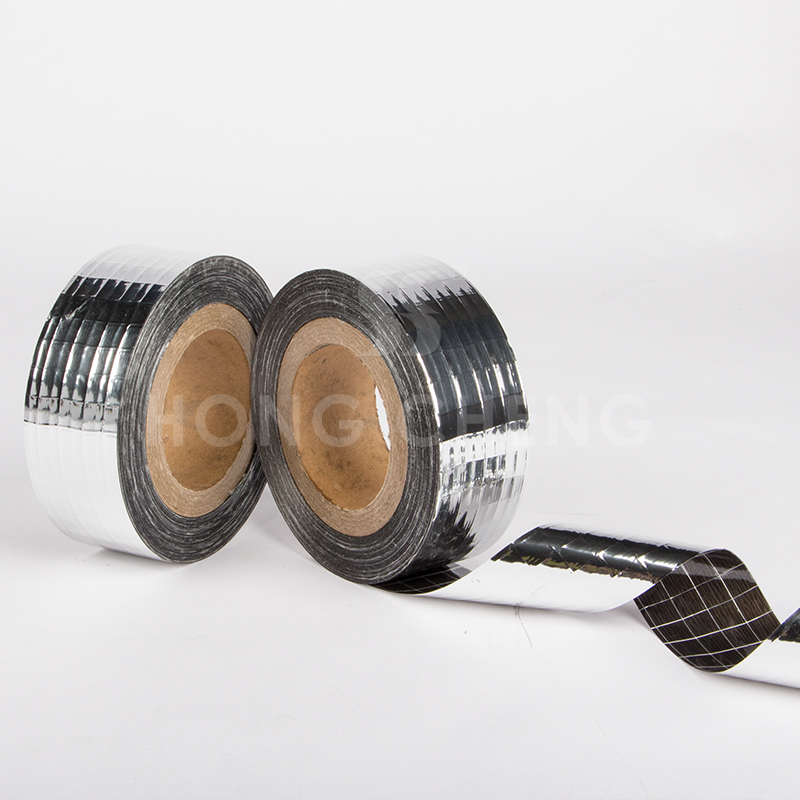
Fiber glass mesh Foil
We usually choose the Aluminum with type 1235 because it is very soft and better for expansion and bending. It is the best material for flexible foil ducts. Also, it will increase durability. Moreover, the aluminum is self-sustaining; it will not rebound after installation and can keep the flatness of the duct. Furthermore, the aluminum has flame-retardant (FR) characteristics. It is used for high and low-pressure air conditioning, ventilation systems, and exhaust smoke from range hoods.
The outer diameter (OD) of the duct ranges from 50mm to 600mm. The temperature resistance is from -30℃ to 150℃. Our tolerance for slitting is within 0.5mm. Excessive tolerances will make the landing edge of the aluminum foil too large or too small during the production of the air duct, affecting the gluing width, thereby impacting the fastness and beauty of the duct. We all use new films for laminating and slitting to ensure tensile strength and stability when using the materials on machines.
1235 aluminum has emerged as a preferred material in the manufacturing of flexible foil ducts, thanks to its unique combination of mechanical properties and practical advantages. Classified as a pure aluminum alloy with a minimum aluminum content of 99.35%, it strikes an optimal balance between softness and strength, making it exceptionally well-suited for applications requiring frequent expansion and bending. Unlike harder aluminum alloys that may crack or fatigue under repeated flexing, 1235 aluminum maintains its structural integrity, even when subjected to the constant movement and shape adjustments common in flexible duct systems. This inherent flexibility ensures that the ducts can be easily maneuvered around obstacles during installation, adapting seamlessly to complex building layouts without compromising performance.
Durability is another key attribute of 1235 aluminum that sets it apart. The alloy’s composition enhances its resistance to corrosion and wear, allowing the ducts to withstand the harsh conditions often encountered in HVAC and ventilation systems. Whether exposed to moisture in high-humidity environments or the abrasive particles present in exhaust air, 1235 aluminum foil ducts retain their integrity over time, reducing the need for frequent replacements and lowering maintenance costs. This longevity is particularly valuable in commercial and industrial settings where system downtime can lead to significant operational disruptions.
The self-sustaining property of 1235 aluminum is a critical factor in ensuring the long-term performance of flexible ducts. Once installed, the material maintains its shape without rebounding, preserving the duct’s flatness and structural stability. This is especially important for maintaining consistent airflow, as any deformation or warping could create air resistance or leakage points. In contrast, materials that tend to rebound may cause the duct to constrict over time, reducing airflow efficiency and increasing energy consumption. By retaining its form, 1235 aluminum contributes to the overall efficiency of the HVAC system, ensuring that conditioned air or exhaust is distributed evenly and effectively.
Flame retardancy is a safety feature that makes 1235 aluminum an ideal choice for ductwork in residential, commercial, and industrial buildings. Its inherent resistance to ignition and slow burning rate helps prevent the spread of fire through the duct system, providing valuable time for evacuation and fire suppression. This characteristic is particularly crucial in applications such as range hood exhaust systems, where the ducts are exposed to high temperatures and potential grease buildup, which can act as a fire accelerant. By using 1235 aluminum, manufacturers and installers can enhance the safety of the building’s ventilation infrastructure, ensuring compliance with strict fire codes and regulations.
The versatility of 1235 aluminum foil ducts is further highlighted by their wide range of applications. They are commonly used in high and low-pressure air conditioning systems, where their flexibility and durability allow for efficient air distribution. In ventilation systems, they excel at moving fresh air throughout buildings while resisting the accumulation of dust and debris. Additionally, their ability to withstand high temperatures makes them suitable for range hood exhausts, effectively channeling smoke and fumes out of kitchens and industrial facilities. This adaptability ensures that 1235 aluminum ducts can meet the diverse needs of different environments, from residential homes to large commercial complexes.
The technical specifications of 1235 aluminum ducts are carefully engineered to optimize performance. With an outer diameter ranging from 50mm to 600mm, they can accommodate various airflow requirements, from small residential ventilation systems to large industrial air handling units. The temperature resistance range of -30℃ to 150℃ ensures that the ducts remain functional in extreme weather conditions, whether in freezing cold or high-heat environments. This broad temperature tolerance makes them suitable for use in both indoor and outdoor applications, expanding their utility across different climates and settings.
Precision in manufacturing is paramount to the performance of 1235 aluminum ducts, particularly in the slitting process. Maintaining a slitting tolerance within 0.5mm is critical to ensuring that the landing edges of the aluminum foil are uniform during duct production. Excessive tolerances can result in edges that are too large or too small, disrupting the gluing process and affecting the width of the adhesive bond. A poorly bonded duct may suffer from reduced fastness, leading to leaks or even structural failure over time. Additionally, irregular edges can compromise the duct’s aesthetic appearance, which is important in visible installations. By adhering to strict slitting tolerances, manufacturers ensure that the ducts are both functional and visually consistent.
The use of new films for laminating and slitting is another quality control measure that enhances the performance of 1235 aluminum ducts. These films provide an additional layer of protection, improving the duct’s tensile strength and resistance to tearing. They also ensure that the material feeds smoothly through manufacturing machines, reducing the risk of jams or inconsistencies during production. This stability in processing translates to a more reliable final product, with consistent thickness and structural integrity across all sections of the duct. Whether being cut, folded, or bonded, the laminated aluminum foil maintains its properties, ensuring that the ducts meet the highest standards of quality.
In conclusion, 1235 aluminum is a superior material for flexible foil ducts, offering a combination of flexibility, durability, safety, and versatility that is unmatched by other alloys. Its softness allows for easy installation and adaptation to complex layouts, while its self-sustaining property ensures long-term performance and airflow efficiency. The flame-retardant characteristics enhance building safety, and the wide range of technical specifications makes it suitable for diverse applications. With precise manufacturing processes and quality materials, 1235 aluminum ducts provide a reliable and cost-effective solution for HVAC, ventilation, and exhaust systems. For anyone seeking high-performance ductwork that meets strict safety and efficiency standards, 1235 aluminum is the ideal choice.
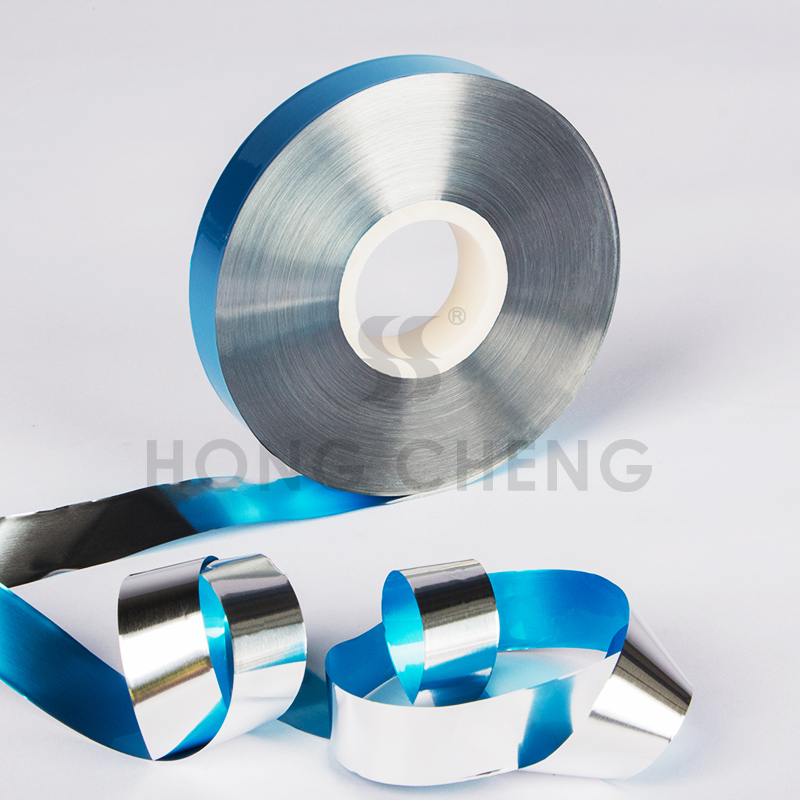
PET for flexible duct
Black glue foil (PET+HDPE+VMPET)