Aluminum Mylar Tape for Robotics Wiring Harness: Shielding Performance and Sourcing Considerations
The rapid expansion of industrial robots in automotive welding, electronics assembly, and logistics sorting has driven a substantial increase in wiring harness density inside robot arms and joints. In a six-axis industrial robot, servo motor drive cables, encoder signal lines, and sensor buses run in close parallel within confined spaces. Electromagnetic interference (EMI) from high-current, PWM-modulated drives poses a growing risk to positioning accuracy and communication reliability. In 2026, the accelerating development of collaborative robots (cobots) and humanoid robots has further intensified demand for reliable shielding materials — and AL/PET aluminum mylar tape has emerged as a key raw material in this segment.
1. The EMI Challenge in Robotics Wiring
The electromagnetic environment inside a robot is more demanding than in most industrial control equipment. In a standard six-axis robot, cables at the joint articulations undergo millions of bending cycles. Drive currents in the tens of amperes, combined with PWM switching frequencies between 2 and 20 kHz, generate broadband radiated emissions that can couple into adjacent signal lines. Encoder feedback signals, which determine positioning precision, are especially vulnerable to interference — even small levels of noise can cause vibration, position drift, or emergency stops.
Collaborative and humanoid robots add further complexity. These systems integrate torque sensors, vision systems, and tactile sensors, using mixed bus protocols such as CAN, EtherCAT, and RS-485, often with minimal separation between power and signal cables. The tolerance for EMI is correspondingly lower.
Aluminum mylar tape addresses these challenges by providing a continuous metallic shielding layer when helically wrapped around a wiring harness. The aluminum foil reflects and absorbs radiated emissions, both preventing external interference from entering the harness and limiting internal radiation from escaping — all while keeping the harness compact and organized.
2. Structure and Key Parameters of AL/PET Shielding Tape
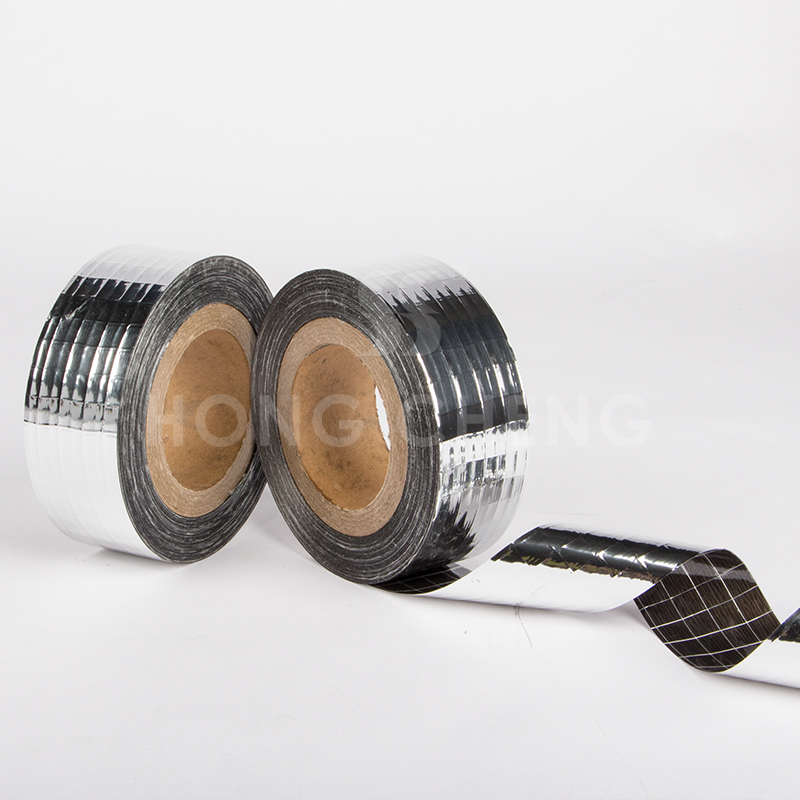
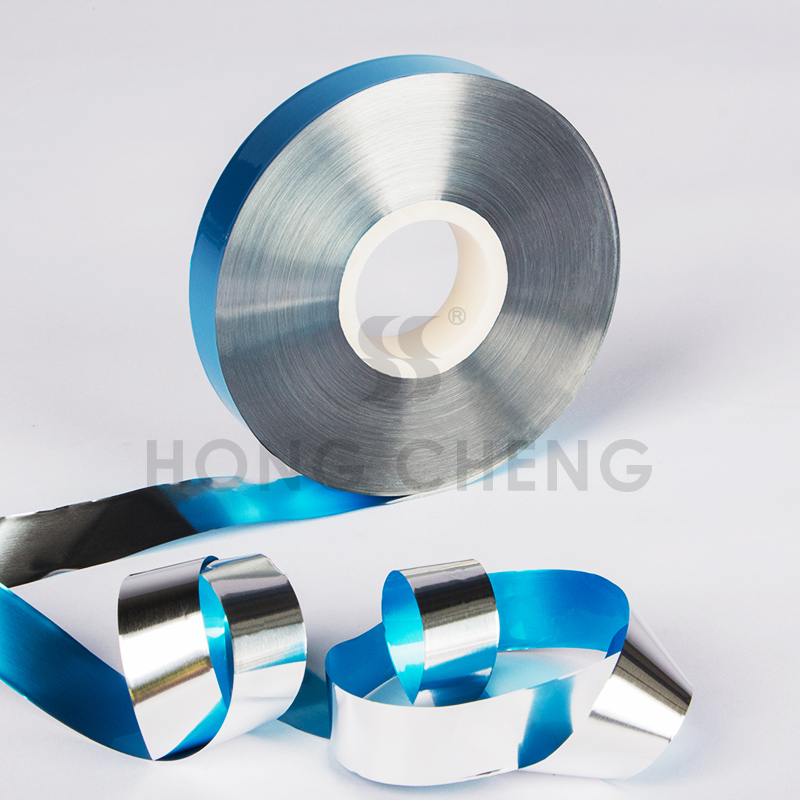
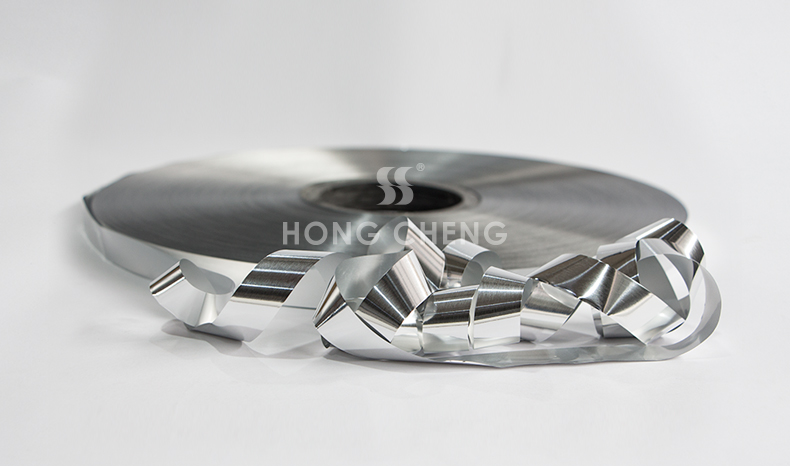
Standard AL/PET aluminum mylar tape consists of an aluminum foil layer bonded to a polyester (PET) film substrate. Some grades include an additional thin PE layer or a conductive adhesive on the outer face. The combination of aluminum's electrical conductivity with PET's mechanical strength and insulating properties makes AL/PET the most widely used composite structure in cable and wiring harness shielding applications.
For robotics wiring harnesses, the following parameters are critical:
Aluminum Foil Thickness Robotics wiring harnesses typically use foil thicknesses between 6 and 9 microns (µm). Thicker foil provides higher shielding effectiveness (SE) but reduces flexibility and bending fatigue life. For frequently articulated joints, a 6 µm foil laminated with 12 µm PET is a common choice, balancing shielding performance with long-term flexibility.
Peel Strength (Bond Strength) Peel strength measures the adhesion quality between the aluminum foil and PET film — a direct indicator of durability through bending cycles and thermal stress. Robotics applications typically require a minimum peel strength of ≥1.2 N/15mm (dry lamination process). Insufficient bond strength causes foil delamination after repeated flexing, compromising shielding continuity.
Surface Resistance The surface resistance of the aluminum foil face determines grounding conductivity. Low surface resistance (≤0.03 Ω/sq) ensures effective electrical continuity with grounding terminals on the harness assembly. For applications requiring lower contact resistance, conductive-adhesive variants are available.
Slitting Precision Automated harness wrapping machines demand tight slitting tolerances, typically ±0.1 mm on width. Excessive width variation leads to inconsistent overlap coverage during wrapping, creating gaps in the shielding layer.
Pinhole Density Microscopic pinholes in aluminum foil are unavoidable in production; however, excessive pinhole density creates leakage points at high frequencies. For robotics-grade applications, pinhole density should be ≤3 pinholes/m² for 9 µm foil.
3. AL/PET vs. AL/PE: Which to Choose?
Both AL/PET and AL/PE are widely used in industrial wiring shielding. Selecting the right structure depends on the application requirements:
| Parameter | AL/PET | AL/PE |
|---|---|---|
| Tensile Strength | High (~170 MPa, PET) | Moderate (~20 MPa, PE) |
| Flexibility | Moderate | Better |
| Max Temperature | ~125°C | ~80°C |
| Heat Sealability | Poor | Good |
| Primary Use | Signal cable shielding, high-temp zones | Low-frequency shielding, flexible bending |
For robot joint wiring, where cables must withstand high-cycle bending, elevated temperatures near servo motors (60–80°C temperature rise), and demanding shielding performance requirements, AL/PET is generally the preferred choice.
4. Sourcing Checklist and Supplier Evaluation
When sourcing AL/PET shielding tape for robotics or industrial wiring applications, consider the following key points:
- Base foil quality: Prefer 1000-series or 8000-series electrolytic aluminum foil, which provides lower pinhole density and better surface uniformity.
- Lamination process: Dry lamination is preferred over wet lamination for electronics applications — it produces lower residual solvent levels and more consistent bond strength.
- Slitting capability: Confirm the supplier's minimum slit width (typically 8 mm) and the width tolerance they can guarantee.
- Compliance documentation: Request RoHS test reports; some Japanese OEM customers also require REACH compliance declarations.
- Customization: Depending on the wrapping process, customizable parameters may include overlap flap width, foil/PET thickness combinations, or adhesive type.
Hangzhou Hongcheng Technology Co., Ltd. specializes in the manufacture of aluminum foil composite materials, including AL/PET shielding tape in foil thicknesses from 6 to 12 µm. Custom widths are available from 8 mm upward, produced via dry lamination with full RoHS compliance documentation. The product range is well-suited for robotics wiring harness manufacturers, industrial cable producers, and export-oriented electronics assembly suppliers seeking a reliable China-based raw material partner.
Aluminum Mylar Tape vs AL/PET Shielding Tape: A Selection Guide for EV Wiring Harness Applications
Hangzhou Hongcheng Technology at the 37th China Refrigeration Expo