Industrial Bus Cable Shielding Technology: Solving the Challenge of Complex Electromagnetic Interference
Since the 1990s, industrial automation technology has experienced explosive development, giving rise to various industrial buses. As the core carrier of information transmission in control systems, they shoulder the responsibilities of data interaction, equipment linkage and decision support, and are increasingly widely used in industrial scenarios.
However, factory environments are filled with electromagnetic interference generated by motors, frequency converters, high-frequency equipment, etc. Such interference may cause signal distortion, transmission interruption and even system paralysis, directly affecting production efficiency and safety. How to resist electromagnetic interference through shielding technology has become the key to the stable operation of industrial buses. This article focuses on the shielding technologies of mainstream industrial buses, analyzes the core logic of coping with complex electromagnetic environments, and discusses the application value of high-performance shielding materials in this field.
Classification of Industrial Buses and Premise of Shielding Technology
The international standard IEC 61158-2 defines the physical layer performance specifications of fieldbuses, covering 10 types of mainstream buses with different focuses in application fields:
|
Type |
Name |
Application Field |
|
Type 1 |
Foundation Fieldbus H1&World FIP Partial Technology |
Process automation, supporting bus power supply and intrinsic safety |
|
Type 2 |
ControlNet & Ethernet/IP |
ControlNet is suitable for deterministic control; EtherNet/IP is based on standard Ethernet |
|
Type 3 |
PROFIBUS |
Widely used in manufacturing and process industries |
|
Type 4 |
P-NET |
Mainly used in agriculture, food and light industry |
|
Type 5 |
FF HSE, High Speed Ethernet |
Based on high-speed Ethernet (100 Mbps), suitable for control layer communication |
|
Type 6 |
SwiftNet |
Mainly used in aerospace field |
|
Type 7 |
WorldFIP |
Suitable for process control, compatible with FF H1 |
|
Type 8 |
INTERBUS |
Suitable for high-speed I/O communication |
|
Type 9 |
FF H1 |
Dedicated to low-speed process control (31.25 kbps) |
|
Type 10 |
PROFINET |
Industrial Ethernet standard, supporting real-time communication (RT/IRT) |
"Frequency Trap" of Electromagnetic Interference: Limitations of Single Shielding
In domestic industrial scenarios, copper wire braided shielding is often used for cables to cope with low-frequency interference. Some standards require the braiding density to reach 80%, so many manufacturers believe that "high braiding density can ensure communication quality". But is this really the case?
Figure 1: Shielding Effectiveness in Different Frequency Bands (Selected from Cable Shielding)
The book Cable Shielding reveals a key rule through experiments: the effectiveness of copper wire braided shielding is closely related to the interference frequency (see Figure 1). When the frequency is below 1MHz, braided shielding can stably resist interference; however, when the frequency exceeds 1MHz, its transfer impedance rises sharply, the shielding effectiveness drops drastically, and signals are prone to distortion, terminal reception failure or shortened transmission distance.
Figure 2: Braided Structure and Gap Aperture Under Microscope
The core reason lies in the physical characteristics of the braided structure: no matter how high the braiding density is, the mesh structure inevitably has gaps. Low-frequency interference has a long wavelength and is difficult to penetrate the gaps; while high-frequency interference has an extremely short wavelength (e.g., the wavelength of 10MHz electromagnetic wave is only 30 meters, and that of 100MHz is only 3 meters), which can easily pass through the braided gaps and couple with signals, leading to shielding failure.
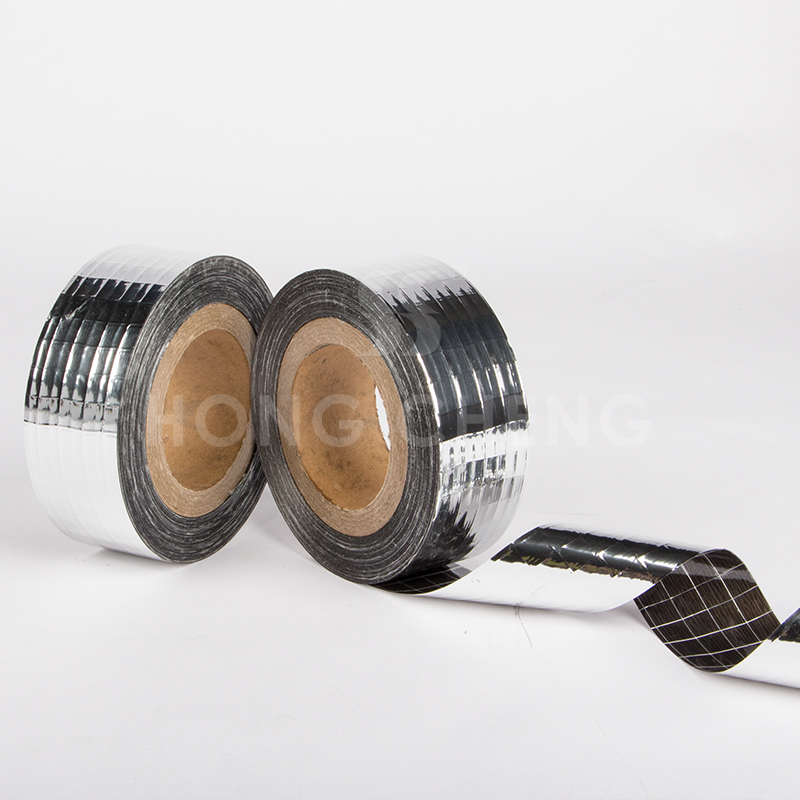
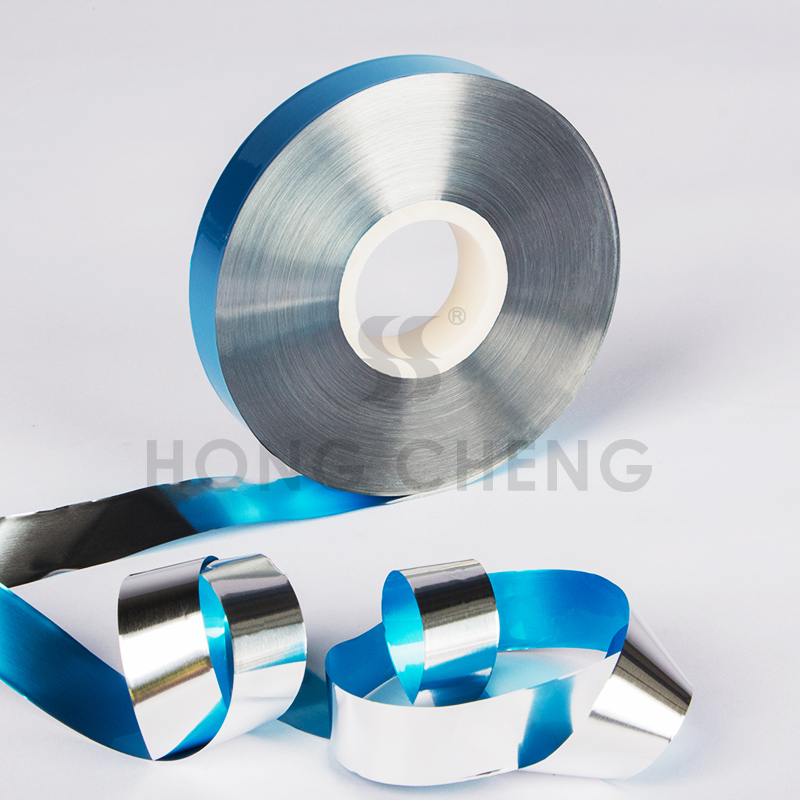
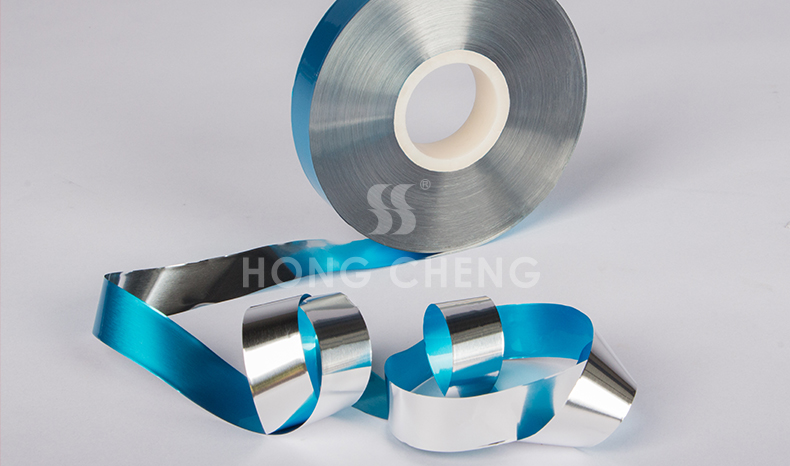
This pain point exactly needs high-performance aluminum foil shielding materials to make up for it. Aluminum foil with a seamless closed structure can fundamentally solve the performance shortcomings of braided shielding in the high-frequency band and become a key supporting material for industrial bus shielding solutions.
Shielding Technology Solutions for Mainstream Industrial Buses
Based on the operating frequency, transmission characteristics and application scenarios of different buses, shielding technologies need to be designed in a targeted manner. The following focuses on three widely used buses: PROFIBUS-DP, PROFIBUS-PA and PROFINET, and expounds the suitable shielding solutions.
01 PROFIBUS-DP: Double-layer Shielding Protection for High-frequency Scenarios
PROFIBUS-DP is mainly used for distributed equipment communication in manufacturing and process industries, with a transmission rate of 9.6 kbps~12 Mbps, covering low to high frequencies (up to 25MHz in some scenarios), and has extremely high requirements for signal fidelity.
Shielding Solution: Adopt the double-layer structure of "aluminum foil + tinned copper wire braiding".
- The aluminum foil has a seamless closed structure, which can completely block high-frequency interference and make up for the gap defects of braided shielding;
- Tinned copper wire braiding is responsible for low-frequency common-mode interference protection, and the tinned layer improves conductivity and corrosion resistance, ensuring that interference current is quickly grounded to avoid thermal effects caused by energy accumulation.
This structure is included in the EN 50288-7 standard and has been verified by experiments to operate stably in complex industrial environments.
02 PROFIBUS-PA: Flexible Shielding Design for Low-frequency Scenarios
PROFIBUS-PA is mostly used in process industries, with a fixed transmission rate of 31.25 kbps (low frequency), supporting bus power supply and intrinsic safety, connecting intelligent instruments such as pressure and temperature transmitters, and the system reliability is directly related to production safety.
Basic Shielding Solution: Shielding structure of "aluminum foil + tinned drainage wire".
- General scenarios (without mixed laying of high-voltage electricity): Adopt the "aluminum foil + drainage wire" structure. The aluminum foil effectively blocks low-frequency interference, and the drainage wire guides the induced current to the ground to avoid interference accumulation;
- High-interference scenarios: Upgrade to the double-layer shielding of "aluminum foil + tinned copper wire braiding" to strengthen the resistance to high-frequency clutter (such as frequency converter leakage signals).
Special Considerations: Process industries often involve environments such as oil pollution, high temperature and mechanical wear, so the shielding layer needs to balance chemical stability and mechanical strength. Aluminum foil materials processed by polyester film composite technology are not easy to break in high-vibration scenarios and can adapt to the long-term use requirements of harsh industrial environments.
03 PROFINET: Layered Shielding System for High-frequency and High-speed Scenarios
As an industrial Ethernet standard, PROFINET has a transmission rate of 100Mbps (Cat5e) to 1000Mbps (Cat6A), widely connecting controllers, cameras, servers and other equipment. Its high-frequency characteristics make it susceptible to crosstalk and external interference.
Shielding Solutions:
- PROFINET Cat5e (100Mbps): Adopt "total shielding (aluminum foil + tinned copper wire braiding)", with 4-core star twisted pairs sharing one shielding layer, balancing high-frequency interference protection and cost control;
- PROFINET Cat6A (1000Mbps): Adopt the "individual shielding + total shielding" double-layer system — each pair of core wires is individually wrapped with aluminum foil (individual shielding) to block crosstalk between wire pairs by virtue of the physical isolation characteristic of aluminum foil; the whole is covered with "aluminum foil + tinned copper wire braiding" (total shielding) to form internal and external double protection against external high-frequency interference.
Core Logic: During high-frequency signal transmission, the electromagnetic coupling (crosstalk) between wire pairs has a significant impact. The individual shielding design of Cat6A reduces internal interference through physical isolation, and the total shielding solves external electromagnetic intrusion. With its high shielding effectiveness and excellent composite technology, aluminum foil has become an ideal material for the layered shielding system, ensuring lossless transmission of high-speed data.
Selection and Application Practice of High-performance Shielding Aluminum Foil Products
In industrial bus shielding solutions, the performance of aluminum foil materials directly determines the upper limit of shielding effect. Hangzhou Hongcheng Technology Co., Ltd. has been deeply engaged in the aluminum foil material field for many years. The special shielding aluminum foil developed for industrial bus scenarios has become the industry's preferred choice with a number of technical advantages:
- Wide-band High-efficiency Shielding: The product adopts high-purity aluminum foil as the base material and is processed by precision composite technology, with a shielding range of 100KHz-3GHz. It can meet the interference protection needs of both low-frequency and high-frequency scenarios at the same time, and is perfectly suitable for various types of buses such as PROFIBUS-DP and PROFINET.
- Weather-resistant and Durable Characteristics: Through polyester film composite technology, the material is endowed with excellent corrosion resistance, wear resistance and flexibility. It can withstand harsh conditions such as oil pollution, high temperature and vibration in industrial scenarios, and has a service life far exceeding that of ordinary aluminum foil materials.
- Customized Adaptation Capability: According to the shielding structure requirements of different industrial buses, it can provide various products such as single-sided aluminum foil, double-sided aluminum foil and hot-melt aluminum foil, supporting flexible combination with braided layers and drainage wires, and meeting the application requirements of international standards such as EN 50288-7.
At present, the shielding aluminum foil products of Hangzhou Hongcheng Technology have been widely used in industrial bus systems in fields such as automobile manufacturing, chemical processes and intelligent factories, helping customers effectively solve electromagnetic interference problems and ensuring the stable operation of production systems.
Key Characteristics of Three Buses and Shielding Adaptation Logic
|
Bus Type |
Operating Frequency |
Core Interference Type |
Core of Shielding Solution |
Core Value of Aluminum Foil Material |
|
PROFIBUS-DP |
Low to 25MHz high frequency |
High-frequency electromagnetic radiation, low-frequency common-mode interference |
Double-layer protection of aluminum foil + braiding |
Seamless shielding of high-frequency interference, making up for braided gap defects |
|
PROFIBUS-PA |
31.25kbps low frequency |
Low-frequency conducted interference, local high-frequency clutter |
Aluminum foil + drainage wire / double-layer shielding |
Corrosion-resistant and flexible, suitable for harsh industrial environments |
|
PROFINET Cat6A |
Gigabit-level high frequency |
Wire pair crosstalk, external high-frequency interference |
Individual shielding + total shielding layered protection |
High uniformity, ensuring dual effects of isolation and shielding |
Conclusion
The shielding technology of industrial buses is not "the thicker the better", but needs to follow the principle of "frequency matching and scenario adaptation":
- Low-frequency scenarios (such as PROFIBUS-PA): Prioritize solving conducted interference, focusing on the grounding efficiency of the shielding layer;
- High-frequency scenarios (such as PROFIBUS-DP, PROFINET): Need to balance seamless shielding (aluminum foil) and conductive grounding (braiding). For high-frequency and high-speed scenarios, layered isolation should be added (such as the individual shielding of PROFINET Cat6A).
Faced with complex industrial environments, customized solutions need to be formulated based on bus characteristics, interference source types and environmental parameters. As the core anti-interference material for industrial buses, the technological upgrading of high-performance shielding aluminum foil will continue to promote the stability improvement of industrial automation systems. Hangzhou Hongcheng Technology will continue to be driven by technological innovation to provide better shielding material solutions for the industrial bus field and help the high-quality development of the industry.
需要我帮你把这篇文章里杭州鸿成科技的产品卖点整理成一页可直接用于宣传的PPT内容吗?
Floor Heating Reflective Film: The "Energy-Saving Core" of Floor Heating Systems
Development Trend and Enterprise Opportunities of the Aluminum Foil Tape Industry