How to Select Vacuum Aluminum Foil Composite Films for Pallets/Wooden Cases?
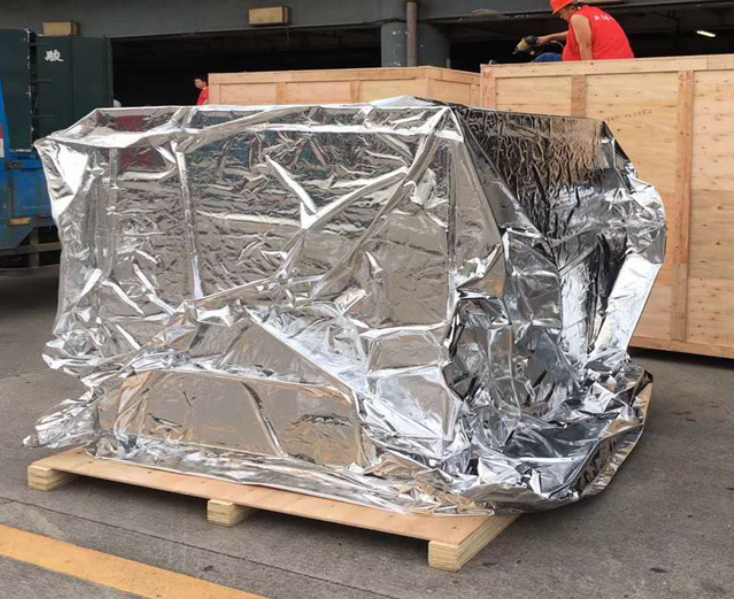
In industrial logistics packaging, pallets and wooden cases are core carriers for bulk goods, while vacuum aluminum foil composite films serve as their "protective outer layer". By achieving vacuum sealing, these films provide moisture resistance, oxidation resistance, pollution prevention, and mechanical damage protection, directly determining the integrity rate of goods during storage and transportation. Selecting such materials should not rely solely on thickness or price; instead, a systematic evaluation standard should be established based on performance adaptability, scenario requirements, and cost-effectiveness.
1. Core Performance Dimensions: Screening Based on "Protective Essence"
The core value of vacuum aluminum foil films lies in "sealing protection" and "structural stability". When selecting, focus on verifying the following 4 key indicators:
- Barrier Performance: The "First Line of Defense" for Protection
Barrier performance directly determines whether goods are affected by moisture or oxidation. Two key data points matter: Oxygen Transmission Rate (OTR) and Water Vapor Transmission Rate (WVTR), with lower values being better. Aluminum foil is the core barrier layer, typically chosen in thicknesses of 6-12μm. Too thin, it easily develops pinholes due to wrinkling; too thick, it reduces material flexibility, making it difficult to fit the edges and corners of pallets/wooden cases during packaging. Additionally, pay attention to the lamination process of the base material and aluminum foil: dry lamination offers more uniform sealing than extrusion lamination, making it suitable for scenarios with high protection requirements such as precision electronics and food.
- Mechanical Strength: Coping with "External Impact" in Logistics
During cargo handling and stacking, film materials are prone to damage from friction, puncture, or stretching. Prioritize checking tensile strength (longitudinal ≥20MPa, transverse ≥18MPa) and puncture strength (≥30N). The choice of base material is critical: PET (polyethylene terephthalate) has strong tensile resistance, suitable for heavy machinery packaging; PA (nylon) excels in puncture resistance, ideal for hardware with sharp components; PE (polyethylene) has good toughness and lower cost, suitable for ordinary daily necessities packaging.
- Temperature Resistance: Adapting to "Environmental Fluctuations" Throughout the Supply Chain
It must cover extreme temperatures during transportation, such as high temperatures in containers in summer (up to over 60℃) or low temperatures in northern winters (below -20℃). PE has good low-temperature resistance (no brittleness at -40℃) but softens easily at high temperatures; PET has a wide temperature resistance range (-40℃ to 120℃), suitable for cross-climatic zone transportation. For cold chain or high-temperature storage, composite films with temperature-resistant modifiers should be additionally selected to prevent film shrinkage and vacuum failure.
- Heat-Sealing Performance: Ensuring "Leak-Proof Sealing"
The sealing performance of vacuum packaging depends on heat-sealing effectiveness, which must match the heat-sealing temperature of the packaging equipment (usually 120-180℃). Prioritize PE or CPP (cast polypropylene) for the heat-sealing layer, as they have a wide heat-sealing temperature range and high edge-sealing strength (≥50N/15mm), with low risk of "false sealing" (local unsealed areas). For automatic packaging lines, additionally confirm the film’s heat-sealing speed adaptability (≥30m/min) to avoid affecting production efficiency.
2. Scenario Adaptation: "Precisely Matching" Materials to Cargo Needs
Different types of goods have different priorities for packaging protection, requiring targeted material combinations:
- Electronic Components/Precision Instruments: Core needs are moisture resistance and antistatic protection. Recommend the "PET + Aluminum Foil + PE" structure, with aluminum foil thickness ≥9μm to enhance barrier performance. Additionally, add antistatic agents to the PE layer (surface resistance ≤10¹¹Ω) to prevent electrostatic dust adsorption or component breakdown.
- Food/Pharmaceutical Raw Materials: Compliance with safety standards and fresh-keeping needs is essential. Prioritize films with food-grade certifications (e.g., FDA, GB 4806), using the "PET + Aluminum Foil + EVOH (Ethylene-Vinyl Alcohol Copolymer) + PE" structure. EVOH further improves oxygen barrier performance to extend shelf life, and ensure solvent-free composite adhesives are used to avoid migration pollution.
- Chemical Raw Materials/Metal Parts: Key requirements are chemical corrosion resistance and rust prevention. Choose the "PA + Aluminum Foil + PE" structure; the PA layer resists penetration of most acid-base solutions, while aluminum foil isolates oxygen and moisture to prevent rust on metal parts. For oil-containing goods, additionally confirm the oil resistance of the PE layer (no swelling after 24-hour immersion).
- Large Machinery/Furniture: Balance between protection and cost is needed. The "BOPP (Biaxially Oriented Polypropylene) + Aluminum Foil + PE" structure is suitable; BOPP has good rigidity to reduce packaging wrinkles and lower cost than PET, making it ideal for goods weighing ≥500kg. Ensure the film width matches the pallet size (recommended 10-15cm wider than the pallet side length) to avoid sealing gaps from splicing.
3. Avoiding Common Misconceptions: Balancing Performance and Cost
It is easy to fall into the misconceptions of "thickness-only theory" and "low-price-only theory" during selection; note the following two points:
- Do not blindly pursue "thick films": Film thickness and performance are not linearly positively correlated. For example, 12μm aluminum foil only has 15% better barrier performance than 9μm but costs 30% more. 6-9μm aluminum foil suffices for ordinary goods.
- Do not ignore "hidden costs": Low-cost films may have poor lamination strength (easy delamination) or unstable heat-sealing (easy leakage), leading to moisture damage or oxidation of goods and increasing rework and compensation costs. Choose brands with third-party test reports (e.g., SGS, CTI) to ensure performance compliance.
In conclusion, selecting vacuum aluminum foil composite films for pallets/wooden cases is a comprehensive decision that "aligns performance with scenarios and cost with needs". Starting from the four core performances of barrier, mechanics, temperature resistance, and heat-sealing, and combining cargo type and logistics environment, you can select the "cost-effective optimal" solution and truly exert its role as a "protective barrier".
Tape-Specific Aluminum Foil Composite Film
How to Extend the Service Life of Aluminum Foil Woven Film