How to Judge Woven Foil Vacuum Packaging Laminate Quality
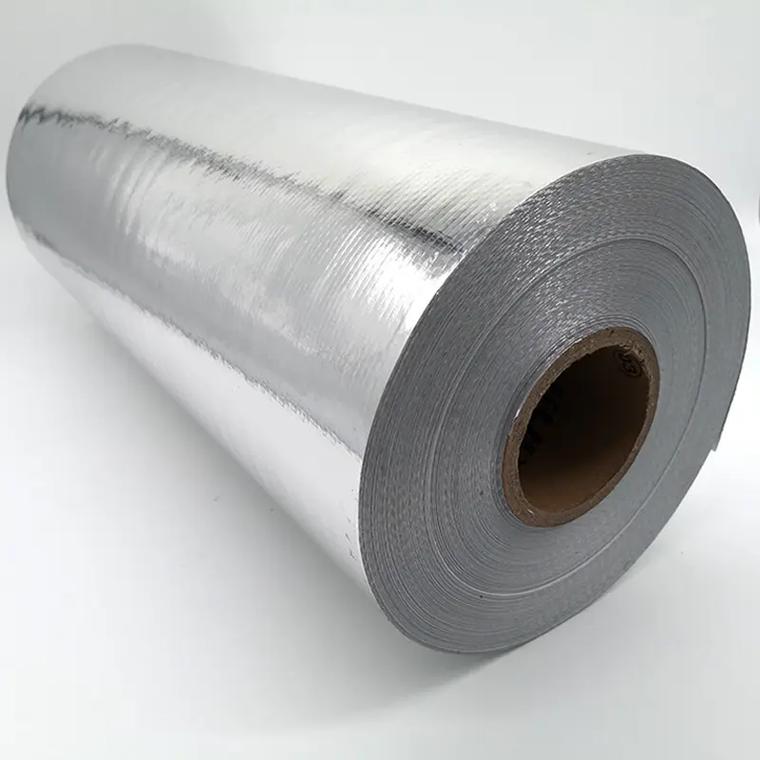
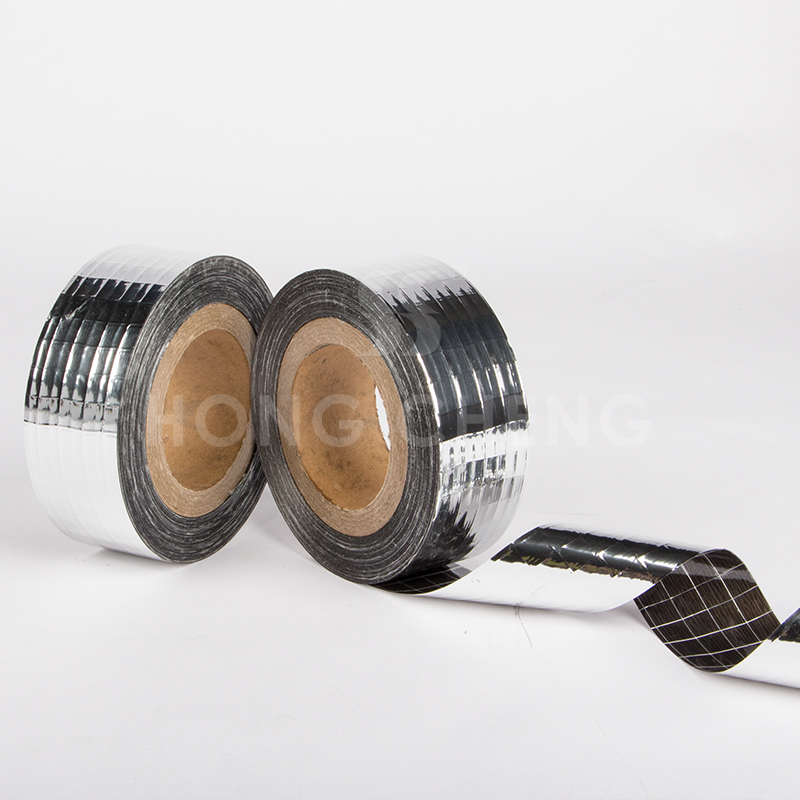
When exporting heavy equipment or shipping precision instruments over long distances, packaging failures can be catastrophic. After two or three months at sea in hot, humid container conditions, inadequate moisture barrier performance can lead to rust, corrosion, and damaged electronics—losses often dozens of times higher than the cost of the packaging film itself. For buyers at packaging plants, woven foil vacuum packaging laminate, aluminum foil woven fabric barrier film, and PET/AL/PE composite vacuum film may look similar on the surface. But at incoming inspection, how do you tell the good from the bad? Here are five hard inspection points to help packaging plants control quality at the source.
1. Aluminum Thickness and Purity: Don’t Judge by Brightness
Many buyers instinctively assume that brighter foil is better foil. In reality, brightness is mainly a surface finish effect and has little to do with barrier performance. What really matters for moisture and oxygen resistance is aluminum thickness and purity.
For typical woven foil vacuum packaging laminate, aluminum foil thickness ranges from 7μm to 12μm. Lighter equipment or short-haul transport can use around 7μm. Heavy machinery and ocean freight should use 9μm or above. Thinner aluminum layers have higher pinhole density, which raises water vapor transmission rate (WVTR). If you don’t have a micrometer on site, ask the supplier for third-party test reports focusing on aluminum thickness and pinhole count.
On purity, industrial packaging normally uses 1235 or 1145 alloy foil with aluminum content above 99%. Some low-cost products use recycled aluminum or off-spec alloys. These are hard to spot visually but have poor ductility and more pinholes, making them prone to tearing during vacuum forming.
2. Woven Fabric Strength and Density: Puncture and Load Resistance
The woven fabric is the structural backbone of the laminate. Equipment often has sharp edges, bolts, and flanges. When the bag is evacuated, the film pulls tight against these protrusions. If the woven fabric is too weak, the bag can puncture.
To evaluate woven fabric, check three things: basis weight, weave density, and tensile strength. Common basis weights range from 80g/㎡ to 140g/㎡. Weave density is typically 10×10 to 14×14 threads per inch. For heavy equipment, choose at least 120g/㎡ with a weave density no lower than 12×12. Single-yarn breaking force should generally exceed 30N.
Coating uniformity matters too. The PE coating bonds the woven fabric to the aluminum foil. Too thin and the layers will delaminate. Too thick and the laminate becomes stiff, wrinkling badly during vacuum forming and reducing surface contact.
3. Bond Strength: Put Peel Strength in the Contract
Whether the woven fabric, aluminum foil, and PE film stay bonded determines whether the bag will open in transit. Many quality issues are not caused by raw materials but by poor lamination.
The direct way to evaluate bond strength is the peel test. For a standard foil-to-woven fabric structure, peel strength should be at least 1.0N/15mm. For three-ply structures such as PET/AL/PE or woven/AL/PE, the target is usually 1.2N/15mm or higher. Buyers should require batch peel-strength test reports from the supplier and write minimum values and sampling ratios into the purchase contract.
A quick on-site check is also useful: cut a small strip and try to separate the layers by hand. If they separate easily or the aluminum layer peels off in large flakes, the lamination process or adhesive selection is questionable. A quality laminate resists separation, and failure usually occurs within the substrate rather than at the interface.
4. Pinhole Rate and Barrier Performance: Test Before Vacuum Forming
Pinholes are the enemy of aluminum foil laminates. A hole almost invisible to the eye can let moisture seep in over time, defeating the purpose of vacuum packaging.
The simplest way to check pinhole density is light transmission: hold the film up to a light source and look for bright spots. Reputable suppliers also use dye penetration or conductivity tests. Buyers without lab equipment should at least request WVTR and OTR data. Quality woven foil barrier film typically has WVTR below 0.5g/㎡·24h and OTR below 0.5cm³/㎡·24h·atm.
A vacuum hold test is practical and effective. Form a standard bag, evacuate it to the target vacuum level, and leave it for 24 hours. If vacuum loss exceeds 5%, there may be a problem with the film or sealing process.
5. Slitting Quality and Width Tolerance: Affects Bag-Making Yield
Many packaging plants focus on the film surface and ignore slitting quality. In fact, ragged edges, uneven roll ends, and width variation directly cause sealing misalignment and lower bag-making yield.
Good slitting produces flat, burr-free edges with no curling. Width tolerance is usually controlled within ±2mm, and precision grades can reach ±1mm. During incoming inspection, randomly select three rolls and measure width at both ends and the center to confirm tolerance. Also check whether the core is deformed and whether roll tension is consistent; an eccentric core causes unstable tension on the bag-making line.
Three Quality Traps to Avoid
Trap 1: Metallized film passed off as aluminum foil. Metallized film is cheaper but has much lower barrier performance and is unsuitable for long-term vacuum packaging. A simple field check is electrical resistance: pure aluminum foil has very low resistance, while metallized film shows noticeably higher resistance. Alternatively, fold and rub the sample repeatedly. Aluminum foil resists powdering, while metallized film tends to shed silver flakes.
Trap 2: Comparing price without comparing structure. Two products both labeled “aluminum foil woven fabric laminate” can be very different—two-ply versus three-ply, 7μm aluminum versus 12μm. Always request a layer structure diagram and specified thicknesses for each layer, then select by project requirement rather than price alone.
Trap 3: Ignoring batch-to-batch consistency. A small sample that passes inspection does not guarantee mass-production stability. It is wise to specify batch sampling in the contract, covering aluminum thickness, peel strength, pinhole rate, and width tolerance, and to retain the right to reject non-conforming lots.
Conclusion
The quality of woven foil vacuum packaging laminate, aluminum foil woven fabric barrier film, and PET/AL/PE composite vacuum film ultimately shows up when the equipment arrives at its destination. Packaging plant buyers who control aluminum thickness, woven fabric strength, bond strength, barrier performance, and slitting quality—and who avoid the three traps of metallized substitution, price-only comparison, and ignoring batch consistency—can reduce after-sales risk at the source.
Hangzhou Hongcheng Technology Co., Ltd. supplies aluminum foil composite films, PE laminated composites, and related raw materials to packaging plants, equipment exporters, and logistics packaging companies. Custom aluminum thicknesses, woven fabric specifications, widths, and laminate structures are available on request. For samples or technical selection support, contact us at +86 13758223270 or Email: wendy@hcdxcl.com.cn.
How to Buy Heating Cable AL/PE Shield Film Without Getting Burned
How to Judge Insulation Board Facing Quality? 5 Hard Metrics for Aluminum Foil PET vs VMPET
Related Article