The conductor of high-speed copper cables - silver-plated copper

With the explosion of AI computing demand and the popularization of 56Gbps/112Gbps SerDes technologies, high-speed interconnection between electronic components has become a core bottleneck for performance breakthroughs. Each serial channel of 25-30Gbps is gradually becoming mainstream; although higher data rates can be achieved at the chip level, they are limited by the skin effect of conductors during transmission. As a traditional good conductor, copper has a skin depth of approximately 1 mil at 6MHz, decreasing to 0.35 mil at 55MHz and only 0.1 mil at 1GHz. High-frequency currents are forced to concentrate on the conductor surface, and the microscopic roughness of the copper surface further exacerbates signal loss. As current density continues to gather toward the surface with increasing frequency, the effective resistance of the conductor surges, not only causing signal attenuation but also triggering heat dissipation problems, which have become key obstacles restricting high-speed interconnection. Against this backdrop, silver-plated conductor technology that "breaks the deadlock with silver" has emerged, and the high-precision silver-plated copper conductor products developed by Hangzhou Hongcheng Technology Co., Ltd., with targeted technical designs, have become core materials to solve the skin effect and support high-frequency transmission.
1. Technical Pain Points of Skin Effect: Why Silver Plating Becomes Inevitable?
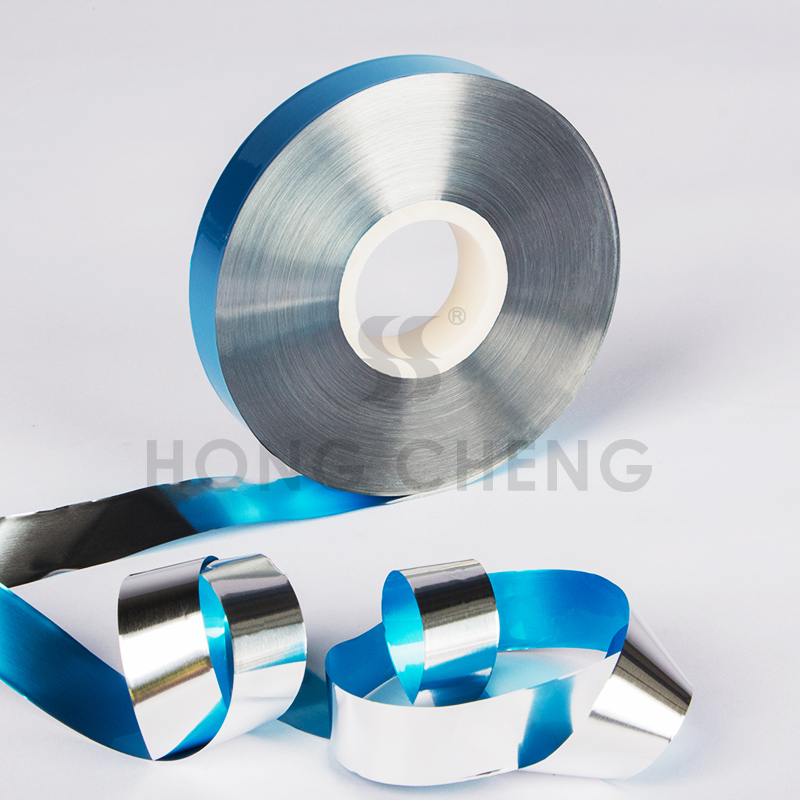
From the perspective of electromagnetic theory, the DC resistance of a cylindrical copper conductor only depends on conductivity, length, and cross-sectional area. However, in an AC environment, the reverse electric field induced by the magnetic field concentrates the current on the surface, forming the skin effect. In engineering, the skin depth △ is defined as the thickness where the current density drops to 0.368 times that of the surface. Its calculation formula (△=1/√(πfμσ)) shows that the higher the frequency f, the shallower the skin depth. Taking copper (σ=5.8×10⁷S/m) as an example, the skin depth is 9.3mm at 50MHz and only 1.2μm at 3GHz, meaning high-frequency signals are almost transmitted only in an extremely thin layer on the conductor surface. At this point, the conductivity and smoothness of the conductor surface directly determine transmission performance: as the metal with the lowest resistivity (conductivity of 6.1×10⁷S/m) in nature, silver has much lower surface electron flow resistance than copper. Additionally, its strong chemical stability prevents the formation of semiconductor copper oxide caused by copper oxidation. Seizing this core demand, Hangzhou Hongcheng Technology has developed silver-plated copper conductors with precisely controlled silver layer thickness (conventional 0.5-3μm, customizable to over 5μm) and surface smoothness (Ra≤0.1μm), ensuring smooth transmission of high-frequency currents in the silver layer and alleviating losses caused by the skin effect at the material level.
2. Performance Advantages of Silver-Plated Copper Conductors: Technical Breakthroughs of Hangzhou Hongcheng Technology
Compared with pure copper, tin-plated copper, and other solutions, the silver-plated copper conductors of Hangzhou Hongcheng Technology demonstrate multi-dimensional advantages in high-frequency scenarios, perfectly matching the core demands of high-speed interconnection:
- Reduce Insertion Loss and Extend Transmission Distance: Through independently developed cyanide-free electroplating technology, the silver layer adhesion of the company's silver-plated copper conductors reaches over 5N/25mm, avoiding resistance mutations caused by silver layer peeling. In the 112Gbps SerDes signal transmission test, its insertion loss is reduced by more than 30% compared with pure copper conductors, extending the effective transmission distance of DAC cables from 5 meters to 8 meters, meeting the long-distance interconnection needs between servers in data centers.
- Enhance Bandwidth Adaptability and Support AI Computing Transmission: For high-density interconnection scenarios inside AI servers, the company has developed ultra-fine silver-plated copper conductors (with a wire diameter as small as 0.08mm). Under the working condition of 1.2μm skin depth at 3GHz frequency, the silver layer thickness accurately covers the current transmission layer, increasing the signal bandwidth by 40% compared with tin-plated copper, which can stably adapt to terabit-level data interaction between AI chips per second.
- Strengthen Corrosion Resistance and Heat Dissipation for Complex Environments: The dense structure of the silver layer isolates air from contact with the copper core. After the neutral salt spray test (5% NaCl solution, 48 hours), the surface corrosion area of the company's products is ≤0.1%, far better than that of tin-plated copper (corrosion area ≥5%). Meanwhile, the low-resistance characteristic reduces Joule heat generation by 25%. In the high-density deployment scenario of data center cabinets, it can reduce system cooling energy consumption by 15%, conforming to the trend of green computing.
3. Market Application Scenarios: Comprehensive Coverage from Core Fields to Emerging Tracks
The silver-plated copper conductor products of Hangzhou Hongcheng Technology have been deeply integrated into key application scenarios of high-frequency interconnection, becoming "invisible supports" for high-speed transmission in various industries:
- High-Speed Communication and Data Centers: In the fields of DAC cables and high-frequency RF coaxial cables, the company's products account for 12% of the domestic mid-to-high-end market share, with customers covering mainstream network equipment manufacturers. The high-speed cables made of its silver-plated copper conductors have been used for interconnection of server clusters in super-large data centers such as Tencent and Alibaba.
- AI Servers and Computing Infrastructure: With the annual growth of AI computing demand by 50%, the silver-plated copper conductors customized by the company for AI servers have passed the compatibility test of NVIDIA DGX systems, stably supporting high-speed signal transmission between GPUs and memory. The order volume of related products increased by 180% year-on-year in 2025.
- New Energy Vehicles and Intelligent Connected Vehicles: In the fields of automotive radar and high-speed in-vehicle Ethernet (1000BASE-T1), the company's high and low temperature resistant silver-plated copper conductors (stable performance under -40℃ to 125℃) have been matched with the intelligent driving systems of BYD, NIO, and other automakers, solving the anti-interference problem of in-vehicle high-frequency signal transmission.
- Aerospace and Medical Electronics: To meet the strict reliability requirements of high-end fields, the company provides military-grade silver-plated copper conductors (complying with MIL-DTL-15222 standards) for precision interconnection of aerospace equipment. In medical imaging equipment (such as CT and MRI), its low-noise characteristic can reduce signal interference and improve image resolution.
4. Future Trends: Material Upgrade Direction at Higher Frequencies
As data rates move toward 224Gbps and 400Gbps, the skin depth will further shrink to below 0.5μm, and the technical requirements for silver-plated conductors will also increase accordingly. Hangzhou Hongcheng Technology has launched two key R&D projects: one is "nanoscale silver layer coating technology", which increases the silver layer thickness control accuracy to ±0.05μm to adapt to shallower skin depths; the other is "silver-copper composite interface optimization", which reduces the diffusion effect between silver and copper by introducing a transition layer, extending the product service life from 8 years to 12 years. Meanwhile, to balance environmental protection and cost, the company's R&D "thin silver layer + anti-oxidation treatment" process reduces silver usage by 15% while ensuring performance, providing possibilities for the popularization of silver-plated conductors in mass markets such as consumer electronics.
From the theoretical dilemma of the skin effect to the practical breakthrough of silver-plated technology, Hangzhou Hongcheng Technology takes material innovation as its anchor, turning silver-plated copper conductors from a "technical option" into a "high-frequency necessity". In the fast-developing tracks of AI, data centers, and new energy vehicles, it continues to provide high-performance and high-reliability material solutions for the global electronic interconnection industry.
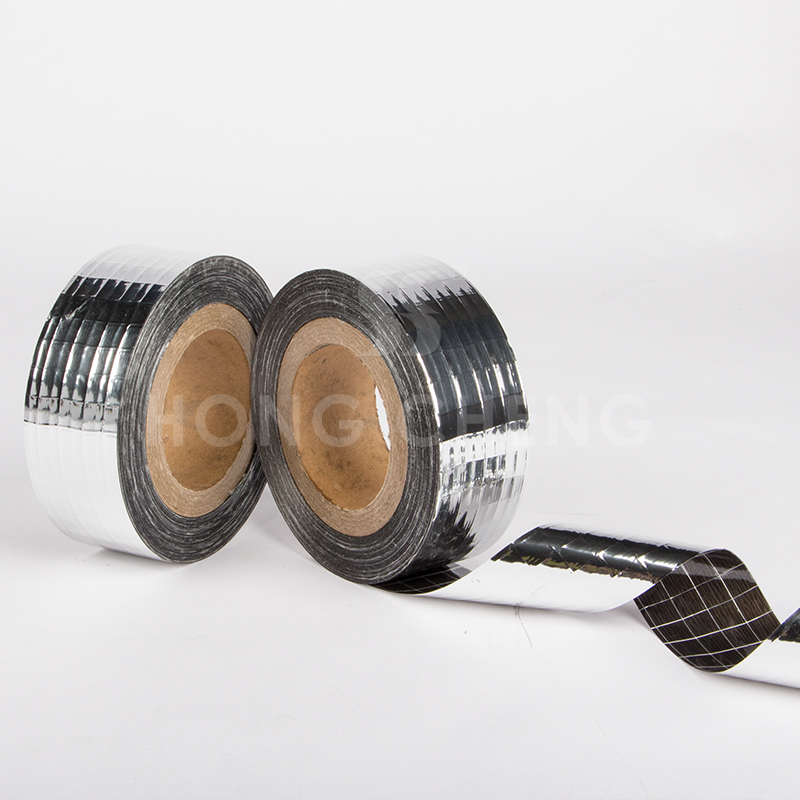
It is worth noting that the stability of high-frequency signal transmission not only relies on the low-loss characteristics of silver-plated copper conductors but also requires solving the problem of electromagnetic interference (EMI) in complex electronic environments — which is exactly the core value of the shielding aluminum foil products from Hangzhou Hongcheng Technology Co., Ltd. The company's shielding aluminum foil uses soft aluminum foil with a purity of over 99.9% as the base material. After cold rolling passivation and composite processing, it can achieve a shielding effectiveness of ≥90dB in the high-frequency band of 1GHz-100GHz, attenuating external interference signals to 1/10^9 of their original intensity, and forming a collaborative solution of 'low-loss transmission + high shielding protection' with silver-plated copper conductors. Currently, this shielding aluminum foil has been used in conjunction with silver-plated copper conductors in scenarios such as DAC cables for AI servers and transmission lines for automotive radars, effectively avoiding signal distortion caused by electromagnetic interference and further ensuring the transmission integrity of signals at 25-30Gbps and even higher rates.
Cat6a Cable Shielding Layer: The Underrated "Signal Guardian" in the Digital Transmission Era
The Material Revolution in the Digital Energy Era: How Aluminum-Plastic Film Supports the Intelligent World 2035?