Four Lives of a Sheet of Aluminium Foil: How Extrusion-Coated Laminates Solve Shielding, Airflow, Insulation and Barrier Problems at Once
2026-11-18

Inside cable shielding tapes, ventilation ducts, building insulation wraps and food packaging, there hides one humble material: the extrusion-coated laminate. Only a fraction of a millimetre thick, it performs four jobs that normally contradict each other — shielding yet insulating, reflecting heat yet blocking moisture, strong yet light. Here is how the "sandwich" works.

01. Why a laminate beats any single material

Every single material has a born weakness. Pure aluminium foil offers superb barrier and reflectivity, but at 6 microns it tears with your fingers. Woven fabric is strong and fold-endurable, yet permeable to moisture. Kraft paper is stiff and printable but goes soft when wet. Nonwovens are soft and light, but lack strength and barrier. Lamination is simply the discipline of letting each layer do the one thing it does best — foil for reflection and barrier, woven cloth for mechanical strength, paper for stiffness, nonwoven for conformity — and bonding them with a molten PE film, with no solvent and no adhesive at all.

02. Extrusion coating: bonding, made thin and clean

In extrusion coating, LDPE resin is melted at roughly 300°C and applied through a die at 20–40 g/m², then pressed and cooled in one continuous pass. Compared with adhesive lamination it leaves no solvent residue, cuts cost by removing glue and drying steps, and offers unmatched structural freedom: swap the substrate, adjust the coat weight, or add a halogen-free flame-retardant masterbatch — and you have a new product line on the same machine.

03. Four product lines, four roles

Product: Foil-coated woven cloth
Typical structure: Al foil 6–9 μm + PE coating + woven fabric (double-side foil optional)
Key performance: Tensile & tear strength, reflective insulation, moisture & light barrier
Main applications: Ventilation ducts, building insulation, pipe wraps

Product: Metallized film
Typical structure: PET/BOPP substrate + vacuum-deposited Al layer (tens of nanometres)
Key performance: High barrier, metallic finish, minimal aluminium use
Main applications: Flexible packaging, reflective layers, decorative laminates

Product: Coated kraft paper
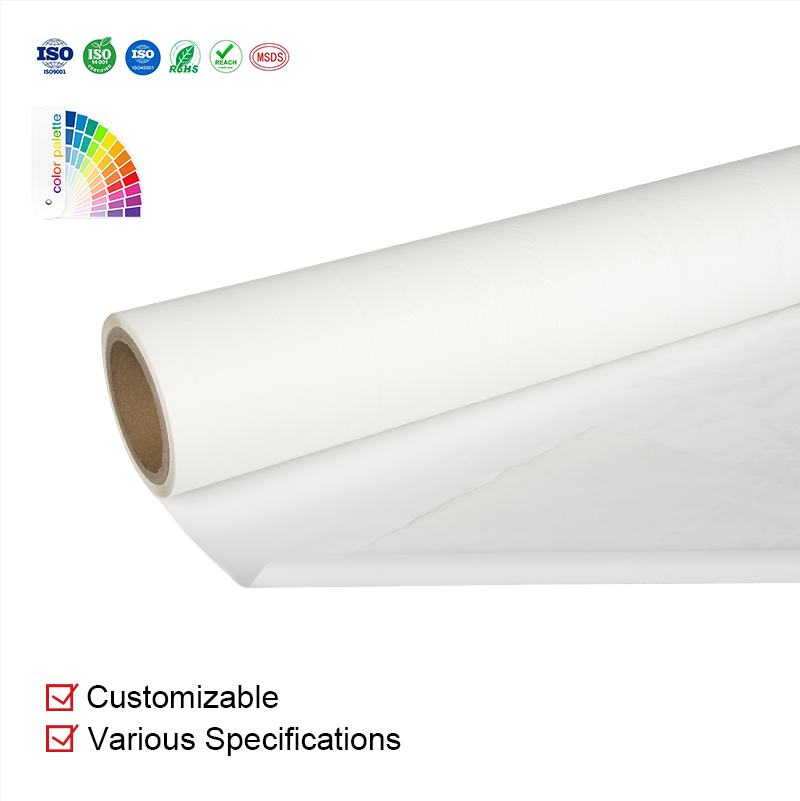
Typical structure: Kraft paper 60–120 g/m² + PE coating
Key performance: Stiffness, printability, moisture & grease resistance
Main applications: P sacks, building facings, moisture barriers

Product: Nonwoven laminate
Typical structure: PP/PET nonwoven + PE coating or metallization
Key performance: Soft handle, low linting, adjustable weight
Main applications: HVAC insulation, automotive harness wrap, medical packaging

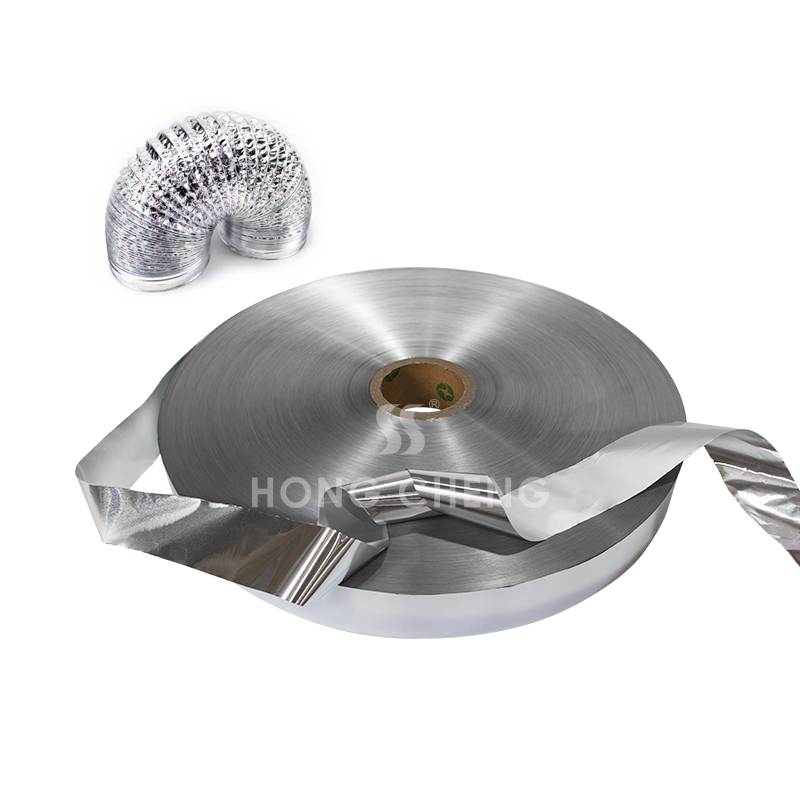
Among them, foil-coated woven cloth is the all-rounder: the wall skeleton of foil ducts with an embedded steel spiral, the reflective skin of building insulation wraps, and — as an aluminium/PET tape — the electromagnetic shield of cables.

04. Four battlefields: shield, ventilate, insulate, block

(1) Cable & electronics shielding. Communication and data cables use aluminium/PET laminated tapes, wound longitudinally or helically around the core. The foil reflects and conducts high-frequency interference; the coating keeps the foil bonded so it never cracks or lifts during winding.

(2) Ventilation ducts. The wall of a flexible aluminium duct is exactly the "foil + woven cloth + foil" sandwich with an internal steel spiral. Foil handles the air temperature, the fabric resists flexing and negative pressure, and the coating ensures the laminate survives thousands of fold cycles.

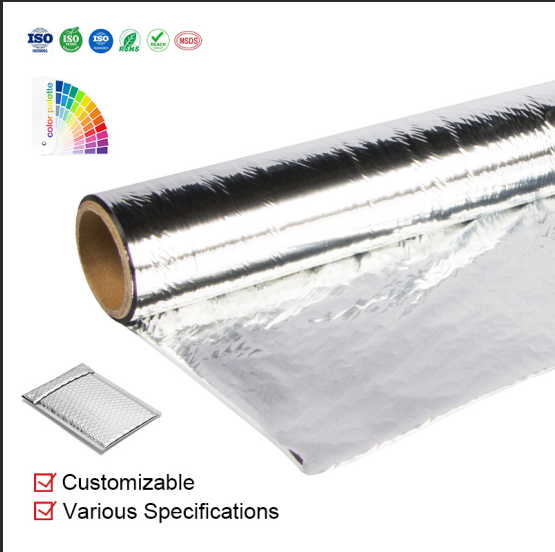
(3) Building insulation. Heat moves by conduction, convection and radiation. Mineral wool handles the first two; radiation is the foil's job — its low-emissivity surface reflects most radiant heat back. Foil-faced bubble wraps and foil woven insulation blankets combine both principles for roofs, underfloor heating and pipe insulation.

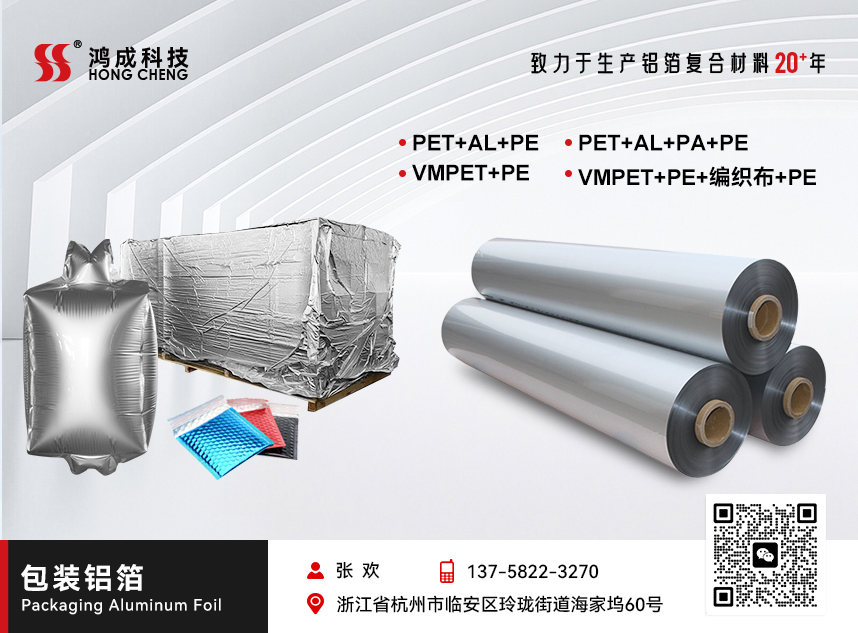
(4) Packaging barrier. Metallized film delivers near-foil moisture and light barrier with a fraction of the aluminium; coated kraft paper adds stiffness, a printable surface and heat-sealability. Almost every "barrier yet recyclable" packaging discussion ends up on one of these two materials.

05. Three things happening in 2026

First, the EU PPWR now fully applies — packaging enters the design-for-recycling era. Regulation (EU) 2025/40 entered into force in February 2025 and applies from 12 August 2026: all packaging placed on the EU market must meet recyclability requirements, with heavy metals limited to 100 mg/kg; from 2030 a graded A/B/C recyclability regime starts to bite. Multi-layer adhesive-bonded "foil + plastics" structures are under pressure, and mono-material, down-gauged, coating-based solutions — precisely what extrusion coating offers — are becoming the preferred route for export packaging.

Second, new energy and data centres add demand. Thermal protection in BESS containers and EV batteries, backsheets and sealing in PV modules, ventilation and shielding in data centres — these are turning laminates from a commodity into a safety component, with flame-retardancy, long-term temperature resistance and smoke density written into purchase specifications. Halogen-free flame-retardant coatings are a clear growth direction.

Third, thinner and better, in parallel. Six-micron foil and thinner metallized layers cut cost and carbon; highly reflective, lightweight, recyclable facing materials grow steadily as building energy codes tighten. "Thinner, leaner, recyclable" is replacing "thicker, heavier" as the scoreboard for composites.

06. Customization starts with one sample roll

Coated laminates are a business of parameters: single or double-side foil? Coat weight? Halogen-free flame retardancy and LOI value? Slit width, core diameter, printing colours? Even low-linting requirements for medical use will change the nonwoven choice. Our usual path: you share the application and key specs → we propose 2–3 structures → sample roll → on-machine validation → volume supply. Width, weight, colour, flame-retardant grade, printing and slitting are all customizable, with retained samples for traceability.

07. Closing words

The value of a coated laminate lies not in any single extraordinary layer, but in putting the right material in the right place: foil blocks radiation and EMI, woven cloth carries the load, paper and nonwoven add stiffness and conformity, and a few dozen microns of PE binds them into one. Shielding, ventilation, insulation, barrier — four lives of one sheet of foil, driven by the same engineering logic of divide-and-laminate.

If you are sourcing materials for cable shielding, ventilation ducts, building insulation or export packaging, send us your working conditions and specifications — and let's start with one sample roll.

Contact us
Company: Hangzhou Hongcheng Technology Co., Ltd.
Tel / WeChat: +86 137 5822 3270
Email: mark@hcdxcl.com.cn
Main products: aluminium foil, foil-coated woven cloth, metallized film, kraft paper, nonwoven and other extrusion-coated laminates — sample rolls & OEM structures welcome
HVAC Export Growth: How Flexible Duct Manufacturers Should Choose Duct Facing
How to Choose Equipment Vacuum Packaging Film: Start by Sorting Machines by Type and Packaging Format