Laminate Film Inspection Checklist for Insulated Bag Manufacturers
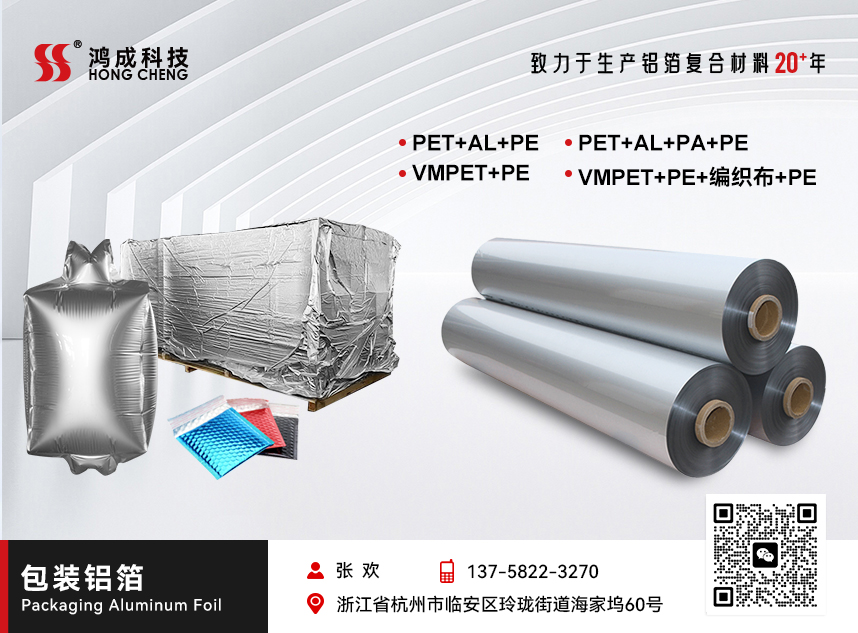
For manufacturers of insulated delivery bags and thermal boxes, the aluminum laminate film roll is the single most important purchased component. It sets the ceiling on thermal performance, seal reliability, and ultimately, customer satisfaction. Yet many buyers still inspect incoming rolls by brightness and unit price alone — and then wonder why one batch seals beautifully while the next causes wrinkles, weak seals, or delamination on the production line. From the perspective of a laminate film supplier, here is a practical guide to inspecting laminate rolls for insulated bags, along with the three most common traps.
First, Clarify What You Are Buying
An insulated bag manufacturer's in-house work is cutting, heat sealing, stitching, and assembly. The thermal "foundation" comes from upstream laminate rolls. Three common material routes serve this market:
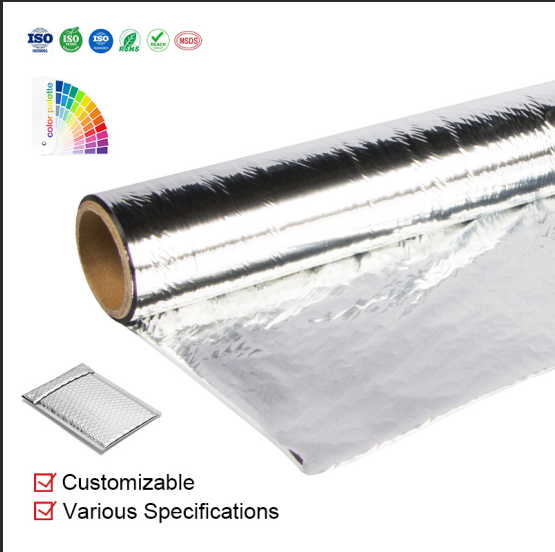
- AL/PE two-ply: pure aluminum foil bonded to a PE heat-seal layer. True metallic reflection and stable barrier, suited to mid- and high-grade insulation.
- PET/AL/PE three-ply: pure foil in the middle, with PET providing a printable outer surface and PE the seal layer. This balances strength and appearance and is the mainstream route for courier insulated bags.
- VMPET/PE metallized structure: lower cost with a bright finish, suited to lightweight bags where insulation duration is less critical.
One point of clarity: as a raw material supplier, we do not manufacture finished insulated bags. Bubble layers, nonwoven liners, and final assembly remain with the converter. What we deliver is the roll — and roll quality defines the ceiling of bag quality.
Five Inspection Points That Must Translate Into Numbers
Point 1: Verify the aluminum layer's identity, not just its shine. Pure foil and metallized film both look silver, but their reflectivity and barrier performance are not in the same class. The simplest field test is a surface-resistance check with a multimeter: pure foil conducts with very low resistance; metallized film does not. Contracts should state "pure aluminum foil" or "metallized film" explicitly — never just "aluminum layer."
Point 2: Check foil thickness by grade, not by total thickness. The standard supply range is 6μm-9μm, with 9μm as the heavy grade. Some quotations state only a total thickness such as 0.08mm without breaking down foil, PET, PE, and adhesive layers — which allows a light-grade foil to hide inside an "upgraded" product. Verify with a micrometer at multiple points, then back-calculate layer weights from grammage. The two sets of numbers must agree.
Point 3: Put three PE heat-seal parameters on paper. Seal window, seal strength, and PE thickness determine your production yield. A practical seal window falls between 110°C and 150°C; anything narrower forces re-tuning every time a batch changes. Seal strength should generally reach at least 6 N/15mm depending on bag construction, and PE thickness typically runs 15-30μm — too thin and seals crack; too thick and cost creeps up. A trial run on your own sealing machine is the only truly reliable verification.
Point 4: Test bond strength and fold endurance. Insulated bags are opened, closed, folded, and squeezed throughout the courier cycle. If the laminate delaminates, the foil separates, and both insulation and barrier fail. A quick initial check: tear a sample by hand — separating the layers should take visible effort with a clean fracture line. For formal acceptance, specify a 180° peel test with bond strength of at least 1.5 N/15mm, and write it into the contract.
Point 5: Secure batch-to-batch consistency with a sealed-sample system. An approved sample does not guarantee an approved production run. Keep a sealed reference sample from the first order, and compare every incoming batch against it for appearance, grammage, thickness, and sealing behavior. For large lots, inspect first, middle, and end sections of each roll. A supplier's real value lies in how small its batch-to-batch variation is — ask for that data, not just certificates.
Three Quality Traps to Keep on Your Radar
Trap 1: Metallized film sold as pure foil. It undercuts on price, looks nearly identical, and only a resistance test or production trial reveals it. Prevention is straightforward: multimeter check plus explicit contract language.
Trap 2: Comparing prices without comparing structures. Three rolls may all be called "0.08mm aluminum laminate," but AL/PE, PET/AL/PE, and VMPET/PE differ substantially in both cost and performance. Compare structure first, layer-by-layer grammage second, and only then unit price.
Trap 3: Ignoring batch consistency. A drifting seal window or a light-grade foil substituting for the heavy grade creates silent losses — wasted film, rework, and customer complaints that surface weeks later. A sealed-sample archive and arrival comparison remain the cheapest insurance available.
A Fixed Four-Step Receiving Routine
- Measure thickness: micrometer at multiple points, backed by grammage calculation.
- Check the layer: multimeter surface-resistance test to confirm pure foil.
- Tear a sample: assess bond strength quickly by hand.
- Archive a sample: seal one specimen per batch as the reference for the next.
The entire routine takes under half an hour yet screens out the majority of batch risks.
Beyond Inspection: Two Questions Worth Asking Your Supplier
Question 1: Can you provide layer-by-layer data for each batch? A supplier confident in its process can hand over foil thickness, layer weights, and peel-strength results with every lot. Reluctance here is a warning sign.
Question 2: What is your consistency record? Ask for grammage and thickness variation data across recent production runs. A stable process shows narrow bands; a marginal one shows wide scatter that will eventually reach your line.
Closing Perspective
The insulated delivery bag market has moved past appearance-driven competition. What buyers and end customers now judge is insulation duration and repeat-purchase reliability — and both are locked in at the moment the laminate roll enters your warehouse. Hongcheng Technology supplies AL/PE, PET/AL/PE, and VMPET/PE laminate rolls with custom widths and layer ratios, accompanied by batch test data. As a raw material supplier, we do not manufacture finished insulated bags; our role is to give converters a dependable foundation. We welcome bag and thermal-box manufacturers to contact us for samples and trial-runs.
Tel/WhatsApp: +86 13758223270, Email: wendy@hcdxcl.com.cn
— Techfoil
Extrusion Coating Explained: The "Temperature & Speed" Secrets Behind Every Laminated Composite
Related Article