Choosing Shielding Tape for Motor Lead Wires: Four Motor Types, Four Decisions
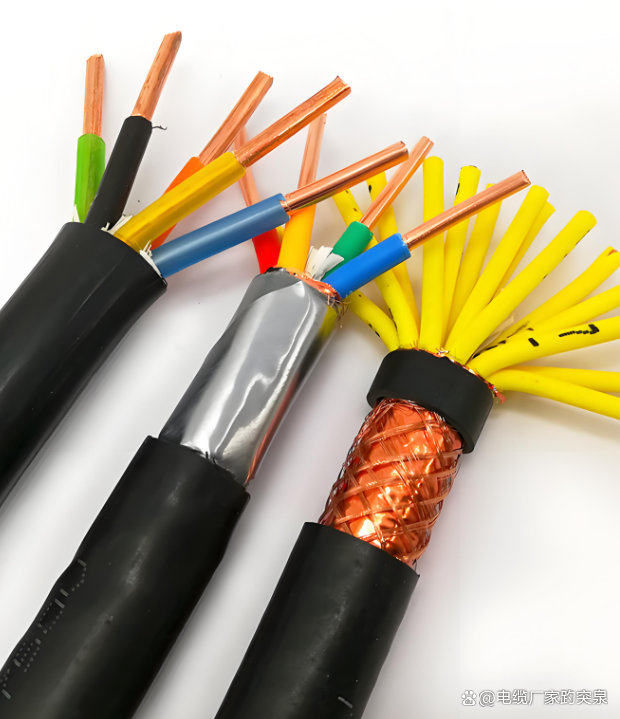
In plants that build motors, shielding tape is often treated as a commodity: it is all aluminum mylar tape, so whichever roll is cheaper goes onto the machine. The same tape then performs well on a standard industrial motor but causes trouble on an inverter-driven one. In reality, the first step in specifying shielding for motor lead wires is not comparing prices — it is identifying which of four motor categories your application belongs to, because operating conditions differ widely and so do the demands on the tape. Based on years of supplying foil laminates to motor plants, here is how the categories break down and what each one demands, so buyers can match their own situation to the right structure.
Category One: Standard Industrial Motors — AL/PET Two-Layer Is Enough
General-purpose three-phase asynchronous motors, fans and pumps generate lead-wire shielding requirements that are mainly about electromagnetic noise and interference immunity, with modest operating temperatures. For these, a two-layer AL/PET laminate is sufficient, with the foil in the conventional grade of 6μm to 9μm. Wrapping pitch and overlap follow the drawing. The points worth spending money on are laminate bond strength and slitting quality: when peel strength is inadequate, a slit narrow tape delaminates as soon as the wrapping machine applies tension; when roll edges carry burrs, high-speed wrapping breaks the tape. On incoming inspection, a hand-tear sample shows whether the foil comes away in full sheets, and examining roll edges under a light reveals burrs. If these two checks are done consistently, this category rarely produces surprises. Do not pay for a three-layer structure bought for conditions that do not exist here.
Category Two: Inverter-Driven Motors — Watch Temperature and High-Frequency Shielding
When a motor is fed from a variable-frequency drive, the lead wires carry high dv/dt pulses and common-mode currents, and the shielding layer works across a higher frequency band. For this category we recommend the heavy foil grade (9μm) and, importantly, the supplier's shielding attenuation data at high frequencies — not just the conventional band. Because these leads run close to the motor body, surface temperatures run high, so the adhesive must match the location's temperature class. Ask for peel strength after heat ageing: ordinary adhesive often fails first here, and once the shield loosens, the interference returns with it. Another detail that is easy to overlook is the temperature class of the PET film itself. In hot locations the PET should be specified at a higher temperature grade rather than only worrying about the adhesive. Before requesting a quote, put the expected operating temperature of the lead location into the inquiry so the supplier can propose a matched adhesive and film combination instead of guessing.
Category Three: Appliance and Power-Tool Motors — Narrow Slitting and Small Diameters
Appliance and power-tool motors use small-diameter lead wires wrapped at high speeds, and their tape is slit into narrow widths. This is where slitting quality decides the outcome: edge burrs and width deviation show up on the machine as breaks and tracking drift. Specify width tolerance within ±0.3mm, examine roll edges under a light on arrival, and run a full roll through the machine before release. Raised rings in the wound roll and adhesive squeeze-out deserve the same attention, because on narrow tapes both are more sensitive than on wider ones. The conventional foil grade is adequate; the real task is holding narrow-tape consistency batch after batch. Appliance production runs continuously at volume, so one bad batch costs the line its rhythm, and the resulting downtime quickly exceeds any saving made on the tape itself.
Category Four: Servo and Stepper Motors — Protect Shield Continuity First
Servo encoder lines and stepper signal lines carry weak signals, where shield continuity outranks every other property. A single lifted or delaminated overlap lets noise straight into the signal path, and the equipment shows it as lost pulses or jitter. For this category use the heavy foil grade (9μm), specify 180° peel strength of at least 1.5N/15mm, and check incoming samples with a hand-tear test to see whether the foil comes away in full sheets. Keep wrapping tension moderate on narrow tapes so the foil is not stretched into pinholes — a simple pinhole check by holding a sample against a lamp and looking for points of light is effective and costs nothing. When a signal-line shield fails in the field, tracing and rework cost far more than the tape, so in this category the budget belongs to shield continuity.
A Quick Reference Table
Standard industrial motors: AL/PET two-layer, conventional foil grade, focus on bond strength. Inverter-driven motors: heavy grade 9μm with temperature-classed adhesive, focus on high-frequency attenuation. Appliance and power-tool motors: narrow slitting within ±0.3mm, focus on edges and machine trials. Servo and stepper motors: heavy grade with peel strength ≥1.5N/15mm, focus on shield continuity.
Three Practical Recommendations
First, write the motor type and lead location into the inquiry instead of just the words "aluminum mylar tape" — an inquiry that names the application lets the supplier propose the right structure, and quotes become comparable. Second, put three numbers into the contract: foil grade, peel strength value and width tolerance. Third, validate the first shipment on a small roll: run wrapping speed and tension through a full trial before releasing volume orders. This sequence costs a day and saves rework that can run for weeks.
Two Questions We Hear Often
Can one tape serve all four motor categories? Usually not. Forcing a single specification tends to over-buy for standard motors and under-buy for servo signal lines, so the total cost rises either way. Can metallized film replace pure aluminum foil on lead wires? For shielding it cannot; a multimeter on resistance mode distinguishes them quickly — pure foil reads close to a short circuit, metallized film shows a much higher surface resistance. Knowing this also protects you when quotations arrive at suspiciously different price levels for what sounds like the same product.
Hangzhou Hongcheng Technology manufactures aluminum mylar tape, AL/PET shielding tape and high-temperature foil laminates for motor lead wire shielding. We customize foil thickness, PET specification, adhesive class and slit width by motor category. As a raw material supplier we do not produce finished motors, but we are glad to work with motor plants to fix the right structure and specifications. +86 13758223270, Email: wendy@hcdxcl.com.cn
Insulation Season Is Here: How Foil Laminated Composite Materials Become the "Reflective Shield" of Building Insulation
AL+PET+PET Triple-Layer Shielding Tape: The Invisible Armor Inside Every Data Cable