Aluminum Price Volatility Reshapes Duct Facing Procurement: What Flexible Duct Manufacturers Should Know
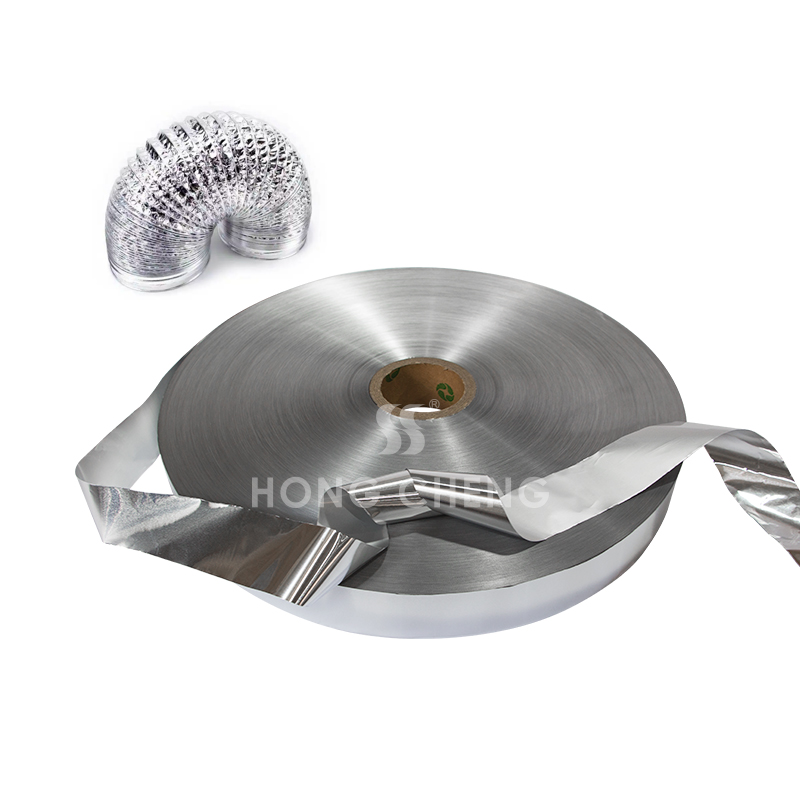
Aluminum prices have been trading in an elevated range in recent weeks, and quotations for aluminum processed products have moved accordingly. For flexible duct manufacturers, whose core raw material is duct facing, this is not just a headline — it is changing how procurement decisions are actually made on the factory floor.
1. Market Review: The Cost Transmission Has Already Happened
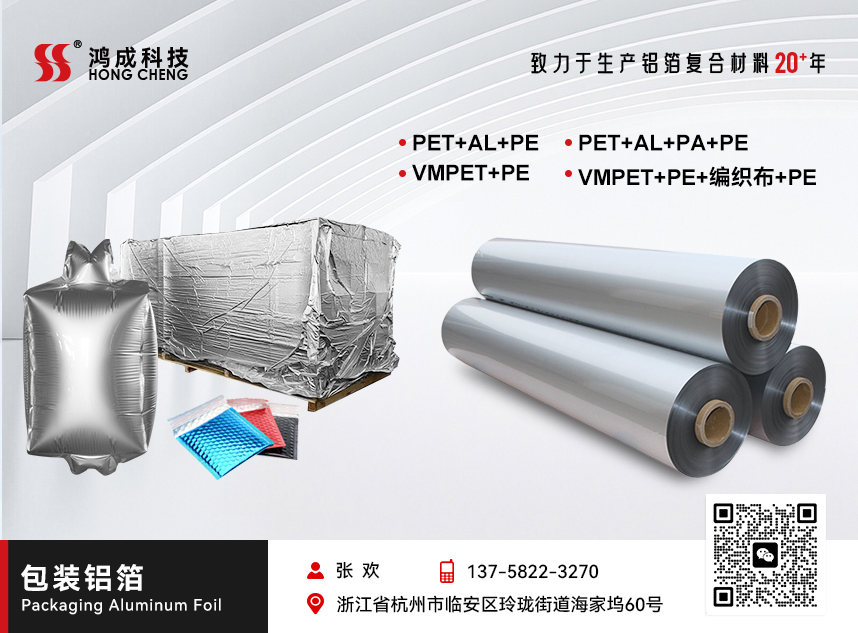
Aluminum is the dominant cost component in duct facing. Whether the product is AL/PE duct facing with a pure aluminum foil layer, or VMPET duct wrap based on metallized film, the aluminum layer accounts for a significant share of total laminate weight. When aluminum prices rise, laminate prices follow with very little lag, because there is no practical substitute for aluminum in a product whose entire selling point is reflectivity and barrier performance. Several material suppliers have already adjusted their quotation terms: price lock-in windows that used to run 30 days have been shortened to 15 days or less, and the validity period on quotes reaching duct manufacturers is visibly shorter. Some suppliers now attach a metal-price adjustment clause to longer contracts, recalculating the aluminum portion of the price against a published benchmark at delivery time. This is an industry-wide chain reaction, not the policy of a single supplier, and it means buyers can no longer treat a quotation as something that stays valid while they think about it for a month.
2. First Change in Procurement Logic: Comparing Quote Structures, Not Just Prices
In a stable market, buyers routinely compare laminates by total weight and total thickness alone. With aluminum prices moving, two quotes prepared on different base dates can differ by hundreds of dollars per ton for nominally identical material, and a quote that looks cheap may simply be one week older than the rest. More and more buyers now ask suppliers to state the aluminum layer thickness grade, the layer-by-layer gram weight breakdown, and the quotation base date on every offer sheet. Once the comparison basis is unified, it becomes immediately clear whose material is genuine and whose pricing is honest. Buyers report a second benefit as well: when suppliers know their quotes will be compared layer by layer, vague specifications and undisclosed substitutions largely disappear from the conversation before the first negotiation even begins.
3. Second Change: The Division of Labor Between Two Material Routes Is Being Reassessed
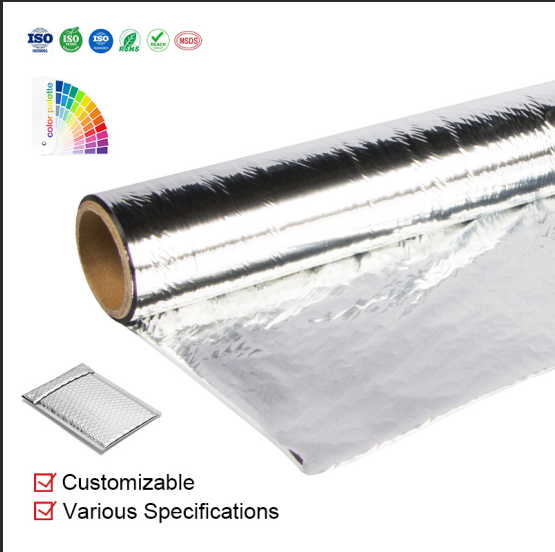
AL/PE duct facing uses pure aluminum foil as its aluminum layer, delivering high barrier performance and high reflectivity. VMPET duct wrap uses metallized film: lower cost and better flexibility, but its barrier capability is not in the same class as pure foil. When aluminum prices climb, some buyers are tempted to switch entire product lines to metallized film to control costs. A caution is warranted here: the two materials serve different scenarios. Mid-to-high-end ventilation systems and projects with explicit barrier requirements still require the pure foil route, and a failed acceptance test on a finished duct costs far more than the savings on the laminate. The sensible approach is to grade by application — assign metallized film to sections where barrier requirements are modest, keep pure foil for exposed and performance-critical runs — rather than replacing everything wholesale. Buyers who maintain both routes in parallel, with clear internal rules on where each is used, are finding the current price cycle easier to manage than those forced into rapid one-way substitutions.
4. Third Change: Contract Specifications Are Moving from Verbal to Written
In volatile price cycles, some suppliers are tempted to play games with aluminum layer thickness — quoting the heavy grade (9μm) but delivering the standard grade, or quietly changing the adhesive system on a running order. Duct manufacturers are increasingly adopting a simple discipline: write aluminum layer thickness, peel strength, width tolerance, and batch-to-batch consistency into the purchase contract, and test foil thickness by sampling each incoming batch. A micrometer, a set of scales, and ten minutes of inspection per shipment will catch most substitutions before they reach the production line. At Hongcheng Technology we have observed that the more rigorous the customer's contract, the smoother the long-term cooperation and the fewer the disputes — rigorous buyers are also, in practice, the customers who suffer the least cost surprise when markets move.
5. Three Practical Recommendations for Duct Manufacturers
First, when requesting quotes, specify the application scenario, forming process, and width requirements in one inquiry so the supplier can propose a matched structure — not just a total thickness. A quote that arrives without a structure proposal is a signal about the supplier, not about the material. Second, require every quote sheet to state whether the aluminum layer is pure foil or metallized film, whether the grade is standard (6μm) or heavy (9μm), and how long the price remains valid; treat an undated quote as expired. Third, with any new supplier, run a small pilot batch through your production line to verify bonding strength, lay-flat performance, and heat-sealing behavior before committing volume — especially in a volatile market, when problematic material arriving at the line is the most costly outcome, because rework queues are longest exactly when every manufacturer is trying to ship against orders priced weeks earlier.
6. What Buyers Should Verify with Suppliers
A short checklist has proven useful for buyers navigating this cycle: (a) test the aluminum layer with a multimeter to distinguish pure foil from metallized film; (b) use a micrometer at multiple points across the web to confirm thickness; (c) perform a simple hand-peel test to verify lamination strength of at least 1.5N/15mm; (d) compare samples across three consecutive batches before approving mass production; (e) keep a sealed reference sample of every approved batch. These five steps cost little and eliminate most of the quality risks that surface when material specifications drift under cost pressure.
7. The Supply Side Is Adjusting Too: Inventory and Pricing Methods Move Together
Volatility changes sellers as much as buyers. Laminate producers have tightened credit terms on delivery-then-payment arrangements, and some customers are shifting to staged pricing: lock the width and structure first, agree the aluminum price base separately as batches are called off. For duct manufacturers, this model smooths cost swings — but only if the supplier's capacity and delivery reliability hold up. When evaluating supply partners in this cycle, capacity headroom and historical on-time delivery records deserve more weight than a marginally lower quote.
8. Conclusion
Aluminum price volatility is a permanent feature of this industry. What it tests is not luck but the precision of a manufacturer's procurement system. Hongcheng Technology is a China-based manufacturer of aluminum foil laminates and PE-coated composite materials, supplying AL/PE duct facing, VMPET duct wrap, and single- or double-sided aluminum foil laminates to flexible duct manufacturers worldwide, with standard foil thicknesses of 6μm-9μm and custom widths and structures available. If you are currently reviewing your duct facing supply options, we welcome your inquiries for samples and technical documentation.
Contact: +86 13758223270, Email: wendy@hcdxcl.com.cn
Techfoil
Extrusion Coating Explained: The "Temperature & Speed" Secrets Behind Every Laminated Composite
Insulation Season Is Here: How Foil Laminated Composite Materials Become the "Reflective Shield" of Building Insulation