How Car Sunshade Materials Block Summer Heat: A Technical Guide to Metallized Film and AL/PE Laminates
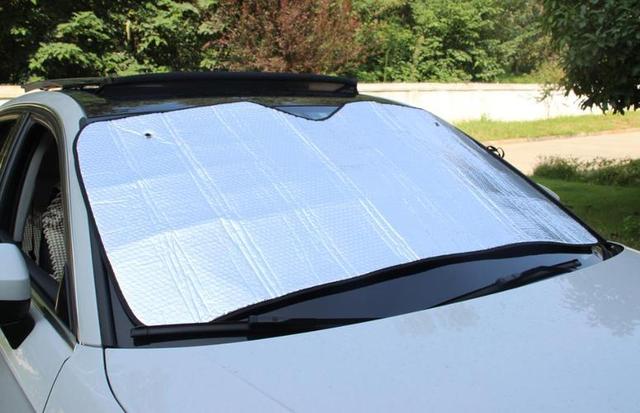
On a hot summer day, the interior temperature of a parked car can climb above 60°C (140°F) within minutes. This heat buildup accelerates dashboard and upholstery aging, degrades electronics, and makes the first few minutes of driving uncomfortable. Car sunshades offer a low-cost way to reduce this heat load, and their effectiveness depends heavily on the reflective material used on the front surface. The two most common raw material options for automotive sunshade manufacturers are metallized PET film (VMPET) and aluminum foil/PE laminates (AL/PE).
1. How Reflective Sunshade Materials Work
Car sunshades do not primarily absorb heat. Instead, they reflect a large portion of incoming solar radiation back through the windshield before it enters the cabin. Solar energy is concentrated in the visible light range (approximately 380–780 nm) and the near-infrared range (780–2500 nm), together accounting for more than 90% of total solar energy. A sunshade with a high-reflectivity surface therefore reduces radiant heat gain directly at the glass.
Most automotive sunshades are built in three layers: an outer reflective layer (metallized film or aluminum foil laminate), a middle insulating layer (bubble film, EPE foam, or non-woven fabric), and an inner protective layer (PE film or non-woven backing). The reflective layer is the most critical component because it determines optical reflectance, durability, and overall product lifespan.
2. Metallized PET (VMPET) Sunshade Materials
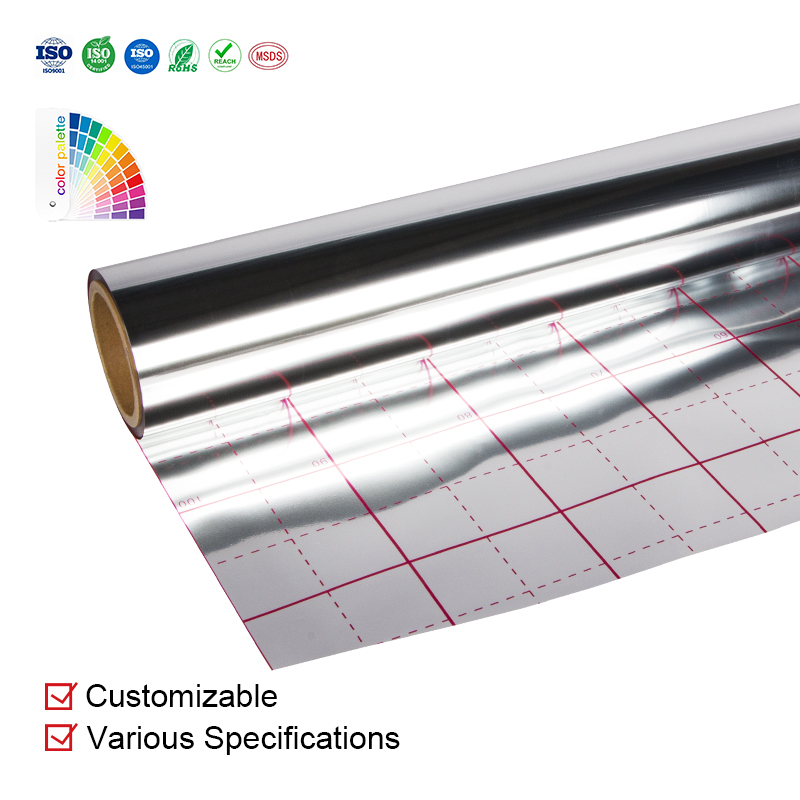
Metallized PET film is produced by depositing a very thin layer of aluminum—typically 30–50 nm thick—onto a PET substrate in a vacuum metallization chamber. The resulting VMPET film is lightweight, highly reflective, and flexible, making it ideal for foldable sunshades, roll-up sunshades, and simple reflective panels.
High-quality VMPET can reflect 80% to 90% of visible light, with some premium grades approaching 90%. Because the aluminum layer is extremely thin, the overall material weight is low, which reduces shipping costs and improves portability. PET also provides good dimensional stability and tear resistance, allowing the material to be cut, heat-pressed, or ultrasonically welded without difficulty.
One limitation of VMPET is that the thin aluminum layer can develop micro-cracks after repeated folding or prolonged UV exposure, gradually reducing reflectance. For products that are folded many times a day or left in direct sun for extended periods, manufacturers often add a protective top coating or switch to a thicker aluminum foil laminate structure.
3. AL/PE Reflective Sunshade Laminates
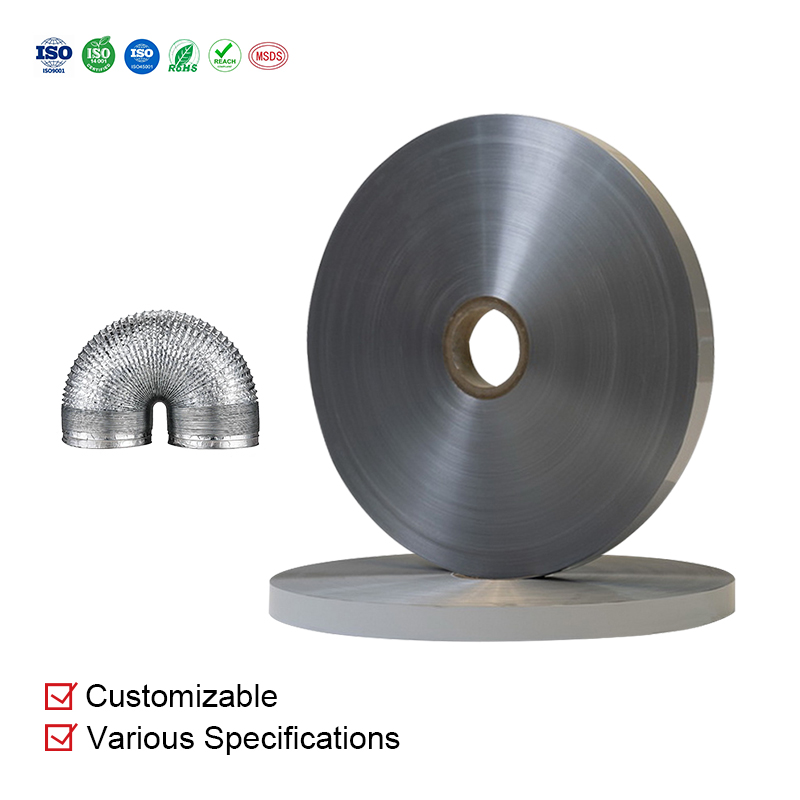
AL/PE sunshade laminates use aluminum foil as the reflective layer and PE film as the substrate, heat-seal layer, or protective backing. Common constructions include aluminum/PE and PE/aluminum/PE, with aluminum foil thickness typically ranging from 6 μm to 12 μm depending on the product positioning.
Compared with VMPET, AL/PE laminates offer a thicker, more continuous aluminum layer. This provides higher and more stable infrared reflectance—usually above 85%—and better moisture barrier performance. The foil’s greater metal continuity also makes it less prone to pinhole defects caused by bending or handling, which is important for premium sunshades, semi-fixed window shades, and outdoor car-cover liners.
In production, AL/PE laminates can be extrusion-laminated or dry-bonded to bubble film, EPE foam, or non-woven fabric to create rigid or semi-rigid composite panels. The PE layer provides good heat-sealability, enabling automatic bag-making, sheet-cutting, or roll-forming processes used by large-scale sunshade manufacturers.
4. Performance Comparison and Application Scenarios
| Property | Metallized PET (VMPET) | AL/PE Laminate |
|---|---|---|
| Reflectance | 80–90% | 85–95% |
| Aluminum layer thickness | 30–50 nm | 6–12 μm |
| Flexibility | Excellent, foldable | Good, better for semi-rigid designs |
| Weather resistance | Moderate, top coating recommended | Excellent, suitable for outdoor use |
| Moisture barrier | Moderate | Excellent |
| Cost | Lower | Moderate to higher |
| Typical applications | Foldable sunshades, budget reflective panels | Premium sunshades, car covers, insulation mats |
For manufacturers selling into the mass-market e-commerce channel, VMPET is usually the preferred choice because it keeps material costs down and makes products easy to store and ship. For premium brands, fleet customers, or products marketed for long-term outdoor parking, AL/PE laminates offer better durability and more consistent thermal performance over time.
5. Sourcing Considerations for Sunshade Manufacturers
When selecting reflective materials for automotive sunshades, manufacturers should match the material to the end-use scenario, target price point, and production line capabilities. If the product is lightweight, portable, and price-sensitive, a VMPET-based composite is usually sufficient. If the product emphasizes long-term reflectance, premium positioning, or heavy-duty outdoor use, AL/PE laminate is the more appropriate base material.
During the summer peak season, batch-to-batch consistency becomes especially important. Variations in aluminum layer thickness, lamination bond strength, and heat-seal performance can directly affect finished-product yield. Buyers should specify material gauges, test standards, and roll dimensions clearly, and work with suppliers who can deliver wide-width master rolls with minimal splices to reduce downtime and waste.
Hangzhou Hongcheng Technology Co., Ltd. specializes in aluminum foil composites, PE extrusion laminates, and metallized film composites for industrial applications. We supply VMPET metallized films and AL/PE reflective laminates tailored to sunshade manufacturers, with customizable widths, thicknesses, and multi-layer structures. Small trial orders and high-volume production runs are both supported.
+86 13758223270、Email: wendy@hcdxcl.com.cn
— Techfoil
Material Innovation in Heavy Equipment Vacuum Packaging: The Evolution of Aluminum Foil Woven Composite Laminates
How to Choose AL/PE Flexible Duct Facing: A Buyer’s Guide
Related Article