Liquid-Cooled EV Charging Cable Shielding: How to Select AL/PET Mylar Tape for High-Power Charging Applications
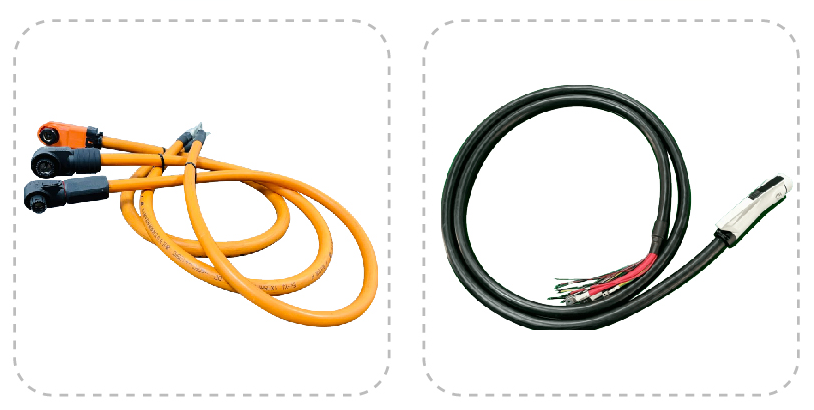
The Liquid-Cooled Ultra-Fast Charging Surge: Why Shielding Tape Has Become a Critical Component
By 2026, China's public charging pile inventory has surpassed 4.6 million units, with liquid-cooled ultra-fast chargers rated above 480kW accounting for 28% of new installations — up from 12% just one year prior. Major operators are racing to deploy "one-second, one-kilometer" charging networks. The liquid-cooled charging cable, which bridges the charging pile and the vehicle, carries high-voltage, high-current power through conductors whose core temperatures can exceed 90°C under sustained 500A loads. Meanwhile, the coolant tube outer wall remains at 35-45°C. Inside this sealed conduit where hot and cold zones intersect, electromagnetic interference (EMI) and thermal accumulation emerge as two hidden threats.
Many charging pile OEMs share a common frustration: when they source shielding tape using conventional specifications, cables experience shielding effectiveness degradation under high-temperature, high-humidity conditions combined with minor coolant seepage. In severe cases, this causes communication signal bit errors and charging handshake protocol interruptions. The root cause is that the shielding tape's substrate structure, aluminum foil purity, and heat-seal layer temperature resistance have not been matched to the unique operating conditions of liquid-cooled cables.
As a source manufacturer of aluminum foil composite materials, Hongcheng Technology presents this selection guide for AL/PET mylar shielding tape in liquid-cooled charging cable applications, organized by power rating, cooling method, cable architecture, and compliance certification.
Four Application Scenarios: Power Rating Drives Shielding Specifications
Scenario 1: 120-250kW Fast Chargers (Air-Cooled / Semi-Liquid-Cooled) The workhorse of urban public parking facilities. Cable rated current: 200-400A, maximum operating temperature 75°C. The primary shielding target is crosstalk between DC+ and DC- conductors and radiated interference to external communication lines. Recommended: AL/PET standard shielding tape with 12μm aluminum layer, 25μm PET layer, aluminum purity ≥99.0%, and overlap rate ≥25%. This specification delivers shielding attenuation ≥45dB within normal temperature rise ranges, offering optimal cost-effectiveness.
Scenario 2: 350-480kW Ultra-Fast Chargers (Full Liquid-Cooled) Flagship units at highway service areas and large commercial complexes. Cable rated current: 500-600A, conductor temperature up to 90°C, coolant tube outer wall 40-50°C. Condensation occurs frequently in the alternating hot-cold conduit environment. Recommended: enhanced AL/PET shielding tape with 15-18μm aluminum layer, 30-50μm PET layer, plus an additional PE heat-seal layer rated for 80°C+ (AL/PET/PE three-layer structure). Aluminum purity ≥99.3%. Overlap rate increased to 30%+ to ensure shielding continuity under high humidity.
Scenario 3: 500-600kW Megawatt-Class Ultra-Fast Charging (Liquid-Cooled + Parallel Conductors) Designed for 800V high-voltage platform vehicles, these cables route multiple parallel conductors, compounding inter-conductor crosstalk and common-mode interference. A single aluminum foil layer cannot meet EMC Class 4 requirements. Dual-layer AL/PET shielding tape with staggered wrap configuration is required, with an outer VMPET metallized film layer serving as both reflective and auxiliary shielding, achieving dual "shielding + thermal insulation" functionality. Total aluminum layer thickness ≥30μm, comprehensive shielding attenuation ≥65dB.
Scenario 4: V2G Bidirectional Charging Stations In vehicle-to-grid scenarios, cables carry bidirectional alternating current, subjecting shielding tape to repeated thermal expansion and contraction stress. Woven fabric aluminum foil composite shielding tape is recommended, where the woven fabric layer absorbs mechanical stress and the aluminum foil layer maintains shielding continuity, preventing micro-cracking that pure AL/PET tape may develop under alternating thermal stress.
Five Core Parameters: Procurement Verification Checklist
| Parameter | Recommended Value (Liquid-Cooled) | Test Method |
|---|---|---|
| Aluminum foil thickness | 12-18μm (per power rating) | Micrometer / laser gauge |
| Aluminum purity | ≥99.0%, preferably ≥99.3% | Spectrometer / chemical analysis |
| PET thickness | 25-50μm | Micrometer |
| Peel strength (AL/PET interlayer) | ≥2.5N/15mm (≥1.8N/15mm after 80°C aging) | Tensile tester |
| Surface resistance (aluminum side) | ≤0.05Ω/sqm | Four-probe method |
| Pinhole rate | ≤0.1/sqm (light transmission) | Light box inspection |
Among these, peel strength is the most frequently overlooked parameter. Liquid-cooled cables undergo stranding, extrusion, coolant tube insertion, and other processing steps during manufacturing. Insufficient AL/PET interlayer adhesion causes aluminum foil wrinkling and displacement after wrapping, directly creating shielding gaps. Buyers should request peel strength data after 80°C × 168-hour thermal aging, not just ambient temperature values.
Three Common Selection Pitfalls
Pitfall 1: "Thicker Aluminum Means Better Shielding" Aluminum layers above 18μm reduce flexural performance during wrapping, which is precisely why copper tape substitution arguments arise. In reality, liquid-cooled cables have significantly smaller bending radii than traditional power cables — excessive aluminum thickness actually increases pinhole risk due to bending stress-induced micro-cracks. For liquid-cooled cables below 350kW, 12-15μm aluminum provides sufficient shielding margin; the critical factors are overlap rate and purity.
Pitfall 2: "VMPET Metallized Film Can Replace Pure Aluminum Foil Shielding Tape" The aluminum layer on metallized film is only 200-500 angstroms thick, with surface resistance 2-3 orders of magnitude higher than pure aluminum foil — a dramatic gap in shielding attenuation. VMPET can only serve as an auxiliary reflective layer in liquid-cooled cables, not as the primary shielding layer. Some suppliers substitute metallized film for genuine aluminum mylar tape. When purchasing, explicitly require aluminum layer thickness test reports in micrometers, not angstroms.
Pitfall 3: "Shielding Tape Has Nothing to Do with Coolant Tubes" In liquid-cooled cables, coolant tubes (typically ethylene glycol solution) run adjacent to the shielding layer, making minor seepage inevitable during long-term operation. Standard AL/PET tape may undergo PET hydrolysis after prolonged glycol exposure, reducing interlayer peel strength. The AL/PET/PE three-layer structure is strongly recommended, as the PE layer offers far superior ethylene glycol resistance compared to bare PET.
Manufacturer Verification Checklist
- Aluminum foil purity test report (third-party, with spectrometric data)
- Peel strength data after thermal aging (80°C × 168h)
- Pinhole rate per-batch inspection records
- Width accuracy (±1mm) and edge flatness
- Three-layer AL/PET/PE composite capability (essential for liquid-cooled cables)
- ROHS / REACH compliance declaration
Hongcheng Technology specializes in aluminum foil composite material R&D and production. AL/PET mylar shielding tape and AL/PET/PE three-layer composite shielding tape support customized thickness, width, and heat-seal layer configurations. Aluminum purity ≥99.3%, pinhole rate ≤0.1/sqm — providing shielding material solutions engineered for the demanding conditions of liquid-cooled charging cable applications.
+86 13758223270 Email: wendy@hcdxcl.com.cn
Techfoil
VMPET vs Aluminum Foil PE Duct Wrap: Which One Lasts Longer?
FIBC Aluminum Liner Film Selection Guide: Food Grade vs Chemical Grade Composite Structures