Buying Aluminum Mylar Tape for Coaxial and Control Cables: Five Pitfalls Cable Makers Should Avoid

For coaxial and control cables, the foil shield is the last line of defense against electromagnetic interference. Aluminum mylar tape and AL/PET shielding tape cost little per meter, but when they fail the damage is expensive: wrapping lines stop for tape breaks, finished cable fails shielding tests, and customers file claims for whole batches. Two suppliers can offer the same "aluminum mylar tape" and deliver very different products. For purchasing teams at cable factories, five traps account for most of the trouble. Here is how to recognize each one and verify it before the material reaches your line.
Pitfall 1: The Aluminum Layer Falls Short of the Declared Thickness
The shielding performance of the tape depends almost entirely on its aluminum layer. The conventional supply range is 6μm–9μm, with 9μm as the heavy grade. A common practice in the market is to quote a full 9μm on the price sheet and ship material closer to 6μm. Because the PET carrier and the adhesive can be made slightly thicker, the total tape thickness looks unchanged, and the difference is invisible to the eye.
Three verification steps close this gap. First, require the supplier to state the aluminum layer, PET layer, and adhesive layer thicknesses separately in the contract, and refuse quotations that only list total thickness. Second, sample the incoming rolls and check the weight per unit area: aluminum has a density of 2.7 g/cm³, so the aluminum contribution to grammage can be calculated from the declared width and thickness and compared against the measured value; mismatches deserve an explanation. Third, hold the tape against the light and look for pinholes. A layer full of pinholes is thin, and its shielding will be inconsistent along the cable length.
Pitfall 2: Metallized Film Sold as Pure Aluminum Foil
This is the classic trap in foil tape purchasing. Metallized film (VMPET) looks almost identical to aluminum mylar tape, and its surface can even appear brighter and flatter. But the deposited aluminum layer is only a few hundred angstroms thick. Shielding effectiveness, surface conductivity, and flex endurance are all far below true foil. On coaxial cable, the shielding figures cannot reach the target, and after repeated bending the metallized layer cracks, cutting the electrical path of the shield.
The test takes one minute. With a multimeter, measure the resistance across the foil surface: pure aluminum foil conducts with a very low reading, while metallized film shows a high or unstable reading, or none at all. Run this check on incoming rolls at the dock, and write "pure aluminum foil layer" explicitly into the contract so the wording cannot be turned around later.
Pitfall 3: Insufficient Bond Strength Between Layers
Aluminum and PET are held together by the adhesive layer. When the adhesive solids content is low or curing time is cut short, peel strength drops. On the wrapping line this shows up as fuzz at the slitter, wrinkles during longitudinal wrapping, and delamination inside the finished cable. The shield may look intact, but the electrical continuity is already gone.
Do not rely on the supplier's routine report alone; report data can be made to look good. Sample every delivery and start with a hand tear test: peel the aluminum from the PET by hand and feel whether the bond separates evenly. Then run a 180° peel test on a tensile machine. Peel strength of at least 1.5N/15mm is the working benchmark. Coaxial and control cables mostly use longitudinal wrapping with an overlap, so bond strength at the lap zone matters most: if the overlap does not stay glued down, shielding effectiveness drops no matter how good the foil is.
Pitfall 4: Poor Slitting Quality Ruins Good Material
The same composite can behave completely differently on the machine depending on slitting quality. Burrs on the slit edge scratch the insulation of the core wire during high-speed wrapping and create latent breakdown points. Wavy edges and loose or uneven rewind cause tracking error and tension fluctuation, so operators keep adjusting the line and the scrap rate never comes down.
The checks are simple. Inspect the roll edge for burrs and scratches. Measure the slit width against the agreed tolerance, normally within ±0.3mm. For critical orders, run one full roll through the machine first and watch unwind tension stability and break frequency before releasing the rest of the order.
Pitfall 5: Samples and Bulk Production Do Not Match
Samples made on the good line, bulk production switched to another line or another batch of raw material — this happens more often than buyers expect. Once a cable factory treats sample test data as the standard for bulk goods, the risk is already built in.
Lock the verification routine in place. Keep a sealed reference sample from the approved trial. When the first bulk delivery arrives, compare it against the sealed sample for pinholes, thickness, and peel strength. During production runs, sample at first-piece, mid-run, and end-of-run. Repeat the whole sequence whenever the supplier or the batch changes, and put batch-to-batch consistency clauses into the contract so there is a written basis for claims.
A Checklist to Take to the Receiving Dock
Shielding tape is a small item in the cable's bill of materials, but it decides whether the cable passes the test. Spending the effort before delivery costs far less than arguing over field failures afterwards. Work through six items at receiving:
- Contract states pure aluminum foil, 6μm–9μm aluminum layer, and the three-layer thickness breakdown.
- Incoming rolls checked against the light for pinholes and with a multimeter for conductivity.
- Hand tear test plus 180° peel test; peel strength at or above 1.5N/15mm.
- Roll edges free of burrs; slit width within tolerance on every roll.
- Sealed samples kept and compared; first-piece, mid-run and end-of-run sampling.
- Compatibility with the drain wire and jacket process confirmed by a line trial.
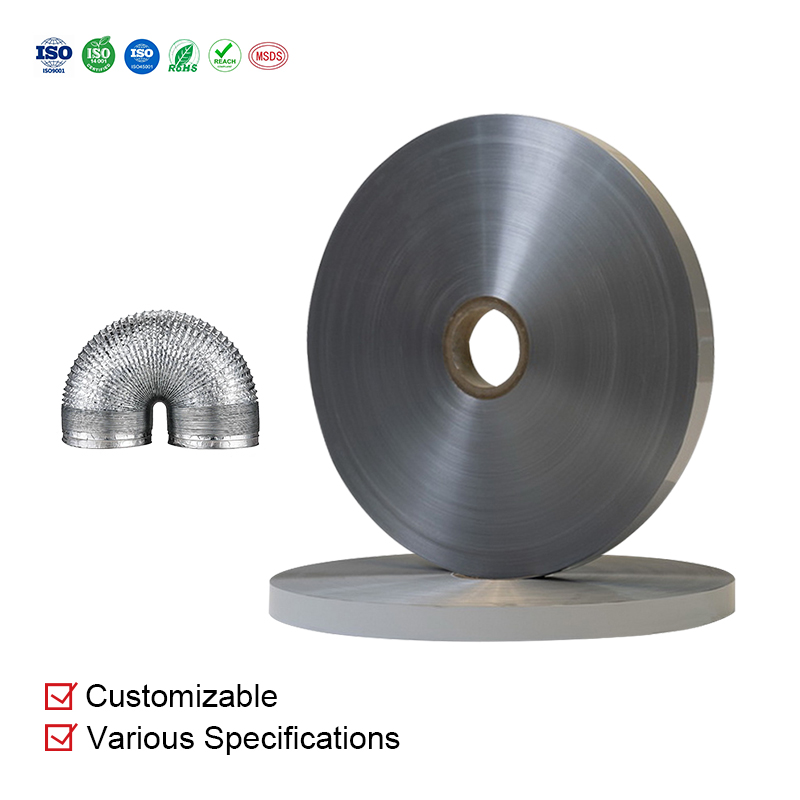
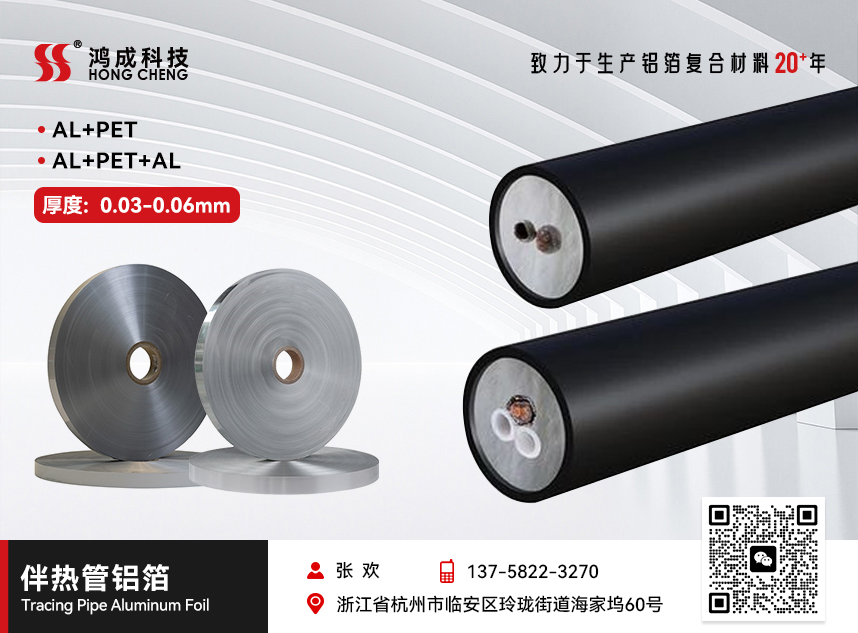
Hangzhou Hongcheng Technology Co., Ltd. supplies aluminum mylar tape, AL/PET shielding tape, and aluminum-polyester composite tape to manufacturers of coaxial, control, and data cables. Aluminum layers from 6μm–9μm, various PET specifications, and custom slit widths are available, with samples for line trials. Contact us for samples or technical discussion.
+86 13758223270 | Email: wendy@hcdxcl.com.cn
How Bag Converters Choose Materials for Container Moisture Barrier Liners: Three Routes and a Three-Step Method
Related Article