HVAC Retrofit Programs Are Reshaping Flexible Duct Demand: A Procurement Guide to Duct Facing Materials
Across the ventilation and HVAC supply chain, one shift has become increasingly visible in 2026: retrofit and renovation orders are taking a larger share of flexible duct production. In Europe, the Renovation Wave strategy and the recast Energy Performance of Buildings Directive have pushed member states to launch national programs for upgrading existing buildings, and heating, ventilation and air conditioning systems are usually among the first components to be replaced. In Asia, urban renewal and existing-building energy retrofit programs continue to advance, bringing a steady flow of ventilation system upgrades in commercial buildings, schools, hospitals and public facilities. For flexible duct manufacturers, this is not a short-term spike tied to a single market. It is a structural change in where orders come from, and it is likely to last for years.
Why does this matter at the material level? Because a retrofit project is not simply a new project installed in an old building. The working conditions on site, the installation process and the acceptance criteria are all different, and those differences travel down the supply chain until they land on the facing material that wraps every meter of flexible duct. Procurement teams that keep buying duct facing the same way they did for new-build programs may end up with more complaints, more rework and slower project acceptance.
The most obvious difference is space. In an existing building, the installer works in cramped ceiling voids, narrow risers and crowded plant rooms, often with other trades working only inches away. Flexible ducts must be bent repeatedly, routed around beams and cables, compressed into tight corners and then fixed in position. A facing material with weak interlayer bond will not survive this treatment. When the foil layer separates from the substrate after a few sharp bends, the reflective surface is damaged, the appearance of the finished duct suffers, and the thermal performance that the consultant specified may no longer be delivered. Tear resistance matters just as much: the outer skin of a flexible duct gets knocked, dragged and stretched during installation, and a film that splits easily will generate site complaints no matter how good the specification looks on paper.
Acceptance is the second difference. Most energy retrofit projects include some form of performance verification, and the ventilation system is part of it. The reflectivity of the facing, the integrity of the foil layer and the quality of the outer jacket all influence heat gain and heat loss along the duct run. Fire safety requirements apply to retrofit projects in the same way as to new buildings, so flame-retardant performance remains a baseline requirement rather than an optional extra. In practice, this means the facing material must be able to support the contractor's documentation: layer structure, foil gauge, flame-retardant grade and test data should be available from the supplier on request.
So how should a flexible duct manufacturer match facing materials to retrofit orders? Three material families cover most projects.
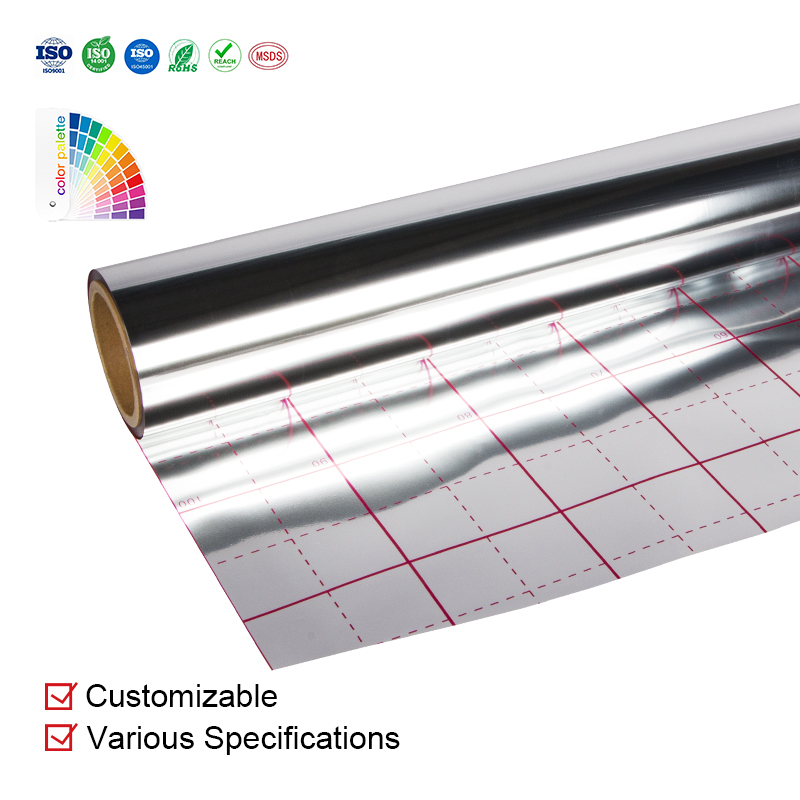
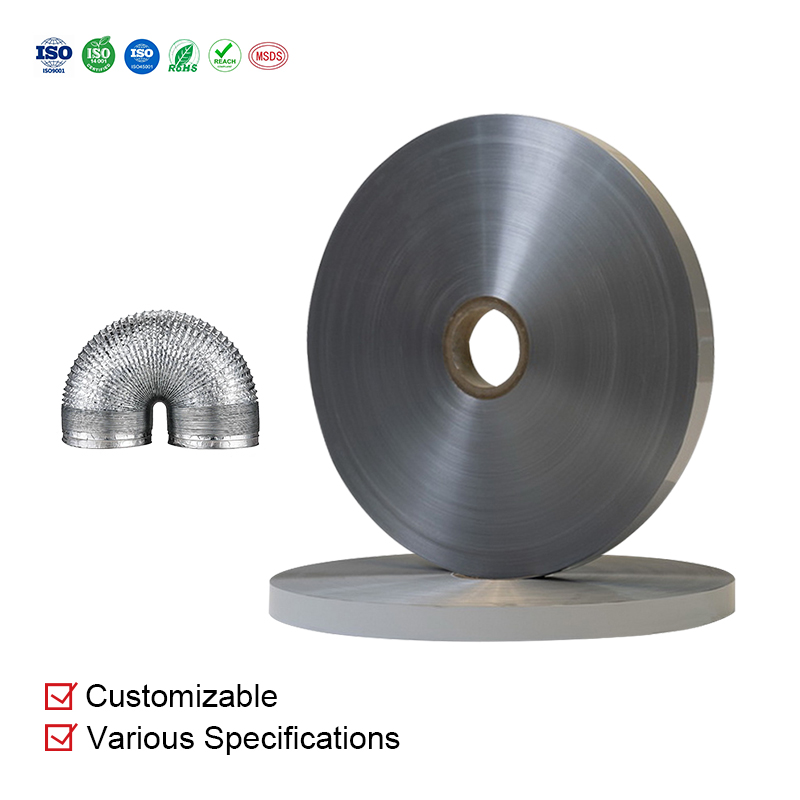
The first family is single-side and double-side aluminum foil laminate, in which aluminum foil is bonded to PE or PET film. This is the workhorse of the ventilation market and the default choice for standard commercial retrofit work. The foil gauge normally sits in the 6μm to 9μm range, and orders that need a heavier grade for better mechanical strength and a more robust reflective surface can specify the 9μm option. Double-side foil structures, with foil on both faces, are chosen when appearance and insulation performance carry more weight. The process is mature, supply is stable, and this family suits volume retrofit programs with conventional requirements.
The second family is AL/PE duct facing. Here the aluminum foil is laminated with a PE layer, and the result is a material with a good balance of toughness and moisture resistance. Because the PE layer takes part in the structure, the laminate resists repeated folding well, which is exactly what retrofit installation demands. It performs reliably in damp locations such as basement car parks and plant rooms, and its cost-effectiveness makes it a practical choice for competitive retrofit tenders.
The third family is VMPET metallized facing, in which aluminum is deposited on a PET substrate. It is light, uniform in appearance and cost-efficient, which suits large-volume orders where consistent looks and controlled cost matter more than the absolute performance of pure foil. One caution is worth repeating to every sales and procurement team: metallized film and pure aluminum foil are different materials, with different reflectivity and different performance profiles. Whatever material is written into the tender document is the material that must go into the product. Substituting one for the other, even with good intentions, creates risk at acceptance.
For procurement teams, three actions translate this market shift into daily practice. First, match the foil grade to the project tier: standard commercial retrofits work well with conventional 6μm to 9μm foil, while projects that require energy verification reports deserve a technical agreement that fixes foil gauge and reflectivity requirements in writing. Second, make bond strength a hard checkpoint: ask suppliers for peel strength data, keep samples by batch, and test the interface on arrival. A facing that delaminates easily should be rejected regardless of price. Third, clarify the grammage composition: two films both called aluminum foil laminate can differ widely in foil thickness, PET thickness and PE coating weight, and therefore in cost. Listing every layer specification on the quotation is the only way to compare prices on equal terms.
None of this requires exotic materials or new equipment. It requires recognizing that retrofit orders reward durability, bond quality and documentation, and aligning material selection accordingly. Manufacturers who treat the facing as a pure commodity will keep competing on price alone; those who treat it as a performance component will find it easier to win retrofit business and to defend their margins.
Hongcheng Technology, trading as Techfoil, has specialized in aluminum foil laminates and PE-coated composite materials for many years, supplying flexible duct manufacturers worldwide with single-side and double-side foil laminates, AL/PE duct facing and VMPET metallized facing, all available in custom widths, structures and roll lengths. Samples, technical data sheets and coating-weight calculations are available on request. If your retrofit order book is growing and you want a facing supplier who understands site conditions, talk to us.
Techfoil +86 13758223270、Email: wendy@hcdxcl.com.cn
Underfloor Heating Reflective Film: How Installers and Distributors Choose by Application Scenario
Material Selection Guide for Aluminum-Foil-Glass-Fiber Composite Shielding Tape in Heat-Tracing Applications