Double-Sided Foil Laminate: Five Purchasing Pitfalls Duct Manufacturers Should Avoid
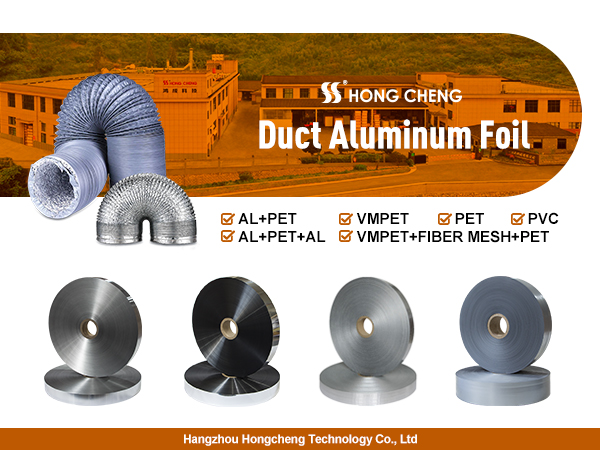
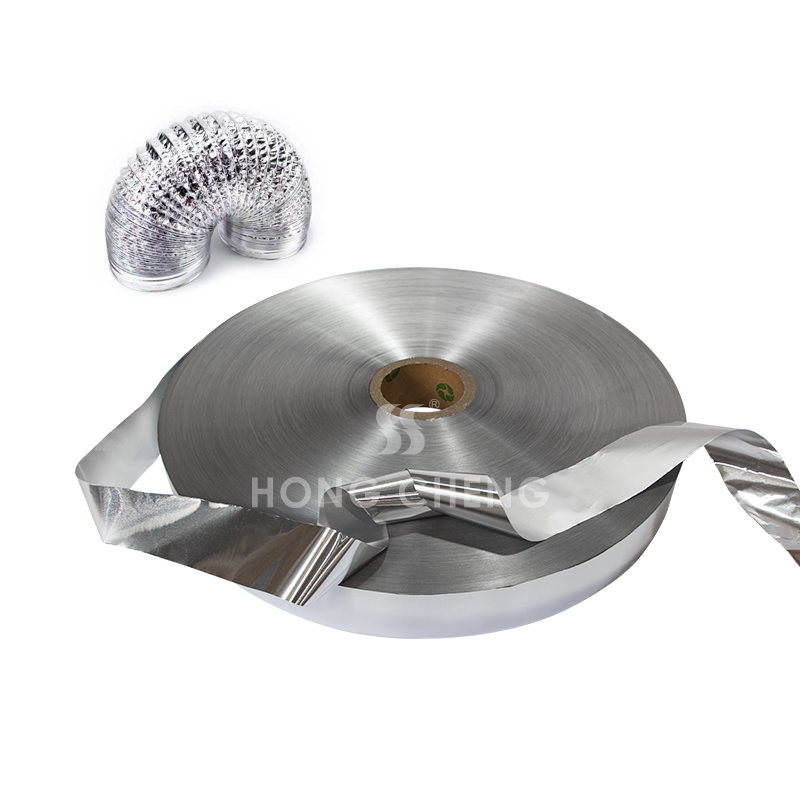
Double-sided foil laminate is a widely used facing material for flexible ducts. With aluminum surfaces on both sides, it wraps into a bright duct inside and out, with strong light-blocking, vapor-barrier and appearance advantages — which is why many duct converters reserve it for their mid-to-high-end product lines. But precisely because "both sides look like foil," purchasing is more easily fooled by vague specifications: two rolls may look identical on arrival, yet problems only show up on the machine or after installation. As a supplier of duct facing raw materials, we have summarized the five pitfalls our customers have encountered, as a checklist for buyers.
Pitfall 1: Not Specifying Both-Side Structures — "Double-Sided" Becomes "One Foil Side Plus One Metallized Side"
The common structure of double-sided foil laminate is foil/PE/foil, but there is also a foil/PE/metallized-PET (VMPET) combination. The latter costs less and is almost indistinguishable by appearance, yet the metallized surface offers noticeably worse fold endurance and barrier performance than a true foil surface. Some quotations simply say "double-sided foil laminate" and then supply one true foil side and one metallized side. In service, the metallized inner wall can develop pinhole-like flaking over time. The correct approach: state the material and gauge of each side in the contract (for example, "9μm foil / PE / 9μm foil"). On receipt, tear open the edge and check the cross-section — a metallized surface transmits light with a glossy sheen under a lamp, while true foil is opaque. One quick check settles it.
Pitfall 2: Writing Only "Conventional Foil" Without a Gauge Grade
Aluminum foil is supplied in conventional thicknesses of 6μm to 9μm, divided into light and heavy (9μm) grades. In a double-sided structure, foil is counted on both faces, so the cost difference between grades is even more significant than in single-sided products — and some quotations cut costs by running one or both faces at the light grade. Light-gauge foil tolerates fewer folds during winding; after repeated flexing, pinholes and see-through spots can appear. When purchasing, write three items into the contract together: the gauge grade of each face, each face's thickness, and total thickness. On arrival, take three micrometer readings and verify both sides separately.
Pitfall 3: Judging Only by Surface Gloss, Ignoring the PE Layer and Seal Performance
Double-sided laminate relies on the middle PE layer for heat-sealing the spiral overlap. Insufficient or uneven PE coating shows up as seam openings at high line speed and inconsistent seal strength; an overly thick PE layer makes the whole film too soft to wind crisply. Do not inspect by gloss alone — run a trial winding pass at your actual line speed and seam temperature, and measure the peel strength at the overlap. Data from a trial beats any sample report. Before changing equipment or line speed, always trial-seal one roll first; never go straight to full production.
Pitfall 4: Overlooking Slitting Specifications and Edge Quality
Double-sided foil laminate is mostly used on spiral-wrapping lines, which are more sensitive to width tolerance and slit-edge quality than over-wrapping lines. Burr edges scratch the film surface or cause web breaks during winding; excessive width variation makes the overlap alternately too wide and too narrow, destabilizing the seal. When ordering, state the application (wrapping/over-wrapping), slit width and tolerance (generally within ±0.5mm), and core size, and require burr-free edges and consistent roll tightness on every roll. Spot-check a few rolls for edge condition on receipt.
Pitfall 5: Inspecting Only the First Roll, Not Batch-to-Batch Consistency
A double-sided structure involves one more lamination step than single-sided, and therefore one more source of batch variation — one batch may have true foil on both faces while the next quietly swaps one face to metallized film, which is not always visible to the eye. Agree on a sealed-reference-sample system with your supplier: keep a sample from every batch; when a new batch arrives, compare it against the reference for light transmission, thickness and a short trial winding. If the variation is obvious, communicate before releasing the batch to the line. Consistent batches matter more than one excellent roll.
Final Word
Purchasing double-sided foil laminate is, in essence, locking five variables — both-side structure, foil gauge grade, seal performance, slitting specifications and batch consistency — into your contract and inspection routine. Once those variables are locked, the three selling points of the finished duct — light blocking, vapor barrier and appearance — will hold.
One more reminder: a complete inquiry eliminates half the pitfalls. A qualified inquiry states at least four things — duct diameter range and forming method, both-side structure and foil grades, slit width and core size, and sealing method with line speed. Many disputes trace back to an inquiry that said only "we need double-sided foil laminate," leaving the supplier no choice but to ship a general-purpose spec that failed to match the line.
For duct converters, rather than saving a few cents per roll, focus your energy on two things: finding a source factory that delivers consistent batches, and turning incoming inspection into a fixed routine. The facing is a small share of duct cost, but when it fails, it drags down the appearance grade of the whole batch and the customer's acceptance. Writing specifications clearly and inspecting rigorously is the way that actually saves money.
Hangzhou Hongcheng Technology (Techfoil) specializes in double-sided foil laminate, AL/PE duct facing, VMPET metallized duct facing and other aluminum foil laminates for flexible ducts, with customization of width, structure and foil gauge. As a raw material supplier, we do not manufacture finished ducts, but we are glad to work with duct converters to define specifications precisely and keep batches stable.
Ocean Freight Moisture Damage Is Pushing Export Shippers Toward Container Barrier Liner Bags
Coaxial Cable Mylar Tape: Five Purchasing Pitfalls Cable Makers Should Avoid