HVAC Export Growth: How Flexible Duct Manufacturers Should Choose Duct Facing
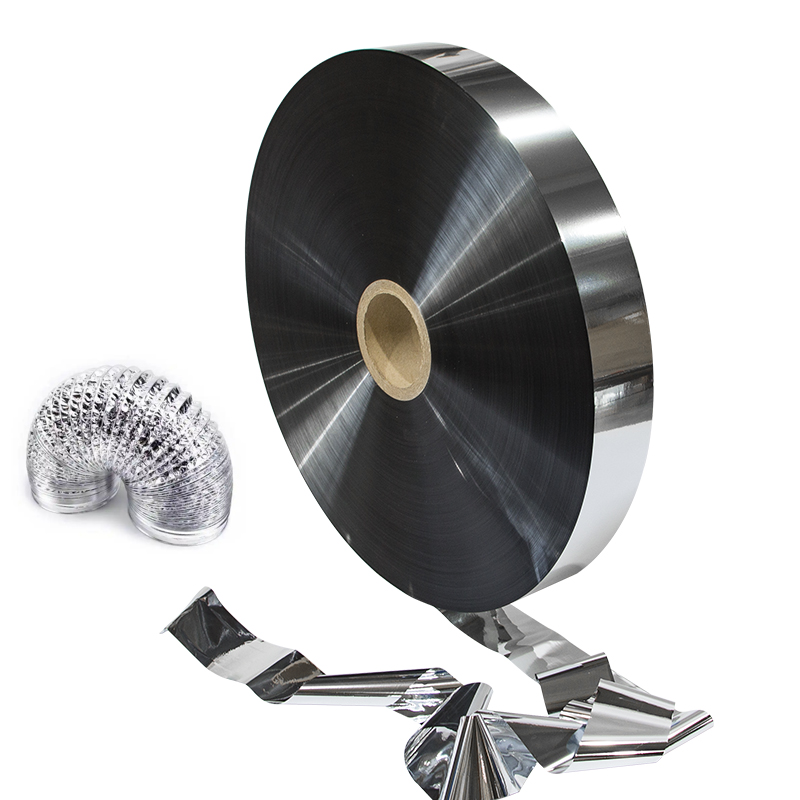
Over the past few years, Chinese-made HVAC equipment — air handling units, fan coil terminals, ventilation heaters and dehumidifiers — has been shipped overseas in growing volumes. Along with the machines come the flexible ducts that connect them. For flexible duct manufacturers, this is more than an increase in order volume: it changes how duct facing materials should be selected, documented and verified.
1. What export orders actually change
For domestic loose-piece ducts, buyers mostly compare price and hand feel, and a slightly inconsistent roll can still ship. With machine-matched ducts, the situation is different. The ducts are packed and accepted together with the HVAC unit, so batch-to-batch consistency of the duct facing — grammage, shade, flatness — must stay within a narrow band. If one batch drifts, the consequence is not a few replacement ducts but rework of an entire shipment. The price-first purchasing logic that works for loose orders does not survive in OEM matched supply. Documentation and traceability become part of the product.
2. What overseas buyers look at
Acceptance checklists on export orders are longer than domestic ones. Three items come up repeatedly. First, flame retardancy: the laminate used as duct facing should come with clear, testable flame-retardant data for the composite layer, not just a verbal claim. Second, odor and VOC: machines are demonstrated in closed showrooms or model rooms with the fan running; if the duct facing releases odor, the whole acceptance is at risk. Whether the PE layer is made from virgin resin or recycled material is often the source of the difference. Third, paperwork: MSDS, composition declarations and batch traceability documents need to travel with the goods. None of these three can be patched together at the inspection stage; they all have to be arranged from material selection and ordering onward.
3. Division of labor among the main duct facing materials
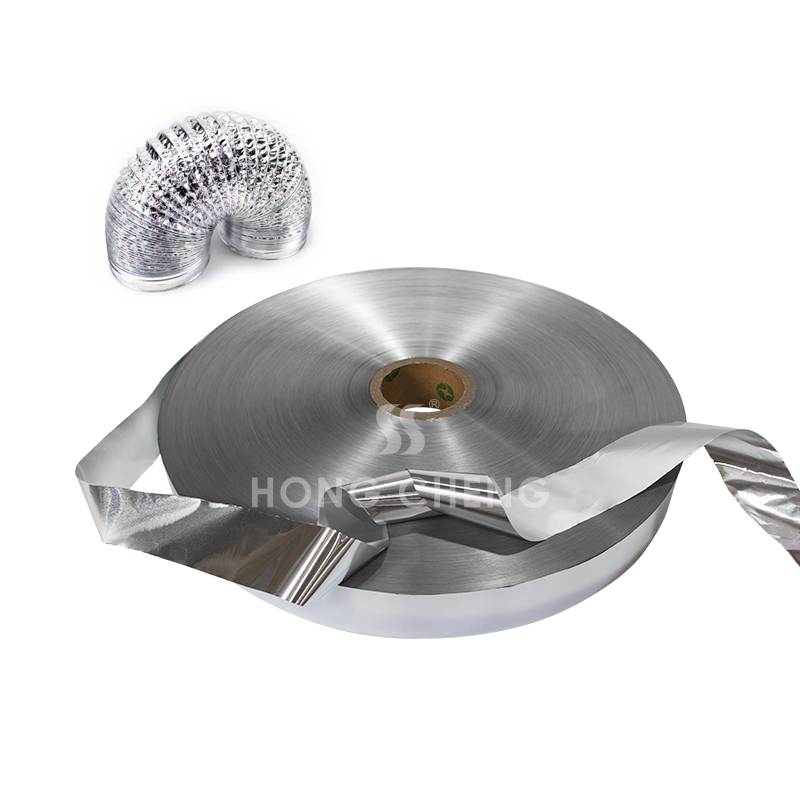
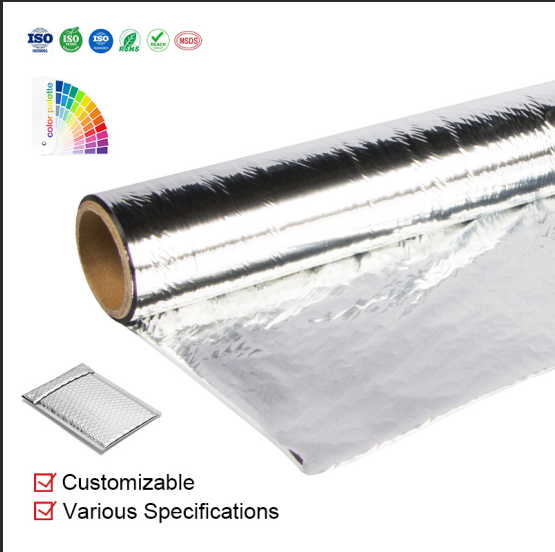
In practice, duct manufacturers work with two main material routes. One is AL/PE duct facing: the PE layer is heat-sealable, which suits spiral winding lines with heavy sealing workloads, and its cost structure is the most mature of the three. The other is VMPET metallized duct facing: lighter weight, with good surface stiffness and gloss and stable barrier performance, suitable for machines where weight and appearance matter. A third option is single-side or double-side aluminum foil laminate; the double-side structure gives two working surfaces and fits applications with heavy on-site secondary processing. These are not substitutes but complements — the choice follows the machine model and the production line.
4. Three practical points for export supply
First, set the thickness by duty. The regular supply range is 6μm–9μm; for main duct runs, negative-pressure sections and areas needing secondary processing, the heavy grade at 9μm is the safer choice, while short branches and ordinary return-air runs can stay on the regular grade. Adding thickness everywhere only raises cost without matching benefit. Second, match roll widths to duct diameters. Export machine models often use duct diameters different from domestic ones; send the slitting width list to the material supplier before ordering to cut edge waste. Third, move paperwork forward: flame-retardant data, MSDS and batch-consistency commitments should be fixed in writing at the sampling stage.
5. Three suggestions for duct manufacturers
One, put the machine model, installation position and target market into the inquiry so the supplier can recommend a structure by working condition instead of guessing. Two, write the key indicators — aluminum layer thickness, peel strength, width tolerance — into the contract so incoming inspection has a basis. Three, run a small pilot batch through the forming and sealing process first; scale up only after the window is confirmed stable.
6. A checklist for the sampling stage
When comparing duct facing samples, ask for: layer-by-layer grammage breakdown; aluminum layer thickness measured, not declared; 180° peel strength results; width tolerance; and a commitment on batch consistency with retained samples. Five minutes with this list at the sampling stage saves weeks of dispute after shipment.
6. Incoming inspection for matched duct orders
Inspection logic also differs from loose-piece orders. Verify aluminum layer thickness by grammage calculation plus micrometer spot checks rather than accepting declared values. Check bond strength on every batch with a hand-tear test, and put peel strength figures into the contract. Inspect the film surface under a lamp for wrinkles, scratches and stains, and check the slit edges for burrs. Retain samples from every batch and compare them against the approved sample — batch-to-batch consistency then becomes visible at a glance. For loose orders these checks are nice to have; for matched orders they are the difference between shipping and reworking.
7. Why the trend is structural, not temporary
Export growth in HVAC equipment is driven by long-term factors: overseas renovation programs, new construction in emerging markets, and buyers diversifying supply sources. As long as machines keep shipping, machine-matched flexible ducts keep shipping with them, and the material standard for duct facing rises with each new customer audit. Duct manufacturers that build a documented, repeatable material selection process now will find OEM orders easier to win — and easier to keep.
8. Closing
The shift from selling loose ducts to supplying machine-matched ducts rewards manufacturers who treat duct facing as an engineering choice rather than a commodity purchase. Build the process now, and every future customer audit becomes a formality instead of a fire drill. Hongcheng Technology is a duct facing raw material supplier, offering AL/PE duct facing, VMPET metallized duct facing and single-/double-side aluminum foil laminates with custom widths and structures for HVAC flexible duct production. We support sampling, documentation and batch-consistency programs for OEM export supply. Contact us to discuss a structure matched to your machine model and target market.
+86 13758223270, Email: wendy@hcdxcl.com.cn Techfoil
How to Choose Aluminum Laminate Film for Picnic Mats and Outdoor Ground Mats
Four Lives of a Sheet of Aluminium Foil: How Extrusion-Coated Laminates Solve Shielding, Airflow, Insulation and Barrier Problems at Once