Duct Manufacturer's Guide: Choosing Single-Sided or Double-Sided Foil Facing by Application
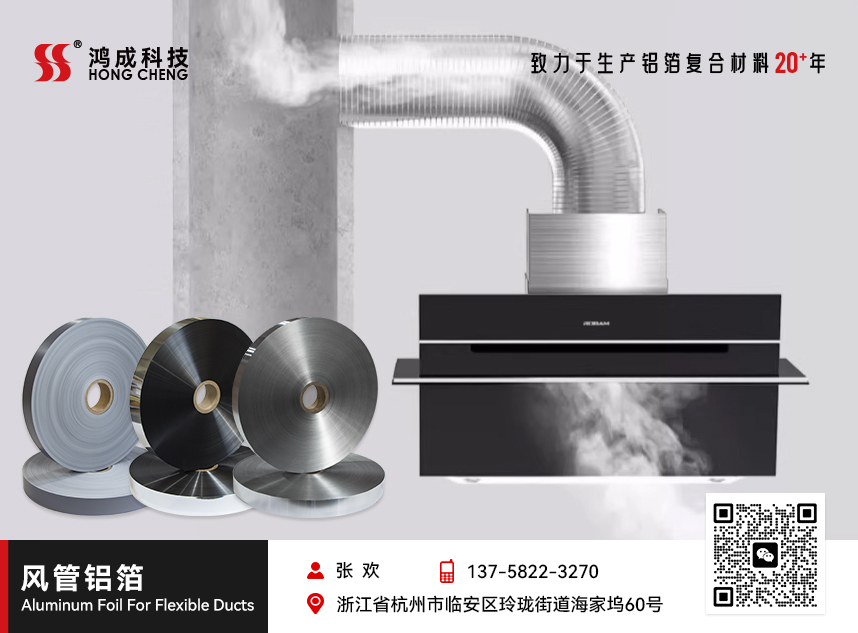
The same steel-wire flexible duct may end up in a central air-conditioning system, a fresh-air ventilation line, a kitchen exhaust hood, or a cooling airflow inside an equipment cabinet—four completely different working conditions. For flexible duct and air duct manufacturers, whether the outer foil facing is chosen correctly often decides if a batch ships smoothly or comes back weeks later with darkened, delaminated foil and a customer complaint. The two most common jacket materials for flexible ducts are single-sided foil facing and double-sided foil facing. What is the right logic for choosing between them? In this article, we break it down by the four most common application scenarios, one by one.
First, Understand the Two Structures
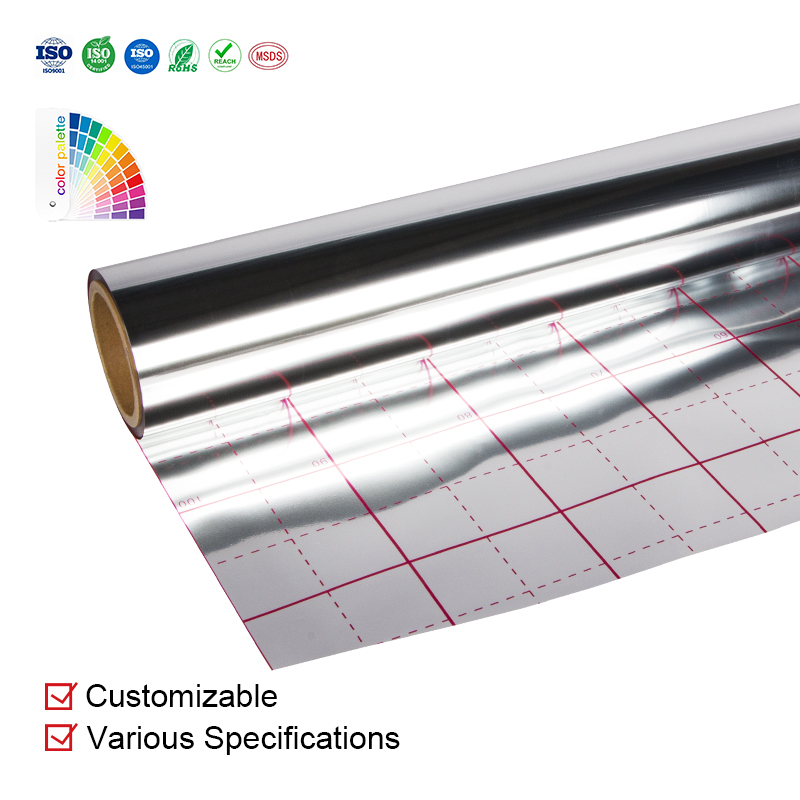
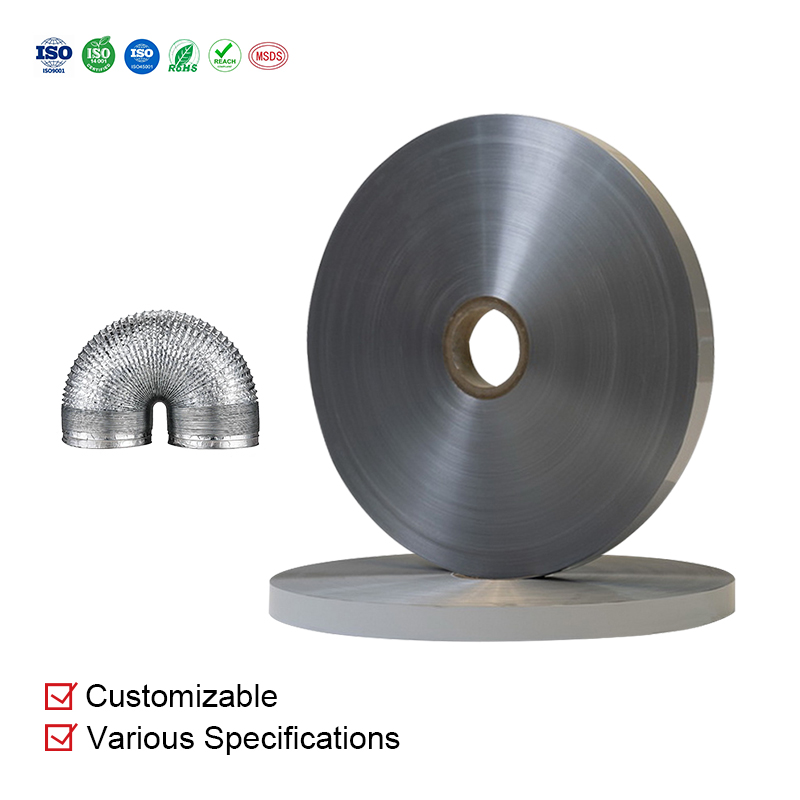
Single-sided foil facing: one layer of aluminum foil (typically 6μm to 9μm) laminated with a PE or PET layer. One side is a metallic surface, the other a resin surface. The foil side handles reflection and moisture barrier; the resin side provides flexibility and bondability. With moderate cost, it is the workhorse material for flexible duct jackets.
Double-sided foil facing: an aluminum/PE/aluminum sandwich structure with metallic surfaces on both sides. It offers more balanced moisture barrier and heat resistance, a stronger metallic appearance—and a higher price.
Neither structure is inherently better. The key question is: where will the duct be used? Let's match structures to scenarios.
Scenario 1: Central Air-Conditioning Supply and Return Air Ducts
Working conditions: normal temperature, long duct runs, many bends, tight installation spaces.
In this scenario, flexibility and conformability matter more than anything else. Ducts are bent and stretched repeatedly during installation, and the jacket material must follow the skeleton without cracking or creasing. Normal supply and return air poses no demanding thermal load, so standard-gauge aluminum foil (6μm-9μm) is fully sufficient for vapor barrier purposes, with the PE layer providing adequate bond strength. Specifying heavier foil or a double-sided structure here is performance overkill—it simply drives up cost without adding value.
Recommendation: single-sided aluminum/PE (AL/PE) foil laminate, with grammage and width matched to the duct diameter.
Scenario 2: Fresh-Air and Ventilation Exhaust Systems
Working conditions: continuous long-hour operation, large humidity fluctuations inside the duct, and condensation forming on duct walls when temperature swings between day and night.
The keyword for this scenario is "moisture resistance." Here, the integrity of the aluminum layer and the peel strength matter more than raw thickness. Film with excessive pinholes or weak lamination will darken and lose its aluminum surface quickly once condensate penetrates the layers. In normally humid environments, a single-sided AL/PE laminate with a heavier PE layer is adequate. For high-humidity regions or duct sections with high condensation risk, upgrade directly to double-sided foil facing: two metallic layers blocking moisture simultaneously raise reliability by a clear margin.
Recommendation: single-sided AL/PE laminate with heavier PE coating; double-sided foil facing for high-humidity conditions.
Scenario 3: Kitchen Exhaust and High-Temperature Air Removal
Working conditions: elevated temperatures, grease and oil vapor adhesion, frequent cleaning and wiping.
This is the most demanding of the four scenarios, where heat resistance and oil resistance are hard requirements. We recommend foil at the thicker end of the standard range (9μm) and a PET laminating layer—PET offers clearly better heat resistance and dimensional stability than PE, staying firm and undeformed at elevated temperatures. Where customers care about appearance on both the inner and outer surfaces, or the grease load is heavy, go straight to double-sided foil facing. The most common cause of rework in this scenario is using a thin-gauge standard single-sided PE laminate on an exhaust line: within a short time the surface blackens, the aluminum dulls and flakes, layers separate, and the whole batch of ducts is recalled.
Recommendation: thick-gauge (9μm foil) single-sided aluminum/PET (AL/PET) laminate; double-sided foil facing for heavy grease duty.
Scenario 4: Cooling Exhaust for Equipment Cabinets and Industrial Machinery
Working conditions: compact installation spaces, frequent bending and vibration, and—on some projects—customer requirements for equipment appearance.
This scenario tests flex-fatigue resistance and peel strength. Cabinet ducting is routed tightly and the jacket material is stressed repeatedly; insufficient peel strength shows up as interlayer wrinkling. Single-sided AL/PET laminate, with its good fold endurance and dimensional stability, suits high-frequency bending duty. If the customer values the look of the equipment inside and out, or the cabinet contains precision electronics and the buyer wants the jacket to contribute some added EMI shielding value, double-sided foil facing is the safer choice.
Recommendation: single-sided AL/PET laminate; double-sided foil facing where appearance and added shielding value matter.
One Table for All Four Scenarios
| Application | Recommended structure | Foil thickness | Laminating layer | Key indicators |
|---|---|---|---|---|
| HVAC supply/return air | Single-sided AL/PE laminate | 6μm-9μm | PE | Bond strength, flexibility |
| Fresh-air/exhaust ventilation | Single-sided AL/PE (double-sided for humidity) | 6μm-9μm | PE | Pinhole rate, peel strength |
| Kitchen exhaust/high-temp air | Double-sided foil or thick-gauge single-sided AL/PET | 9μm | PET | Heat resistance, oil resistance |
| Cabinet cooling exhaust | Single-sided AL/PET or double-sided foil | 6μm-9μm | PET | Flex fatigue, peel strength |
Three Selection Mistakes That Cost Money
Mistake one: one specification sheet for every duct. Some factories run all their products on a single jacket material. It works fine for normal supply air—until the same film goes onto a grease-laden exhaust line or a high-humidity system. Different scenarios have different conditions; the laminate structure should change with them.
Mistake two: assuming double-sided is always better. Double-sided foil facing costs considerably more, and using it on ordinary supply and return ducts is waste. Conversely, saving cost with a thin single-sided PE laminate on a high-temperature exhaust line leads to recall losses far exceeding the material price difference. Select by working condition, not by "grade."
Mistake three: asking about foil thickness but not bond strength. During duct winding and lamination, the film is stressed repeatedly. If peel strength is insufficient, even thick foil will delaminate and wrinkle. Write the peel strength value and its test method directly into the purchase contract.
Three Tips for Purchasing Teams
First, report the working conditions clearly—medium temperature, humidity, bending radius, presence of oil vapor—and let the supplier propose a specification for the condition, instead of guessing from a model list. Second, request samples whenever switching specifications, and run a trial on your machine to confirm bonding and web stability before committing to volume. Third, retain samples from each batch and compare color, thickness, and hand feel; flag any drift immediately, before the material is already installed on the duct.
Final Words
As a specialized manufacturer of foil laminates, Hangzhou Hongcheng Technology supplies flexible duct and air duct factories with single-sided AL/PE laminates, single-sided AL/PET laminates, and double-sided foil facing, all produced to order. Foil thickness from 6μm to 9μm, widths and grammage can be custom-slit to match your duct diameters and production process, and peel strength and pinhole-rate data are provided with each shipment. Sample rolls for machine trials are supported.
Purchasing colleagues at duct factories are welcome to contact us with your application scenario and working conditions. We will propose a matched jacket material specification for your products.
+86 13758223270、Email: wendy@hcdxcl.com.cn
AL/PE Heat-Seal Laminate vs Metallized Film — Selection Essentials
How to Buy Heating Cable AL/PE Shield Film Without Getting Burned
Related Article