Export Peak Season: How to Choose Woven Foil Laminate for Equipment Packaging
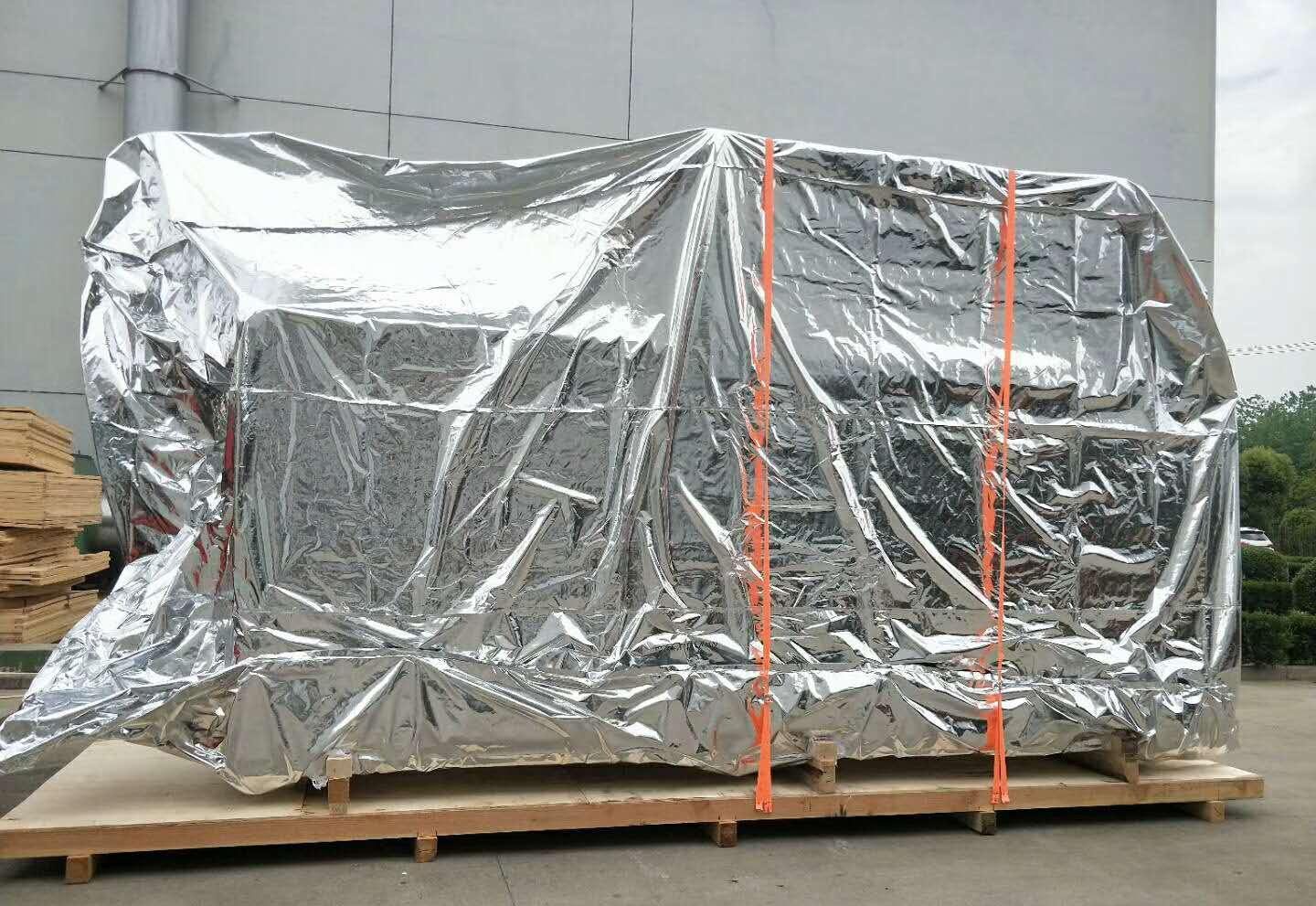
The First Line of Defense: Moisture Barrier in Peak Shipping Season
From August to October each year, China's equipment manufacturing sector enters its peak export season. CNC machines, injection molding equipment, photovoltaic modules, power transformers—equipment ranging from tens of thousands to over a million RMB per unit—must endure twenty to forty-five days of ocean transit after being crated and stuffed into containers. Container interiors can exceed 60°C under direct sunlight during the day and drop to around 25°C at night. This diurnal temperature swing generates "container rain"—condensation that forms on the ceiling and walls, seeping through crate gaps into the interior. Without a qualified moisture barrier liner, equipment arriving at the destination port may suffer rust, mildew, or circuit board failure—losses far exceeding the cost of packaging materials.
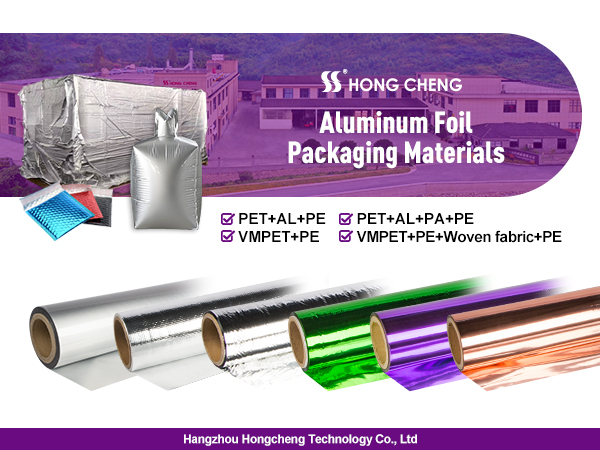
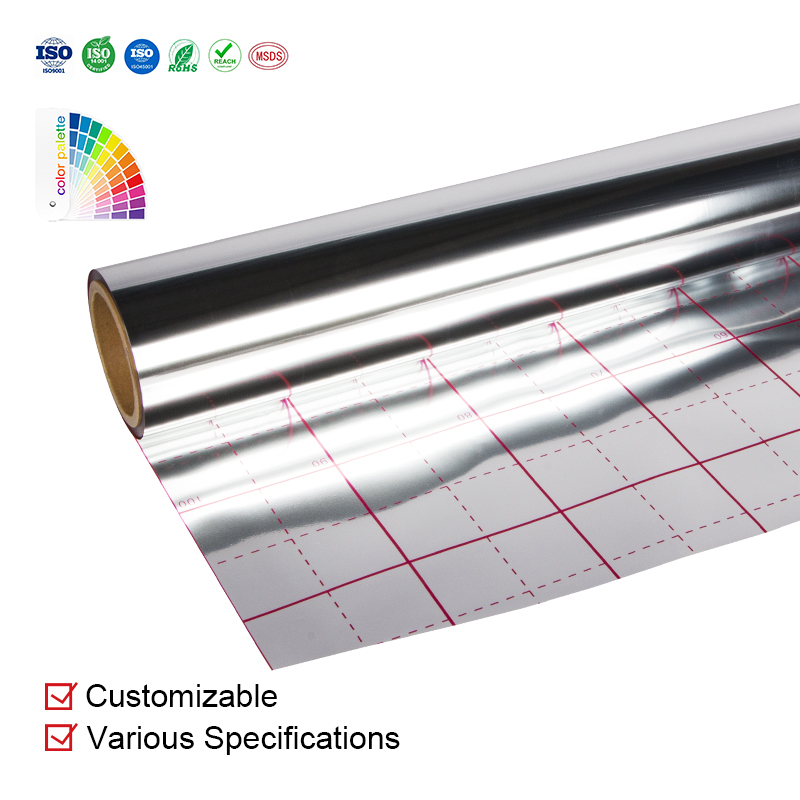
Woven foil laminate—manufactured by extrusion-laminating aluminum foil or metallized film (VMPET) with PP/PE woven fabric—is the core moisture barrier material in current equipment export packaging. It combines the high barrier properties of aluminum foil/VMPET (water vapor transmission rate WVTR ≤ 0.5 g/m²·24h) with the high tensile strength of woven fabric (machine direction ≥ 1500N/50mm), simultaneously blocking moisture penetration and withstanding corner compression and transport vibration friction.
But in actual procurement, many export packaging managers and freight forwarders face a common confusion: products all labeled "woven foil laminate" range from a dozen to over thirty RMB per kilogram, with varying thicknesses, structures, and weave densities. How should one choose? This article provides a practical selection methodology based on real-world export peak season scenarios.
Selection by Transport Mode and Equipment Type
Scenario 1: Ocean Freight — Heavy Equipment (20-45 Day Transit)
Typical Equipment: CNC machines (5-20 tons), injection molding machines (3-15 tons), power transformers, large pumps and valves.
Key Considerations: Long transit time, extreme temperature/humidity fluctuations, severe container condensation. The liner film must deliver both high barrier performance and high mechanical strength.
| Parameter | Recommended Spec | Rationale |
|---|---|---|
| Total Thickness | 120-150μm | Long sea transit requires sufficient aluminum layer to maintain barrier performance |
| Structure | VMPET/Woven Fabric/PE (3-layer) | VMPET for moisture barrier + woven fabric for strength + PE for heat-sealing into bags |
| Weave Density | 10×10 threads/inch | Heavy equipment has sharp corners; insufficient density risks puncture |
| Aluminum Layer Square Resistance | ≤2.0Ω/□ | Core barrier metric; lower resistance = better moisture blocking |
| Width | 1200-1500mm | Matches standard crate interior dimensions, minimizes seam joints |
| Heat Seal Strength | ≥15N/15mm | Vacuum-sealed bags require strong seals that won't delaminate |
Common Pitfall: Many procurement staff only look at total thickness without examining individual layer structures. Two products both labeled "150μm" may have vastly different compositions: "VMPET 12μm + woven fabric 100μm + PE 38μm" versus "VMPET 6μm + woven fabric 120μm + PE 24μm"—the barrier performance difference can be 3-5x. Thinner metallized layers carry higher pinhole risk, causing moisture barrier performance to plummet.
Scenario 2: Land Export — Precision Equipment (3-7 Day Transit)
Typical Equipment: Medical imaging systems, semiconductor inspection instruments, precision optical devices, industrial robots.
Key Considerations: Short transit but extremely high equipment value. Shock absorption and electrostatic shielding often matter more than pure moisture protection. The liner must balance barrier, cushioning, and ESD shielding.
| Parameter | Recommended Spec | Rationale |
|---|---|---|
| Total Thickness | 80-100μm | Short transit does not require excessive thickness; control cost |
| Structure | AL/PET/Woven Fabric/PE (4-layer) | Pure aluminum foil provides dual ESD shielding + moisture barrier |
| Weave Density | 8×8 threads/inch | Precision equipment has fewer sharp corners; medium density suffices |
| Aluminum Layer Square Resistance | ≤1.5Ω/□ | Pure aluminum foil has lower resistance than VMPET, superior ESD performance |
| Surface Resistivity | ≤10⁹Ω | ESD protection grade for electronic components |
| Width | 1000-1200mm | Matches medium-sized crates or plywood cases |
Scenario 3: VMI Inventory Mode — Volume Shipments (High Frequency, Small Batches)
Typical Products: PV modules, small motors, valves and fittings, standardized parts for export.
Key Considerations: Under Vendor-Managed Inventory (VMI) mode, packaging materials require high-volume standardized procurement with extreme consistency and supply stability demands. The liner's primary function is moisture and dust protection; mechanical strength requirements are moderate.
| Parameter | Recommended Spec | Rationale |
|---|---|---|
| Total Thickness | 60-80μm | Control packaging cost for standardized products |
| Structure | VMPET/Woven Fabric (2-layer) | Eliminates PE heat-seal layer; direct lamination wrapping is sufficient |
| Weave Density | 6×6 to 8×8 threads/inch | Standard parts have no sharp corners; standard density suffices |
| Width | 1000mm | Standard width for easy slitting and automated packaging |
| Supply Stability | Monthly capacity ≥ 200 tons | Ensures continuous supply during peak season without stockouts |
Three Major Procurement Pitfalls
Pitfall 1: Comparing Unit Price Without Comparing Gram Weight
Many buyers simply choose the lowest of three quotes, overlooking gram weight (g/m²) differences. Two products both quoted as "150μm woven foil laminate" may have actual weights of 140 g/m² (Supplier A) versus 165 g/m² (Supplier B)—an 18% difference in material usage that directly impacts moisture barrier effectiveness and mechanical strength. The correct approach: request gram weight test reports and compare on a "price per square meter" basis rather than "price per kilogram."
Pitfall 2: Confusing Pure Aluminum Foil with Metallized Film
Pure aluminum foil (AL) is produced through a rolling process, typically 7-9μm thick, dense and pinhole-free with excellent barrier properties but higher cost. Metallized film (VMPET) is produced by vacuum-depositing an aluminum layer onto PET film, with aluminum thickness of only 30-50nm (approximately 0.03-0.05μm)—far less expensive but with barrier performance below that of pure foil. During peak season rush, some suppliers blur the distinction between "aluminum foil" and "metallized" on quotations. Procurement must clarify: for heavy equipment on long ocean routes, VMPET/woven fabric/PE 3-layer structure offers the best cost-performance ratio; for precision electronic equipment, AL/PET/woven fabric/PE 4-layer structure provides dual ESD and moisture protection.
Pitfall 3: Overlooking Woven Fabric Base Weight
The woven fabric is the "skeleton" of the laminate. Its gram weight (typically 60-150 g/m²) directly determines tensile and puncture resistance. Some suppliers use low-weight woven fabric (60 g/m²) paired with a thick aluminum layer to "pad" total thickness—the data sheet looks comparable, but the material tears easily during handling. Verification method: request woven fabric layer weight test data. For heavy equipment packaging, base weight should be ≥ 100 g/m²; for medium equipment, ≥ 80 g/m².
Peak Season Procurement Verification Checklist
During the export peak rush, inspection time and resources are limited. The following six items are mandatory upon delivery:
- WVTR (Water Vapor Transmission Rate): Third-party tested, ≤ 0.5 g/m²·24h for acceptance
- Tensile Strength: MD ≥ 1500N/50mm, TD ≥ 1200N/50mm
- Heat Seal Strength: ≥ 12N/15mm (for heat-sealed bag applications)
- Gram Weight Consistency: Within-batch deviation ≤ ±5%
- Width Tolerance: ≤ ±5mm; excessive gaps compromise crate coverage
- Aluminum Layer Adhesion: Tape peel test—aluminum layer must not delaminate
Technology Upgrade Trends
Two notable trends have emerged in the 2026 export peak season. First, European buyers increasingly require halogen-free certification (halogen content < 50 ppm) for packaging materials. Traditional halogenated flame retardants are being replaced by magnesium hydroxide and aluminum hydroxide alternatives. Second, Southeast Asian and Middle Eastern markets show growing demand for "recyclable labeling," driving interest in mono-material structures (such as all-PE metallized film). However, barrier performance of mono-material structures currently still falls short of woven foil laminates, meaning the latter will remain the primary material for equipment export packaging in the near term.
Conclusion
Moisture protection during peak export season is not simply "wrapping an extra layer of film." It is a systematic engineering challenge involving barrier material selection, mechanical strength matching, and maritime condition anticipation. Hongcheng Technology has specialized in aluminum foil composite materials for over a decade. Our woven foil laminate and VMPET woven fabric products are widely used in vacuum packaging for equipment export, wooden crate moisture barrier lining, and related applications. We offer customized structures, thicknesses, and widths with stable monthly production capacity to meet high-volume peak season demand.
+86 13758223270 Email: wendy@hcdxcl.com.cn
800V EVs Hitting a Wall? The Real Problem Is a $2 Shielding Tape
Summer Renovation Season Sourcing Guide: How to Choose Building-Grade Aluminum Foil Tape Facing Substrate
Related Article