FIBC Liner Film Purchasing: 5 Traps Every Bulk Bag Maker Should Avoid
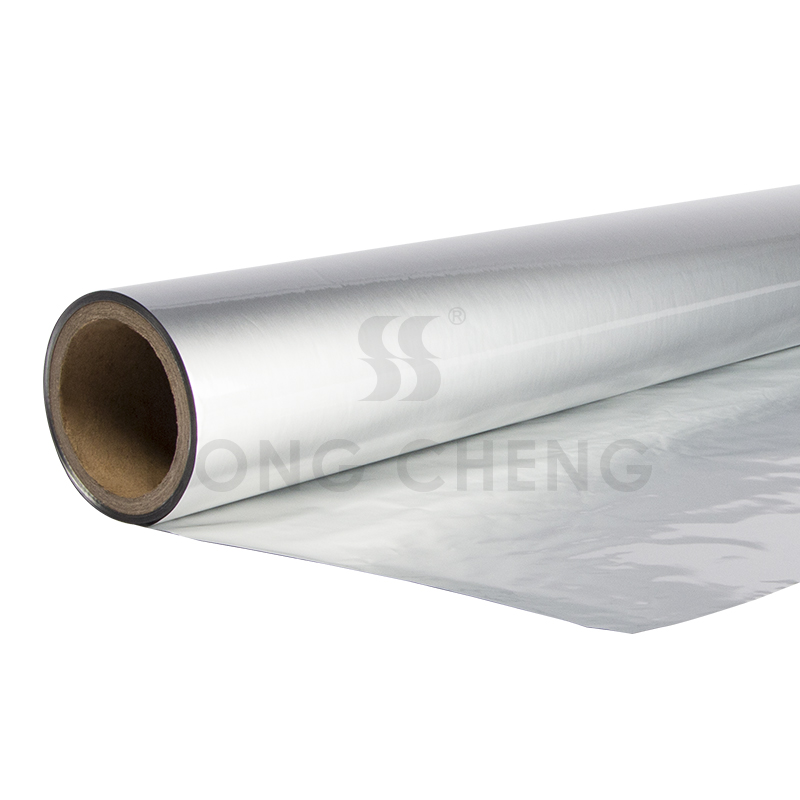
FIBC liner film is a low-cost component, but when it fails, the consequences are expensive: caked powder, moisture-damaged cargo, insurance claims, and lost customers. Reviewing real cases, most failures are not caused by bad material itself — they happen at the purchasing stage. Here are five traps that bulk bag manufacturers fall into most often. Check your own purchasing process against each one.
Trap 1: Specifying Only Total Thickness, Not Layer Structure
This is the most common mistake. An inquiry that simply reads "0.10mm aluminum-plastic film" gives the supplier free room to maneuver: the PET layer can run thicker or thinner, the aluminum layer can be pure foil or metallized film, and the PE layer can be virgin resin or blended with recycled material. All of these combinations can hit the same total thickness, yet the quotes differ significantly — and so does performance. By the time cargo arrives damp halfway across the ocean, it is too late to assign responsibility.
The correct approach is to specify each layer in the inquiry and the contract, for example PET / AL 9μm (thick grade, within the common 6μm-9μm foil supply range) / PE 60μm, along with material requirements for each layer. The clearer the layer breakdown, the more comparable the quotes and the stronger your position if a dispute arises.
Trap 2: Metallized Film Passed Off as Pure Aluminum Foil
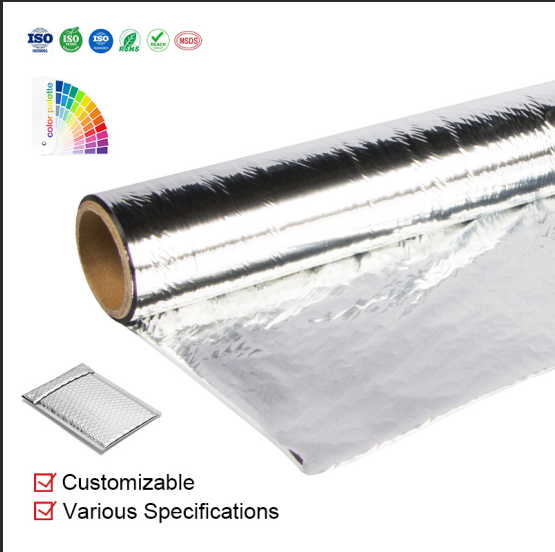
VMPET metallized film looks deceptively similar to pure aluminum foil laminate. Without training, most buyers cannot tell them apart, yet their barrier performance is not in the same league. For moisture-sensitive chemicals and food ingredients, using the wrong material can shorten the protection window from months to weeks.
The test is simple: measure surface resistance with a multimeter. Pure aluminum foil conducts well and shows very low resistance, while metallized film reads significantly higher. Write "aluminum layer is pure foil" into the contract and spot-check on arrival — both steps together close this loophole. For high-barrier applications, also request water vapor transmission rate (WVTR) data from the supplier.
Trap 3: Heat-Seal Layer Not Matched to Your Filling Process
Most FIBC liners are made into bags, fitted into the bulk bag on site, and sealed after filling. If the PE layer's heat-seal window does not match your sealing equipment's temperature, pressure, and dwell time, you get weak or incomplete seals — invisible at first inspection, but opening up after the filled bags are stacked on pallets, wrapped, and shipped across rough roads and long sea passages. The liner may even pass your incoming check and still fail in the container.
Before placing the order, provide your sealing equipment type and parameters to the supplier, ask them to adjust the PE grade and thickness accordingly, and run a heat-seal trial under your actual process conditions, not the supplier's lab conditions. This small step takes little time and prevents batches of downstream seal failures.
Trap 4: Roll Width Not Matched to Bag Dimensions
Bulk bags come in many sizes, and the liner tubing width must follow the bag dimensions. Buy too wide and you waste material in trimming and pay extra labor; buy too narrow and the liner will not fit the bag or the gusset falls short — unusable either way.
Provide the bag's length, width, height, and gusset (M-fold) dimensions, and let the supplier calculate the tubing width and fold diameter for your bag type. Run a sample fitting trial before committing to the full order. For factories with stable bag specifications, agree on stock programs for common widths with your supplier to shorten lead times.
Trap 5: No Sample-Sealing System for Batch Consistency
The first delivery performs well. Then, batch by batch, the aluminum grade and PE resin quietly change. The bags still seal, but barrier performance has already dropped — and when the customer complains, no one can find the cause. Almost all of these cases trace back to the absence of a sealed-sample system.
The fix is straightforward: archive sealed samples of the first approved batch, and compare every incoming batch against them for color, feel, and grammage. Flag any batch outside the agreed range immediately, and state "accepted against sealed sample" in the contract. That sentence is worth more than any verbal promise.
A Five-Step Receiving Checklist
Make receiving inspection a routine of five actions: visual check (no wrinkles, stains, or scratches on the film surface), thickness check (micrometer readings at multiple points against the contract), backlight check (pinholes and aluminum-layer uniformity), peel test (tear a sample to assess laminate bond strength, generally at least 1.5N/15mm), and seal trial (test-seal on your actual equipment and inspect seal integrity). Record the results of each batch and keep them on file together with the sealed samples, so that any future dispute can be traced back to real data instead of memory. Build these five actions into habit and quality problems are caught before the film enters your warehouse, not after it reaches your customer.
Three Recommendations for Bulk Bag Makers
First, write the application into every inquiry: cargo characteristics, shipping routes, and storage duration. Suppliers can only propose a matching structure when they understand the end use; otherwise you receive generic quotes that look cheap on paper and cost dearly in transit. Second, put key indicators into the contract: layer structure, peel strength, WVTR, and acceptance method. Every missing item is a future dispute waiting to happen. Third, choose a raw-material manufacturer with proven FIBC liner experience. A supplier who can advise on bag types, sealing processes, and structure optimization is worth a long-term relationship; one who only quotes prices is not.
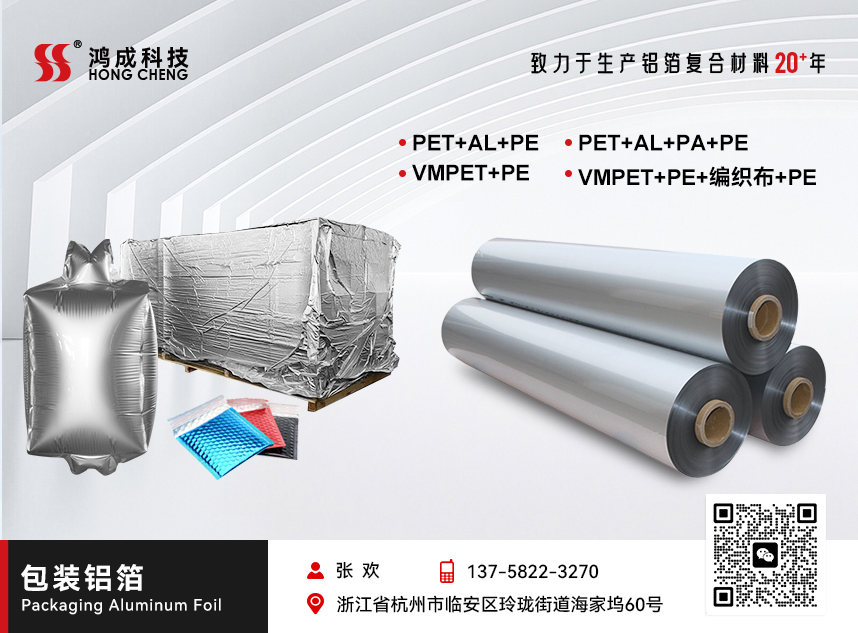
Hangzhou Hongcheng Technology specializes in aluminum foil composite materials and PE extrusion-laminated materials, supplying PET/AL/PE, VMPET/PE, and foil-woven-fabric laminates to bulk bag and bag-converting factories worldwide, with custom widths and structures available. As a raw-material supplier, we do not manufacture finished bags or liners — we focus on making the roll stock reliable.
Contact: +86 13758223270, Email: wendy@hcdxcl.com.cn
Techfoil
AL+PET+PET Triple-Layer Shielding Tape: The Invisible Armor Inside Every Data Cable
How to Choose Aluminum Laminate Film for Picnic Mats and Outdoor Ground Mats