Summer Renovation Season Sourcing Guide: How to Choose Building-Grade Aluminum Foil Tape Facing Substrate
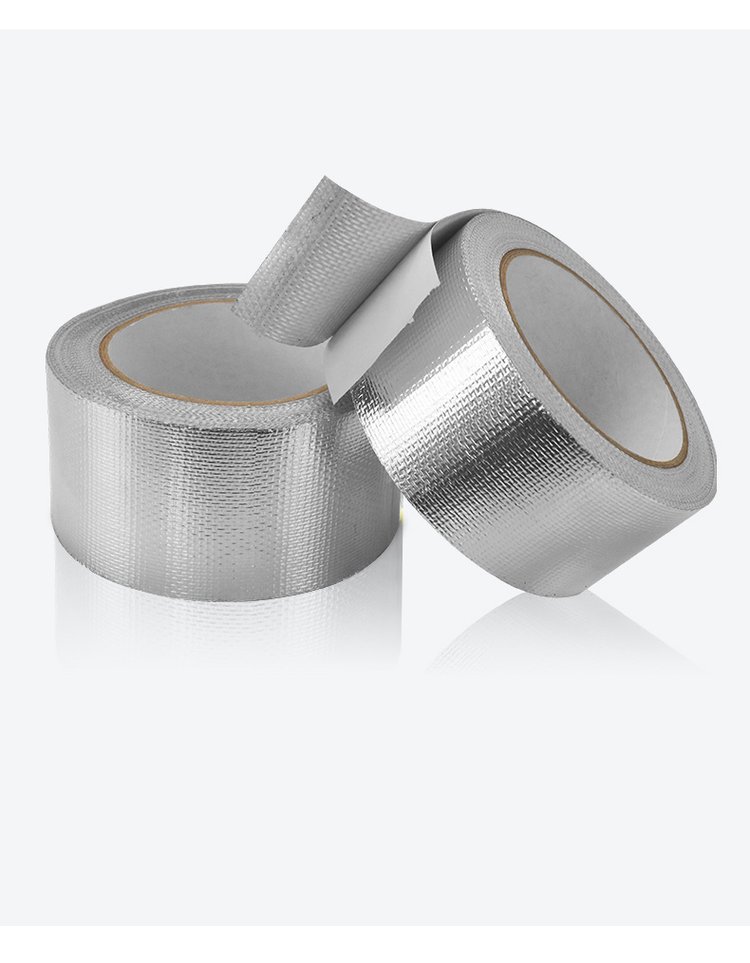
Across most of China, late August still sees daytime highs above 35°C, while southern regions endure a "steaming humidity" pattern with relative humidity persistently above 80%. On construction sites, residential retrofits, and furniture back-panel assemblies, the result is the same: mildew spots, blistering, edge lifting, and adhesive failure on aluminum foil tape facings. Procurement teams are now revisiting what "building-grade" really means for foil tape substrate—and the answers are not in the catalog, but in the source structure.
Over the past decade, aluminum foil tape facings have migrated beyond HVAC duct wrapping and insulation seams into interior decoration, furniture moisture barriers, underfloor heating reflective layers, kitchen condensate pipe wrapping, and sunroom window thermal strips. That widening application window means purchasing is no longer as simple as "buy by thickness". It now requires a three-dimensional decision: application scenario + substrate type + compliance grade.
This article walks through the real pain points in summer construction, the structural differences between aluminum-foil-PET substrate, metallized PET (VMPET) substrate, and paper-based foil facings, the five core parameters that define a building-grade product, the underlying logic of anti-mildew performance, and three procurement mistakes that consistently cost converters money.
1. The Real Pain Points of Summer Construction
The most direct challenge to foil tape facings in humid heat is moisture vapor penetration. In 28°C-plus environments with RH above 80%, ordinary foil tapes with paper substrates or low-density PET allow vapor to slowly creep along the adhesive edge. Within one to three months, this vapor condenses in the micro-gap between the adhesive and the foil layer, producing black mildew, blackened aluminum oxide, and total adhesive failure.
The frustrating reality for procurement teams: lab samples pass the 24-hour water bath test with flying colors, but by week three on the construction site, the facing is bubbling off the wall because the moisture has migrated back into the substrate. What they tested was short-term water bath leakage, not accelerated aging-driven peel-strength decay.
That is why source-level selection of building-grade foil tape facings must begin with the substrate structure itself.
2. Aluminum Foil PET, Metallized PET (VMPET), and Paper-Based Foil: Source-Level Differences
Three common substrate types dominate the market, and their source-level differences are stark:
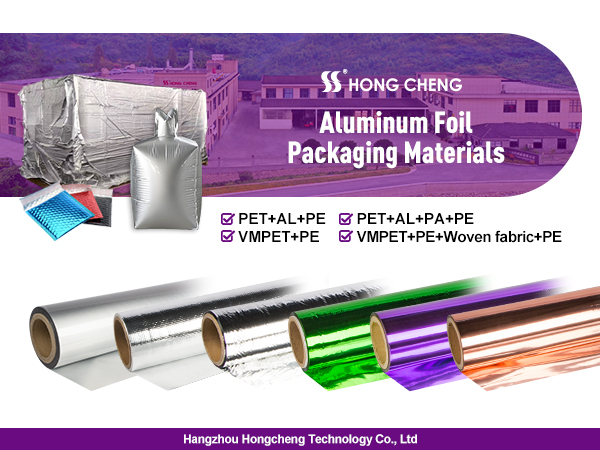
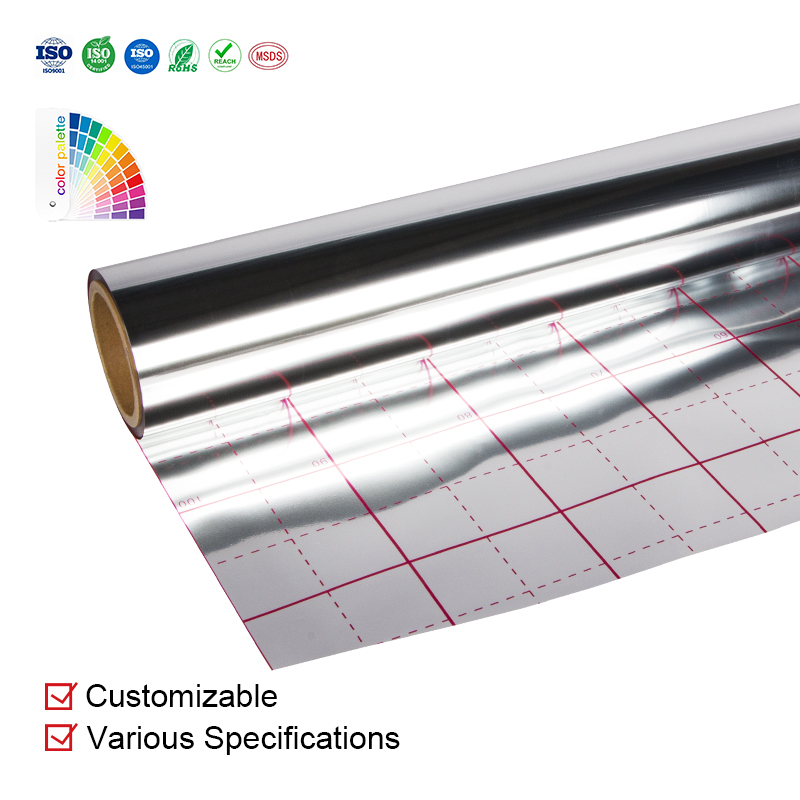
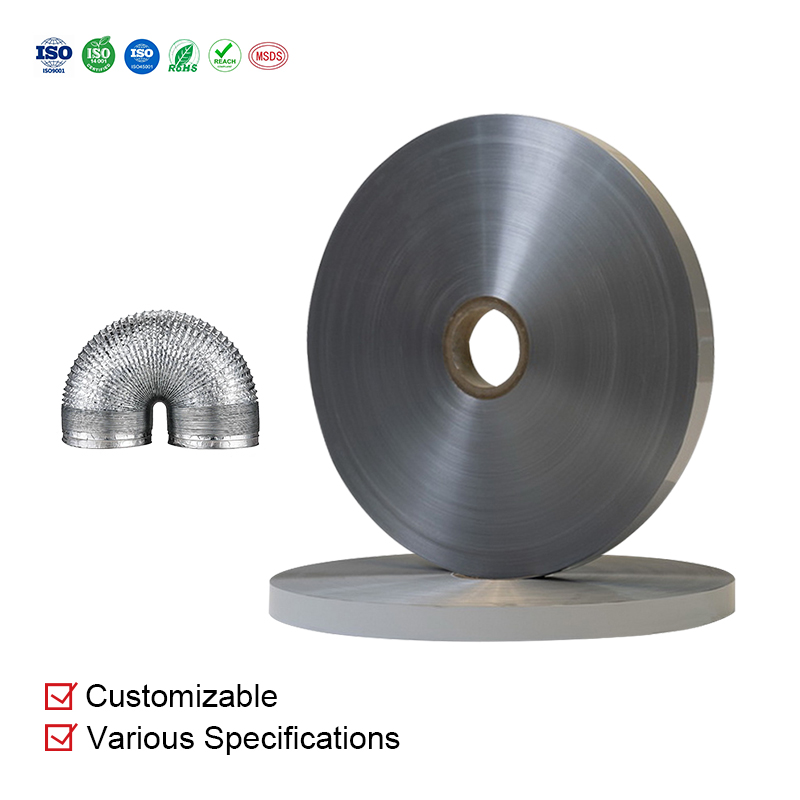
Aluminum Foil PET Substrate — produced by dry laminating or co-extrusion of industrial-purity aluminum foil (7-30μm) with PET film (12-50μm). The aluminum layer is dense, oxidation-resistant, and provides a high barrier against water vapor and oxygen; the PET layer gives mechanical strength and dimensional stability, ensuring the tape does not tear during peeling. This is the first choice for summer renovation furniture back panels, wall moisture barriers, and high-humidity mechanical-room pipe wrapping.
Metallized PET (VMPET / VM-PET) Substrate — based on PET or BOPP film with a 30-80nm vacuum-deposited aluminum layer. The metallized layer offers high opacity and reflectivity, but the metal layer is extremely thin: it does not resist folding or abrasion, and over time the aluminum progressively oxidizes, lowering reflectivity. VMPET's advantage is unit cost 30-50% lower than pure aluminum foil. It is well-suited to short-term, low-friction, indoor-dry foil tape applications such as decorative strips, temporary labels, and indoor packaging sealing.
Paper-Based Foil (Kraft Paper Foil Facing) — industrial aluminum foil (7-20μm) laminated with kraft paper (60-120g), then coated with pressure-sensitive adhesive. Strong points are tear resistance, hand-tearability, and easy application; the weak point is that the paper substrate is not waterproof—in southern humid heat the paper absorbs moisture, mildew forms, and the aluminum layer swells. This remains the common choice for HVAC external insulation and outdoor temporary wrapping, but it is not recommended for furniture back panels or interior decorative facings.
The first step in selection is to determine which application category the downstream product belongs to: long-term high humidity and heat → aluminum foil PET; dry short-term use → metallized PET; outdoor ducts / temporary wrapping → paper-based foil.
3. Five Core Parameters of Building-Grade Foil Tape Facings
For summer scenarios, a building-grade foil facing must satisfy five parameters simultaneously:
1. Aluminum Thickness and Purity — for building-renovation foil PET substrate, aluminum layer should be ≥15μm, alloy 1235 or 8011 in O temper. Foil below 12μm develops pinholes in long-term humid environments, and water vapor transmission rises rapidly.
2. PET Thickness and Stiffness — PET thickness directly controls tape stiffness, hand-tearability, and edge-lift resistance. Summer humid heat applications should use PET ≥23μm (industry-standard 23-36μm), achieving both easy application and long-term flatness.
3. Peel Strength (Adhesive-to-Substrate) — must be tested after accelerated aging (70°C × 95% RH × 168 hours). Aged peel strength must remain ≥75% of initial value; otherwise the adhesive layer opens within two to three months.
4. Anti-Mildew Grade — a qualified building-grade foil facing must achieve at minimum ASTM G21 mildew grade 1 (no fungal growth) or ISO 16869 mildew grade 0. Source manufacturers should pre-coat anti-mildew agents on the foil PET or apply anti-microbial coating on the PET layer.
5. VOCs and Formaldehyde Emissions — summer heat accelerates adhesive off-gassing. Building-grade foil tape facing must meet GB 18580 formaldehyde grade E1, with high-end applications requiring E0 grade; exports to the EU must comply with EN 16516 / A+ low VOC.
4. Anti-Mildew Source Logic: Substrate Density + Antimicrobial Coating + Adhesive Stability
Many converters assume that "add anti-mildew agent and mildew cannot form". In practice, mildew arises from three sources: insufficient substrate density (pinholes in the aluminum foil or microchannels in the adhesive), uneven distribution of the antimicrobial coating (sprayed vs. compounded), and adhesive migration under humidity (tackifier migration).
A source-level manufacturer that truly solves anti-mildew must achieve:
- A dense aluminum layer (purity ≥99.0%, pinhole count ≤5 per m²) ensuring vapor cannot penetrate;
- Anti-mildew antimicrobial agent through compound blending rather than spray coating, ensuring long-term uniformity;
- Pressure-sensitive adhesive based on a humidity-stable acrylic system, preventing summer migration.
5. Three Procurement Mistakes
Mistake 1: "The brighter VMPET, the better." Brightness only reflects metallization uniformity, not weatherability. VMPET lasts one to two years shorter than foil PET in high-humidity environments and cannot be used for long-term building facings.
Mistake 2: "The thicker the aluminum, the stronger." Foil thicker than 50μm makes the facing too rigid, fails to conform to curved surfaces, and pushes up cost. The cost-performance sweet spot for building renovation is 15-30μm.
Mistake 3: "Low VOC means low adhesion." Properly formulated low-VOC acrylic pressure-sensitive adhesives fully meet building-grade peel-strength requirements. Source suppliers should provide dual EN 16516 / GB 18580 compliance reports.
6. The Source Manufacturer Capability Checklist
Before placing a summer-season order, procurement teams should require the source supplier to provide:
- 24-hour water bath leakage data, 168-hour humid-heat aging data, and peel-strength decay curves;
- Third-party anti-mildew reports per ASTM G21 / ISO 16869;
- Three-stage MSDS for aluminum foil, PET, and adhesive layers with heavy-metal compliance statements;
- At least three building-grade foil facing project case studies and shipment records.
Hangzhou Hongcheng Technology Co., Ltd. has specialized in aluminum foil composite materials and PE lamination for more than a decade, supplying aluminum foil PET substrate, metallized PET substrate, and paper-based foil facing across full specifications. We provide stable supply for building decoration, furniture back panels, HVAC ducts, and foil tape manufacturers, with customization on width (100-2000mm), aluminum thickness (7-50μm), PET thickness (12-100μm), and anti-mildew grade. Beyond being a source material supplier, we are a long-term partner for procurement teams navigating the summer construction season.
📞 +86 13758223270 📧 wendy@hcdxcl.com.cn
Export Peak Season: How to Choose Woven Foil Laminate for Equipment Packaging
Low-VOC and Halogen-Free Are Becoming the New Benchmarks for Duct Facing Materials
Related Article