Peak Season Luggage Lining Film Selection: VMPET Woven Laminate Spec Guide
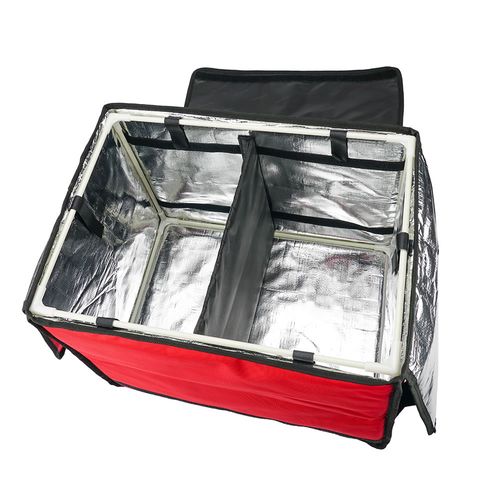
August through November is the traditional peak season for the luggage and bag industry. Cross-border e-commerce brands stock up for Black Friday and Cyber Monday, labels launch Christmas-season collections, and brick-and-mortar retailers fill shelves with autumn-winter product lines. At this critical juncture, lining material selection directly impacts finished-product yield, delivery stability, and end-customer complaint rates. Many buyers who switch materials at the last minute encounter delamination, blistering, or insufficient stiffness — problems that end up delaying delivery rather than speeding it up.
This article systematically outlines the selection logic for metallized film woven fabric composite lining across four dimensions: bag type, lining structure, weight configuration, and export compliance — helping procurement teams lock in the correct specifications before peak season hits.
1. Matching Lining Structure to Bag Type
One specification does not fit all. Different bag types place very different demands on lining stiffness, flexibility, and barrier performance, requiring matched composite structures.
Hard-Shell Suitcases — Dual-Layer VMPET + Woven Fabric
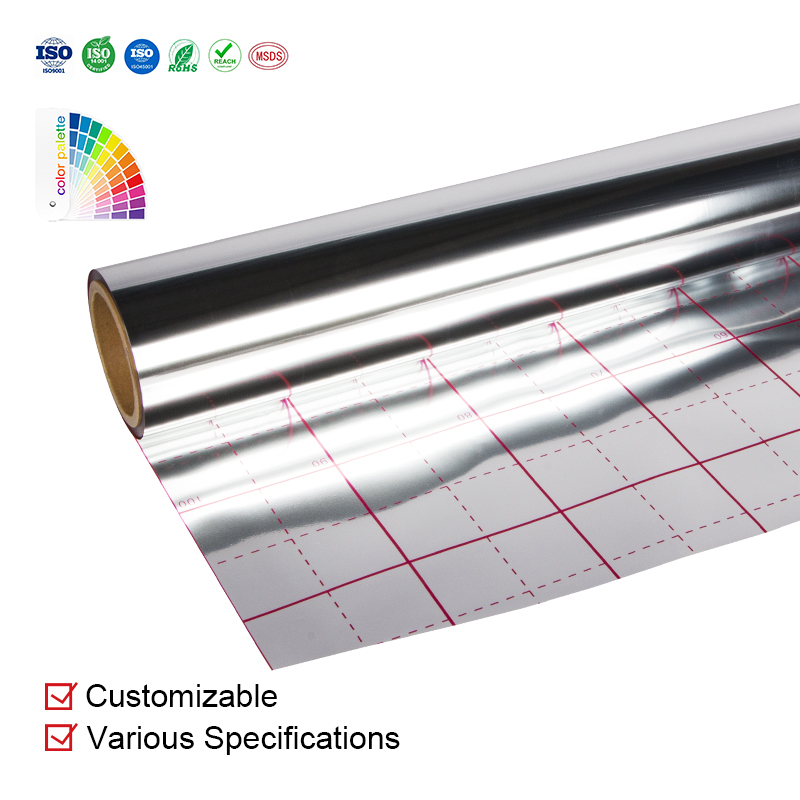
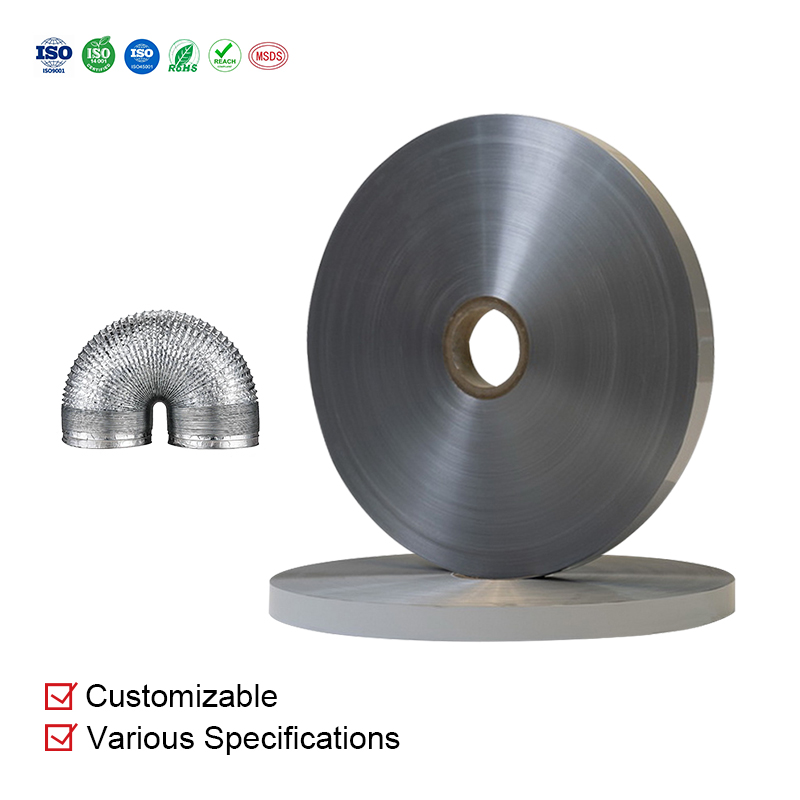
Hard-shell luggage lining primarily covers the frame structure and finishes the interior cavity, demanding high stiffness and flatness. The recommended structure is VMPET 12 µm + PE adhesive + PP woven fabric (60–80 g/m²), with total basis weight controlled at 80–100 g/m². The heavier woven fabric ensures the lining stays flat against the inner wall without sagging or creasing. The silver-white metallic luster of the VMPET surface also meets the aesthetic expectations for mid-to-high-end suitcase interiors.
Soft Travel Bags / Backpacks — Lightweight VMPET + Woven Fabric
Soft bag lining requires a balance between flexibility and structural support. The recommended structure is VMPET 12 µm + PE adhesive + PP woven fabric (40–50 g/m²), with basis weight at 60–75 g/m². The lower weight makes the lining more pliable for sewing and edge binding, while the woven fabric still provides sufficient tear resistance to prevent lining failure along seam lines under full load.
Tool Cases / Instrument Cases — Tri-Layer VMPET + Woven Fabric + PE Film
Tool and instrument case lining demands the highest moisture barrier and abrasion resistance, because metal tools and precision instruments are moisture-sensitive and the lining surface experiences frequent friction during handling. The recommended structure is PE film + VMPET 12 µm + PE adhesive + PP woven fabric, with basis weight at 100–120 g/m². The PE film faces the case interior, providing a smooth, wear-resistant contact surface; the VMPET layer blocks moisture; and the woven fabric provides structural integrity. The tri-layer structure achieves approximately 30% higher peel strength than dual-layer configurations, making it better suited for frequent opening and closing.
Briefcases / Laptop Bags — Low-Weight VMPET + Woven Fabric
Briefcase and laptop bag lining prioritizes a balance of thinness and stiffness. The recommended structure is VMPET 12 µm + PE adhesive + PP woven fabric (35–45 g/m²), with basis weight at 55–70 g/m². The low-weight woven fabric combined with the metallized surface keeps the bag lightweight while creating a clean metallic appearance on the interior wall.
2. Weight and Weaving Density Configuration
Many buyers focus exclusively on woven fabric weight (g/m²) while overlooking weaving density — a critical parameter. In practice, woven fabrics with the same nominal 60 g/m² weight can differ by more than 30% in actual strength if weaving density varies.
Weight determines basis weight; weaving density determines strength. The following rules of thumb apply:
- Weaving density 10×10 yarns/inch: Suitable for low-stress applications (briefcases, laptop bags). Weight of 35–50 g/m² is sufficient.
- Weaving density 12×12 yarns/inch: General-purpose applications (travel bags, backpacks). Weight of 50–70 g/m².
- Weaving density 14×14 yarns/inch and above: High-stress applications (tool cases, instrument cases). Weight of 60–80 g/m².
Always request tensile strength test reports (machine direction and cross direction) and evaluate based on MD/CN tensile data rather than relying on weight alone. For rush peak-season orders, ask the supplier for batch test reports from the past three months to verify material performance consistency.
3. Roll Width Matching and Nesting Optimization
During peak-season stocking, roll width matching directly affects production efficiency and material utilization. Standard widths of 1200 mm or 1500 mm may not match your bag panel cutting layout, and mismatched widths can result in 15–20% edge waste.
Recommendation: Before placing an order, calculate the optimal roll width based on the nesting diagram of your bag cutting panels. For example, a 28-inch suitcase lining panel nested at 1450 mm width can achieve over 92% material utilization; at a standard 1200 mm width, utilization may drop to approximately 78%. Most source factories support custom widths within the 1000–1600 mm range, with some offering up to 1800 mm. Confirming custom width capability and lead time before peak season can save substantial material costs across the entire season.
4. Export Compliance and Certification Essentials
Peak-season cross-border e-commerce orders predominantly target European and American markets, where lining material compliance certification is a hard gate for factory audits and customs clearance.
1. REACH Annex 17 Restricted Substances
VMPET metallized film and woven fabric substrates must ensure absence of Substances of Very High Concern (SVHC) listed in REACH Annex 17, particularly lead, cadmium, and phthalates. Request a REACH statement of compliance and third-party test report from the supplier.
2. RoHS 2.0
While RoHS primarily targets electrical and electronic products, smart luggage with built-in components (such as integrated power banks or GPS modules) requires lining materials to be included in the RoHS compliance assessment scope.
3. OEKO-TEX Standard 100
For mid-to-high-end bag brand lining, materials certified under OEKO-TEX Standard 100 are recommended. This certification sets stricter substance limits than REACH and serves as a differentiator in European bag brand procurement audits.
4. Halogen-Free Requirements
Some Nordic brands and aviation bag customers specify halogen-free requirements (halogen content < 50 ppm). Standard VMPET woven fabric composite uses PE hot-melt adhesive, which is non-halogenated, and typically meets halogen-free standards. However, the limit and test method should be explicitly specified in the purchase contract.
5. Three Common Peak-Season Procurement Mistakes
Mistake 1: Switching Suppliers at the Last Minute
Switching suppliers during peak-season capacity crunches is a high-risk move. Different factories use different woven fabric yarn sources, metallized film batches, and lamination process parameters, which can result in color variation, peel strength fluctuation, and thickness inconsistency after switching. Complete at least two batch trials and lock in process parameters before scaling up.
Mistake 2: Chasing Price While Ignoring Batch Consistency
During peak-season rush orders, some buyers focus solely on unit price and overlook batch-to-batch consistency. The optical density (OD) of the metallized layer can vary between batches, directly affecting lining appearance consistency. Specify OD range (e.g., ≥ 2.0) and batch color tolerance (ΔE < 1.5) in the contract, and require test reports with each batch.
Mistake 3: Overlooking Heat-Seal Temperature Window
Bag lining is typically bonded to the shell material using heat-sealing. Different suppliers use different PE adhesive formulations, and the heat-seal temperature window can vary significantly (typically 130–160°C). If the window is too narrow, line changeovers may result in weak seals or over-melt wrinkling. Confirm the temperature window width (recommended ≥ 15°C) during specification, and conduct a small-batch seal trial before mass production.
Peak-Season Procurement Checklist
| Item | Recommended Spec / Requirement | Verification Method |
|---|---|---|
| VMPET metallized layer | 12 µm PET substrate, OD ≥ 2.0 | Supplier test report + incoming sampling |
| Woven fabric weight | Matched to bag type (35–80 g/m²) | Gravimetric |
| Weaving density | 10×10 to 14×14 yarns/inch | Densitometer or magnifier count |
| Basis weight | 55–120 g/m² (by application) | Gravimetric |
| Tensile strength | MD ≥ 300 N/50mm, CN ≥ 250 N/50mm | Universal testing machine |
| Peel strength | ≥ 2.5 N/15mm | T-peel test |
| Roll width | Custom-matched to panel nesting (1000–1600 mm) | Steel tape measurement |
| Heat-seal window | 130–160°C, window ≥ 15°C | Heat-seal tester trial |
| REACH compliance | Annex 17 SVHC compliant | Third-party test report |
| Batch color difference | ΔE < 1.5 | Colorimeter |
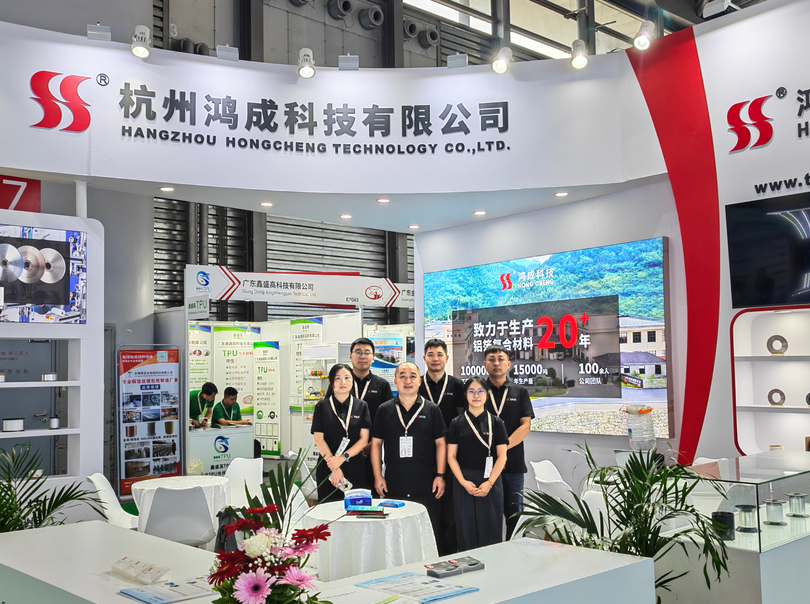
Hangzhou Hongcheng Technology Co., Ltd. specializes in aluminum foil composite materials and PE laminated composite materials. We provide customized rolls of metallized film woven fabric composite lining and VMPET woven cloth laminate, with options for roll width, thickness, weaving density, and peel strength tailored to your application. We support rapid sampling for peak-season production scheduling. Our products are suitable for travel suitcases, backpacks, tool cases, briefcases, instrument cases, and more. Samples and technical data sheets are available on request.
About Hangzhou Hongcheng Technology
Hangzhou Hongcheng Technology Co., Ltd. focuses on the research, development and production of aluminum foil composite materials and PE laminated composite materials. Core products include metallized film woven fabric composite film, aluminum foil PE composite film, PET/AL/PE tri-layer composite film, non-woven aluminum foil and kraft paper aluminum foil, widely used in luggage lining, cooler bags, industrial packaging, building insulation, cable shielding and ventilation duct applications. With integrated lamination, slitting and coating lines, we support custom widths, thicknesses and peel strengths, providing stable and traceable raw material supply to customers worldwide. If you are looking for a luggage lining film supplier, please contact us for samples and quotation.
+86 13758223270 Email: wendy@hcdxcl.com.cn
Techfoil — Raw Material Solutions for Aluminum Foil and PE Laminated Composites
How to Choose AL/PET Shielding Tape for PV DC Cables: Matching 1500V Solar System Requirements
Warm Edge Spacer Foil Facing Selection Guide
Related Article