Precision Instrument Vacuum Packaging for Short-Distance Transport: Woven Foil Laminate Specification Guide
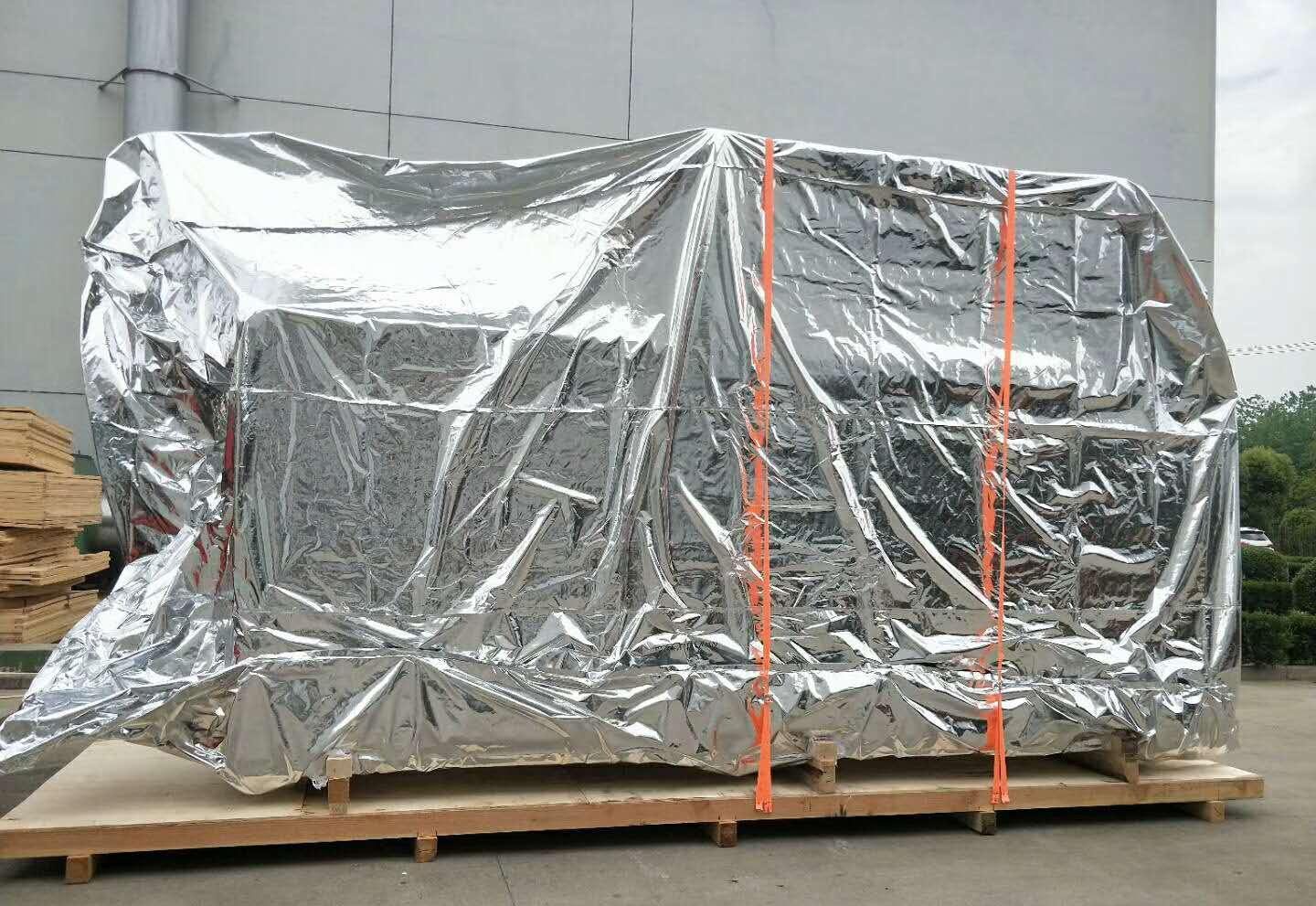
When procurement professionals think of vacuum packaging for equipment, they typically envision ocean freight scenarios: 30-day shipping cycles, equatorial heat, and salt-laden humidity. But in practice, a large volume of industrial equipment never crosses an ocean. A CNC machining center traveling from Suzhou to Hefei, a medical imaging system relocating from Shenzhen to Dongguan, or an analytical instrument shipped from a factory to a trade exhibition — all of these short-distance inland transports require vacuum moisture-barrier packaging, yet the selection logic differs fundamentally from ocean freight scenarios.
The problem is that many procurement teams still apply ocean-grade standards to short-distance packaging. The result is either over-specification that wastes 40-60% of material cost, or under-specification that ignores the unique vibration, shock, and thermal cycling risks inherent in road and rail transport. This article breaks down the selection logic for woven aluminum foil vacuum laminates across three dimensions: equipment type, transport mode, and environmental conditions.
Three Common Short-Distance Scenarios and Their Hidden Risks
Precision Machine Tools and CNC Centers — Short distance does not mean low risk. Continuous road vibration causes micro-damage to guide rails and spindle bearings. The primary function of vacuum packaging here is not moisture barrier alone, but a three-in-one system: immobilization, moisture protection, and dust prevention. The woven foil laminate must conform tightly to the equipment surface after vacuum extraction, forming a rigid shell that prevents movement. A common failure point is using material with insufficient woven fabric weight (below 60g/m²), which lacks puncture resistance at equipment corners after vacuum compaction.
Medical Devices and Analytical Instruments — CT scanners, MRI units, ultrasound systems, and laboratory analyzers are extremely sensitive to dust and static electricity. While short-distance transport avoids salt spray exposure, road dust, humidity spikes in tunnels, and temperature differentials between air-conditioned facilities (22°C), loading docks (35°C), and truck cargo compartments (45°C in summer) can cause internal condensation. Material selection must prioritize aluminum layer continuity (pinhole count below 3 per m²) and anti-static properties in the PE layer.
Electronic Equipment and Semiconductor Production Line Tools — These items are high-value but relatively compact, with transport cycles typically spanning 1-3 days. The core risk is not long-term moisture ingress but instantaneous electrostatic discharge (ESD) and condensation from rapid thermal cycling. The packaging material must combine moisture barrier, anti-static, and cushioning functions, requiring anti-static masterbatch integration in the PE layer of the woven foil laminate.
Selecting Structure by Equipment Type: Three Specification Tiers
Short-distance transport does not require maximum thickness or weight — structural matching is what matters. The table below presents three recommended specifications:
| Tier | Structure | Fabric Weight | Foil Layer | PE Coating | Total Thickness | Target Equipment |
|---|---|---|---|---|---|---|
| Light-A | VMPET / Woven Fabric / PE | 50-60g/m² | 0.03μm (metallized) | 25-30g/m² | 0.18-0.22mm | Small electronics, instrument parts, same-day transport |
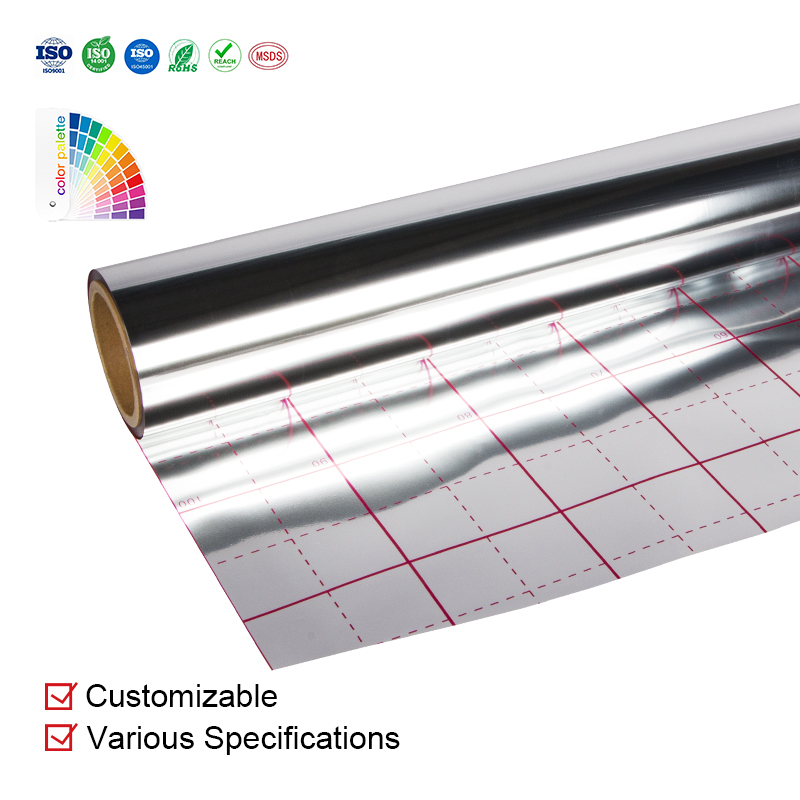
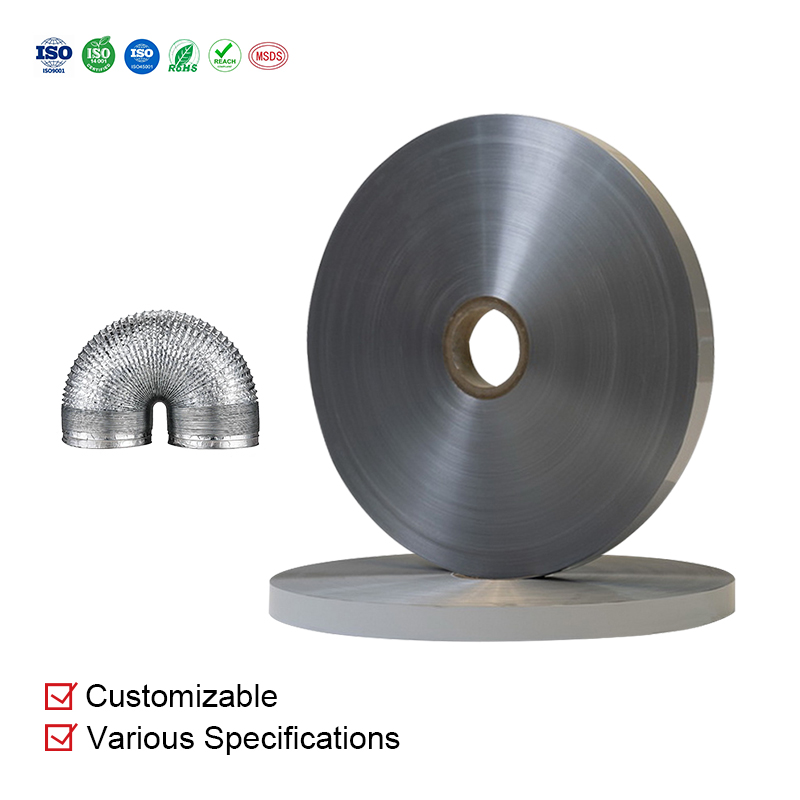
| Standard-B | AL Foil / Woven Fabric / PE | 70-80g/m² | 7-9μm | 30-40g/m² | 0.25-0.30mm | Precision machines, medical devices, 2-5 day transport |
| Heavy-C | AL Foil / Woven Fabric / AL Foil / PE | 90-120g/m² | 7+7μm (dual-sided) | 40-50g/m² | 0.35-0.42mm | Large equipment, semiconductor tools, multi-leg transit |
Light-A is suited for same-day short-distance transport of equipment weighing under 200kg. VMPET metallized film offers slightly lower barrier performance than pure aluminum foil but provides clear cost advantages, and 50-60g/m² woven fabric delivers adequate tear resistance for lighter loads. Critical caveat: metallized film is not suitable for equipment requiring storage exceeding 30 days, as the barrier performance of the deposited aluminum layer degrades over time.
Standard-B is the versatile workhorse for short-distance transport. The 7-9μm pure aluminum foil layer delivers near-zero WVTR (below 0.01 g/m²·24h), while 70-80g/m² woven fabric provides sufficient mechanical backbone after vacuum extraction, and 30-40g/m² PE coating ensures heat-seal strength of at least 3.5 N/15mm. This specification covers over 80% of short-distance equipment transport requirements.
Heavy-C features a dual-sided aluminum foil structure designed for high-value, large-format, or multi-leg transit scenarios (factory to logistics hub to exhibition to end customer). The dual foil layers provide redundancy — even if the outer foil is punctured during transport, the inner layer maintains barrier integrity. The 90-120g/m² high-weight woven fabric offers 1.5-2 times the puncture resistance of Standard-B, making it suitable for equipment with protruding bolts or sharp edges.
Selecting Parameters by Transport Mode: Road, Rail, and Air
Road Transport (Most Common) — The primary risks are vibration and thermal fluctuation. Key parameters to verify: heat-seal strength (at least 3.5 N/15mm to prevent seam failure under vibration), woven fabric tensile strength (warp direction at least 600N/50mm, weft direction at least 500N/50mm), and material conformability to the equipment surface. Road transport involves significant temperature differentials that increase internal condensation risk. An aluminum layer of 7μm or above is recommended, with PE layer optionally incorporating a desiccant composite layer.
Rail Transport — Longer cycle (3-7 days) but lower vibration frequency than road, with greater temperature amplitude as shipments cross climate zones. Material selection should prioritize aluminum foil thickness (9μm and above) and WVTR performance (below 0.01 g/m²·24h). Woven fabric weight can be moderately reduced to 60-70g/m² for cost optimization, since rail vibration is less aggressive than road transport.
Air Transport — Shortest cycle (same-day delivery) but subject to cargo hold low pressure (approximately 800hPa) and extreme cold (-20°C to -40°C). Low pressure increases the pressure differential between the vacuum package interior and exterior, requiring higher burst strength. Key selection criteria: PE layer must use low-temperature grade resin (no brittle fracture at -40°C), heat-seal temperature window should be wide (120-160°C), and total thickness should remain below 0.3mm to control air freight costs.
Three Common Selection Pitfalls
Pitfall 1: Applying ocean freight standards to short-distance packaging. Ocean scenarios demand 12-15μm aluminum foil, 100g/m²+ woven fabric, and dual-sided foil — all of which represent over-specification for 1-3 day short-distance transport. Not only does this increase material cost by 40-60%, but the stiffer material actually reduces vacuum conformability, increasing corner puncture risk. Short-distance selection should follow the principle of "fit for purpose."
Pitfall 2: Focusing on thickness while ignoring weave density. Two woven fabrics both labeled 70g/m² can differ by 2-3 times in tear resistance depending on weave density. During short-distance transport, equipment corners concentrate puncture force on a very small area. The flat yarn thickness and weave density (typically measured as yarn count per 10cm, recommended at 40 or above per 10cm) are far more indicative of puncture resistance than total weight. Procurement teams should request weave density specifications and puncture strength test reports from suppliers.
Pitfall 3: Overlooking the PE layer heat-seal temperature window. Short-distance transport may have a brief cycle, but loading and unloading occur multiple times (factory loading, transit hub transfer, destination unpacking). Each stage involves handling and impact. A PE layer with a narrow heat-seal window (such as 130-135°C only) is prone to localized weak seals from temperature fluctuations during production, which can open under transport vibration. A PE coating with a heat-seal window of 30°C or wider (such as 120-155°C) is recommended to ensure seal consistency.
Procurement Checklist and Verification Guide
The procurement verification checklist for short-distance transport woven aluminum foil vacuum laminates:
- Structure selection: Same-day + light equipment → Light-A (VMPET/Woven/PE); 2-5 days + medium equipment → Standard-B (AL/Woven/PE); Multi-leg transit + large equipment → Heavy-C (Dual-AL/Woven/PE)
- Woven fabric parameters: Weight 50-120g/m² (by equipment weight), weave density at least 40 yarns/10cm, flat yarn linear density at least 800D
- Aluminum layer parameters: Pure foil 7-9μm (short-distance standard), metallized 0.03μm (light-duty only), pinhole count below 5 per m²
- PE coating parameters: Weight 25-50g/m², heat-seal strength at least 3.5 N/15mm, heat-seal temperature window at least 30°C
- Width matching: Equipment maximum dimension + 200mm allowance, avoiding splicing (spliced joints have 5-8 times the leakage risk of monolithic material)
- Test reports: WVTR below 0.01 g/m²·24h (ASTM F1249), tensile strength, puncture strength, heat-seal strength
- Lead time: Short-distance packaging is often a time-sensitive requirement; suppliers must offer 48-hour sampling and 7-day delivery
Hangzhou Hongcheng Technology specializes in the R&D and production of aluminum foil composite materials and PE-coated laminates. Our woven aluminum foil vacuum laminate product line covers the full range of Light-A (VMPET structure), Standard-B (single-sided foil), and Heavy-C (dual-sided foil) specifications, with customizable widths from 200 to 2600mm, woven fabric weights from 40 to 120g/m², aluminum foil layers from 7 to 15μm, and PE coating from 20 to 50g/m². With 48-hour sampling and 7-day delivery, we have provided short-distance transport vacuum packaging solutions for numerous domestic precision machine tool, medical device, and semiconductor equipment manufacturers.
+86 13758223270 Email: wendy@hcdxcl.com.cn
How to Select Shielding Tape for Energy Storage Battery PACK High-Voltage Cables
Which Insulation Board Facing Is Right for You?
Related Article