PV Rooftop Waterproofing: How to Select AL/PE Foil Membrane for BIPV and BAPV Projects
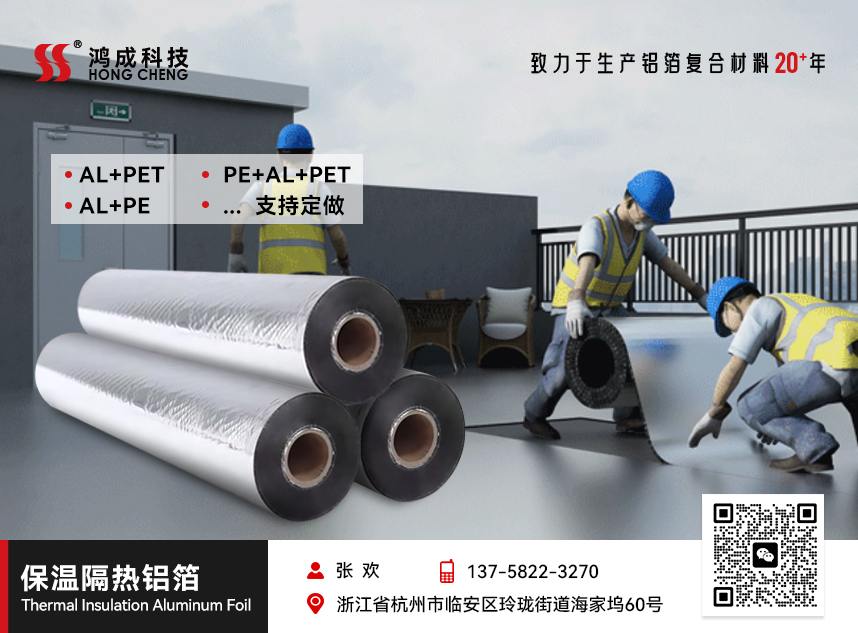
In 2026, China's distributed photovoltaic market continues its high-growth trajectory, with rooftop solar (BAPV) and building-integrated PV (BIPV) projects expanding rapidly across industrial parks, logistics warehouses, and public building rooftops. Yet behind the installation boom lies an engineering pain point that has long been underestimated: the waterproofing and thermal insulation layer on PV rooftops has a service life far shorter than the PV modules themselves. Panels carry a 25-year warranty, but conventional waterproofing membranes degrade in 8 to 12 years under rooftop heat, UV radiation, and thermal cycling. Once the waterproofing fails, the roof leaks, mounting structures corrode, and operations and maintenance costs skyrocket.
Against this backdrop, AL/PE composite waterproof membranes are emerging as a critical material for PV rooftop waterproof-thermal integration, combining three functions in one layer: reflective thermal insulation, moisture barrier, and weather-resistant aging performance. This article examines the operating conditions of PV rooftops, the structural and performance advantages of AL/PE composite membranes, selection parameters, and common procurement mistakes—offering a systematic reference for PV EPC contractors and building waterproofing procurement teams.
1. Why PV Rooftops Demand More from Waterproofing Facings
The defining difference between a PV rooftop and a conventional rooftop is operating temperature. The backside of a PV panel can reach 70-85°C at summer noon, far exceeding the surface temperature of a non-PV roof (45-55°C). Additionally, PV mounting systems create numerous penetration points on the roof surface—every penetration is a potential leak source. The air gap beneath the PV panels creates a "thermal cavity" effect, radiating heat downward into the roof structure and subjecting the waterproofing layer to prolonged high-temperature baking.
These conditions require the waterproofing and thermal insulation material to simultaneously deliver:
- High-temperature resistance: Long-term endurance above 70°C without softening or flow;
- Reflective thermal insulation: Reflecting radiant heat from the PV panel backside, reducing roof temperature by 5-15°C;
- Moisture barrier: Reliable vapor barrier at penetration points and seams;
- Weather-resistant aging: Stable physical properties for 15+ years under UV, ozone, and thermal cycling.
Traditional SBS modified bitumen membranes offer reliable waterproofing but lack reflective thermal insulation and tend to soften above 70°C. Pure PE membranes have good chemical resistance but insufficient barrier properties and cannot reflect radiant heat. AL/PE composite waterproof membranes fill exactly this performance gap.
2. Structure and Performance Advantages of AL/PE Composite Waterproof Membranes
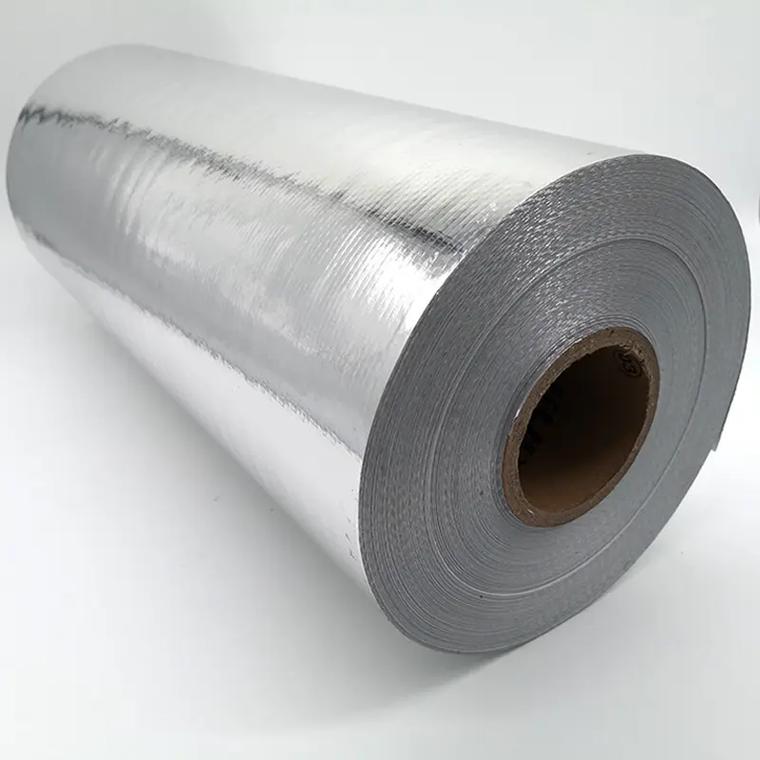
The typical structure of an AL/PE composite waterproof membrane is a three-layer laminate: aluminum foil layer + PE layer + functional coating. The aluminum foil layer (12-30μm thickness) provides high solar reflectance (≥85%) and water vapor barrier performance. The PE layer (50-150μm thickness) provides flexibility, chemical resistance, and heat-sealing capability. The functional coating can be selected based on application: flame-retardant coating, UV-resistant coating, or self-adhesive layer.
Compared with single-layer materials, the core advantage of AL/PE composite membranes lies in multifunctional integration. A single material layer simultaneously addresses reflective thermal insulation, moisture barrier, and weather-resistant aging—reducing interface risks and labor costs associated with multi-layer construction. In PV rooftop installations, the AL/PE membrane is typically laid between the PV mounting structure and the roof structural layer, serving as an integrated "waterproofing + thermal insulation" barrier.
From a thermal performance standpoint, AL/PE composite membranes can achieve solar reflectance above 85%, reducing roof temperature by 5-15°C and indirectly lowering PV panel temperature by 3-8°C. This contributes to improved PV module power output—crystalline silicon panel output increases by approximately 0.3-0.5% for every 1°C reduction in temperature. This "passive energy gain" metric is increasingly recognized by PV EPC design engineers.
3. Key Selection Parameters for PV Rooftop AL/PE Membranes
Procurement teams should focus on five core parameters:
1. Aluminum Foil Thickness and Purity For long-term high-temperature PV rooftop conditions, aluminum foil thickness should be ≥15μm, purity grade 1235 or 8011 alloy in O temper. Foil below 12μm develops pinholes under prolonged UV and high-temperature exposure, causing barrier properties to degrade rapidly. Pinhole count should be controlled at ≤5 per m².
2. PE Layer Thickness and Material PE layer thickness directly determines membrane flexibility, puncture resistance, and heat-seal strength. For PV rooftop conditions, PE thickness should be ≥80μm, using LDPE or LLDPE. LLDPE offers better puncture resistance than LDPE and is more suitable for roofs with mounting system penetration points. If the roof is subject to chemical contamination risk (e.g., acidic or alkaline gas emissions from industrial facilities), HDPE with superior chemical resistance should be selected.
3. Solar Reflectance and Infrared Emissivity AL/PE composite membranes should achieve total solar reflectance (TSR) ≥85% and infrared emissivity ≥0.80. Premium products with nano-oxide coatings on the aluminum surface can push reflectance above 90%, suitable for high-temperature regions (e.g., PV projects in Northwest China, the Middle East, or Africa).
4. Weathering and Accelerated Aging Data Suppliers should provide UV accelerated aging test data (QUV-A, 340nm, 0.89 W/m² @ 340nm, 60°C condensation, 2000 hours). After aging, reflectance retention should be ≥80% and tensile strength retention ≥70%. High-temperature aging data (80°C × 168 hours) should also be provided, with no flow, no blistering, and no aluminum oxidation or blackening after aging.
5. Flame Retardancy Rating PV rooftop projects typically require the waterproofing layer to meet B1 flame retardancy (GB/T 8626) or equivalent international standards (e.g., EN 13501-1 Class E or above). If the project is located in an industrial zone or has special fire safety requirements, B1-grade or above products should be selected, with halogen-free flame retardants compounded into the PE layer.
4. Three Procurement Mistakes
Mistake 1: "The brighter the foil, the higher the reflectance." The initial surface brightness of aluminum foil primarily reflects production flatness and cleanliness, not actual solar reflectance. Some suppliers substitute high-gloss foil for industrial-purity foil—visually bright but with aluminum thickness below 10μm—causing reflectance to drop sharply within 3-6 months. Procurement teams should require third-party TSR test reports rather than relying on visual inspection.
Mistake 2: "Thicker PE is always better." While PE thickness above 200μm does improve puncture resistance, it also makes the membrane rigid, complicates installation, and increases cost. Standard PV rooftop conditions are well served by 80-150μm PE. The critical factors are PE material selection and lamination process quality, not simply maximizing thickness.
Mistake 3: "A self-adhesive layer eliminates the need for hot-air welding." Some AL/PE composite membranes come with a pre-applied self-adhesive layer beneath the PE for ease of installation. However, PV rooftops have numerous penetration points and long seams, and self-adhesive layers lose tack at high temperatures—their long-term reliability is inferior to hot-air welding. For critical seams, hot-air welding should remain the primary sealing method, with the self-adhesive layer serving only as an auxiliary fixation.
5. Procurement Verification Checklist
Before placing an order, procurement teams should require the source manufacturer to provide:
- Third-party test reports for total solar reflectance (TSR) and infrared emissivity (ASTM E903 or CIE No.15);
- QUV accelerated aging 2000-hour test data, including post-aging reflectance and tensile strength retention;
- Aluminum foil purity report and pinhole count test data;
- PE material MSDS and flame retardancy test report (GB/T 8626 or EN 13501-1);
- At least two PV rooftop project case studies and shipment records;
- Customization capability for membrane width, thickness, and aluminum-to-PE layer ratio.
Hangzhou Hongcheng Technology Co., Ltd. has specialized in aluminum foil composite materials and PE lamination for more than a decade, supplying AL/PE composite waterproof membranes, reflective foil insulation facings, and related products across full specifications. We provide stable supply for PV rooftop waterproof-thermal integration, building insulation, and industrial packaging applications, with customization on width (100-2000mm), aluminum thickness (7-50μm), PE thickness (30-200μm), and flame retardancy grade. From material structure to engineering adaptation, we are both a source material supplier and a long-term partner for PV EPC contractors and waterproofing procurement teams.
📞 +86 13758223270 📧 wendy@hcdxcl.com.cn
FIBC Aluminum Liner Film Selection Guide: Food Grade vs Chemical Grade Composite Structures
Why Explosion-Proof Plants Need Antistatic Duct Outer Skins