Requirements for Aluminum Foil Outer Packaging of New Energy Batteries
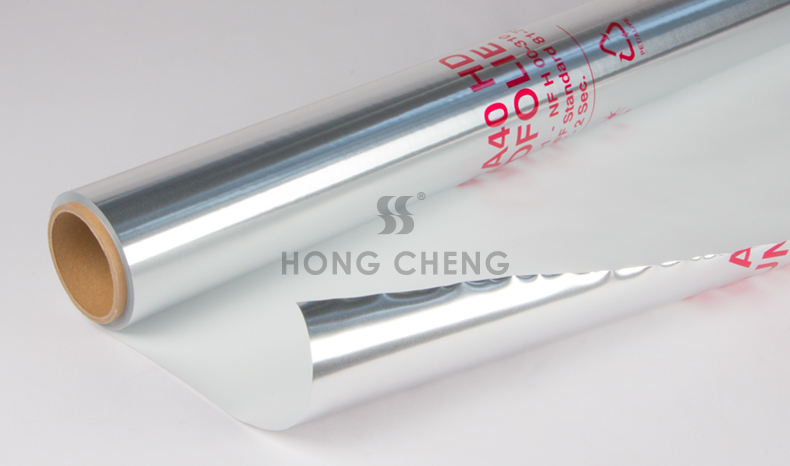
In the full life cycle of new energy batteries (such as lithium-ion power batteries and energy storage batteries), aluminum foil outer packaging is by no means a simple "container", but the "first barrier" to protect battery safety, extend service life, and ensure charge-discharge performance. Its design and performance must be highly compatible with the battery's chemical characteristics, working environment, and production processes, with specific requirements covering five core dimensions:
1. Core Performance: Adapting to Battery Chemistry and Operating Conditions
1.1 Ultimate Barrier: Isolating "Battery Enemies"
New energy batteries are extremely sensitive to moisture, oxygen, and electrolyte penetration—moisture reacts with lithium salts to generate HF that corrodes electrodes, oxygen accelerates the aging of positive electrode materials, and electrolyte leakage directly leads to capacity decay. Therefore, aluminum foil outer packaging must meet:
- Water Vapor Transmission Rate (WVTR): ≤0.05g/(m²·24h) under 40℃ and 90%RH (core indicator for power batteries), ≤0.1g/(m²·24h) for energy storage batteries, achieved by a 6-9μm pinhole-free aluminum foil layer;
- Oxygen Transmission Rate (OTR): ≤0.1cc/(m²·24h·atm) under 23℃ and 50%RH, preventing "oxidation failure" of the positive electrode;
- Electrolyte Resistance: The inner modified PP/PE substrate must resist soaking in carbonate-based electrolytes (no swelling or cracking after 72h immersion at 70℃), eliminating packaging failure caused by solvent penetration.
1.2 Tough Protection: Resisting External Forces in Production and Use
Batteries are vulnerable to external impacts during pit forming, tab welding, module assembly, and vehicle vibration. The packaging must have:
- Mechanical Strength: Tensile strength ≥28MPa in the machine direction (MD) and ≥22MPa in the transverse direction (TD), puncture resistance ≥35N (resisting puncture by sharp tab edges);
- Bending Resistance: No aluminum foil breakage or composite layer delamination after 100 cycles of 180° repeated bending in the temperature range of -30℃~60℃ (adapting to vehicle 颠簸 scenarios);
- Heat Seal Reliability: Heat seal strength ≥90N/15mm (higher than general standards), no bubbles or wrinkles after heat sealing, preventing electrolyte leakage from the sealed edge.
1.3 Wide Temperature Adaptation: Coping with Charge-Discharge Temperature Fluctuations
Battery temperature can rise above 60℃ during fast charging, and normal startup is required in low-temperature environments (-40℃). The packaging must:
- High-Temperature Resistance: No softening or dimensional deformation after baking at 120℃ for 1h (coping with temperature shock in the early stage of thermal runaway);
- Low-Temperature Resistance: Maintaining flexibility at -40℃ without embrittlement and cracking;
- Heat Shrinkage Stability: Longitudinal/transverse shrinkage rate ≤1.0% after 24h storage at 85℃, avoiding cell extrusion due to dimensional changes.
2. Safety and Compliance: Upholding the "Safety Bottom Line" of Batteries
2.1 Flame Retardancy: Delaying Thermal Runaway Spread
The aluminum foil outer packaging must pass the UL94 V-0 flame retardancy test, and after 30s of 700℃ open flame burning, the extinguishing time ≤10s, without releasing toxic gases such as hydrogen chloride and cyanide (avoiding secondary hazards).
2.2 Insulation and Short Circuit Prevention: Eliminating Electrical Risks
Except for the tab contact area, the overall volume resistivity of the packaging ≥10¹⁶Ω·cm, and the joint between the tab and the packaging must be insulated and sealed (using high-temperature resistant insulating adhesive) to prevent short circuits caused by conduction between the tab and the aluminum foil layer.
2.3 Industry Standards: Complying with Battery-Specific Specifications
It must meet:
- Power batteries: GB/T 31485 "Safety Requirements for Power Storage Batteries for Electric Vehicles" (including packaging integrity requirements after extrusion and needle puncture tests);
- Energy storage batteries: GB/T 36276 "Lithium-Ion Batteries for Power Storage" (requirements for long-term aging resistance);
- Environmental compliance: RoHS 2.0 (restricting 6 hazardous substances), EU Battery Regulation (packaging recycling rate ≥85% from 2031).
3. Processing Adaptation: Matching Battery Automated Production
3.1 Pit Forming: Adapting to Pouch Cell Structure
To meet the "cavity accommodating cell" requirement of pouch batteries, the packaging must support pit forming with a depth of 3-12mm (adjusted according to cell capacity). After pit forming, there is no crack in the bottom aluminum foil and no delamination in the composite layer, with a forming accuracy error ≤0.1mm (ensuring close cell assembly).
3.2 Efficient Heat Sealing: Adapting to High-Speed Production Lines
The heat sealing temperature range must cover 160℃~190℃, adapting to the automated heat sealing speed of 20~40m/min, with high heat sealing stability (no sealing failure after 1000 consecutive heat seals), meeting the needs of large-scale battery production.
3.3 Clear Marking: Facilitating Full-Life Cycle Traceability
The outer PET substrate must support laser marking or ink printing. The printed content (battery model, production date, batch number) must be friction-resistant (no fading after 50 rubs with a 500g weight) and electrolyte-wipe resistant (no blurring after 10 wipes with ethanol), facilitating battery traceability management.
4. Scene Optimization: Distinguishing Power Batteries and Energy Storage Batteries
|
Application Scenario |
Special Requirements |
|
Vehicle-Mounted Power Batteries |
Vibration resistance (complying with GB/T 30038, no damage after 200h vibration at 10~2000Hz), lightweight (aluminum foil thickness ≤8μm) |
|
Energy Storage Batteries |
Long-term aging resistance (no performance degradation after 500h storage at 85℃ and 85%RH), large-capacity adaptation (single package size up to 1000mm×500mm) |
5. Environmental Trend: Adapting to Battery Circular Economy
Aluminum foil outer packaging must adopt an "easily separable composite structure" (solvent-free adhesive composite) to facilitate the separation and recycling of aluminum foil and plastic substrates (aluminum foil recycling rate ≥95%); VOCs emissions during production ≤30mg/m³. Some enterprises have piloted the use of biodegradable PE inner layers (degradation rate ≥90% in 180 days under composting conditions), contributing to the construction of a "green battery" industrial chain.
In conclusion, the aluminum foil outer packaging of new energy batteries must take "battery safety" as the core, considering performance adaptation, production efficiency, and environmental attributes. Its technological upgrading will directly promote the development of new energy batteries towards greater safety, longer service life, and greener development.
Core Advantages and Application Adaptation of Aluminum-Plastic Composite Strip Warm Edge Strips
Key Parameters of Aluminum Foil Coils for Ton Bags
Related Article