Material Innovation in Heavy Equipment Vacuum Packaging: The Evolution of Aluminum Foil Woven Composite Laminates
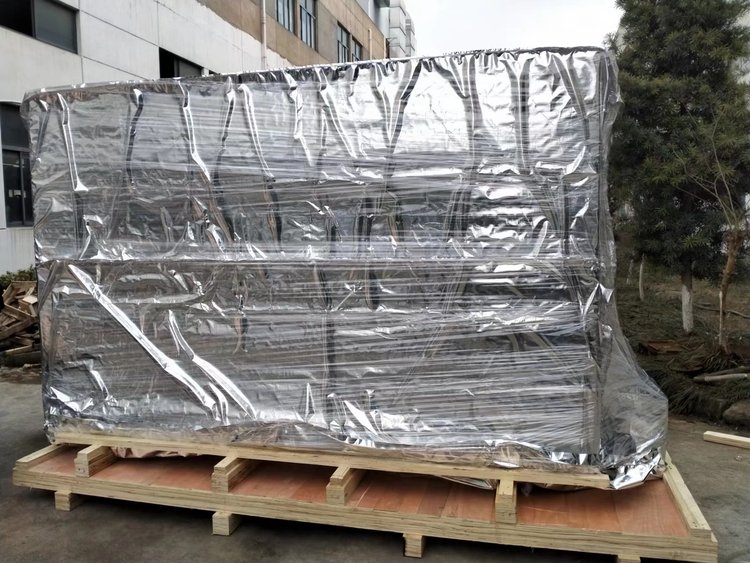
When a precision CNC machining center worth half a million dollars leaves Shanghai Port, crosses the equatorial heat and the humidity of the Indian Ocean, and arrives at a manufacturing facility in Germany, the deciding factor in whether it reaches the customer in pristine condition often has nothing to do with the machine itself. It comes down to a packaging material barely a fraction of a millimeter thick. In the world of heavy equipment export logistics, aluminum foil woven fabric composite materials are undergoing a quiet but consequential transformation.
The Packaging Paradigm Shift: From Wooden Crates to Vacuum-Sealed Aluminum Laminates
For decades, the standard approach to protecting heavy machinery during ocean freight relied on wooden crates combined with desiccant packs. The crate provided physical protection against impact, while the desiccant absorbed moisture inside the enclosure. But this solution carried an inherent flaw: wooden crates are never truly airtight, and desiccants have a finite absorption capacity. On voyages lasting 30 days or more, the probability of moisture-related failure becomes unacceptably high.
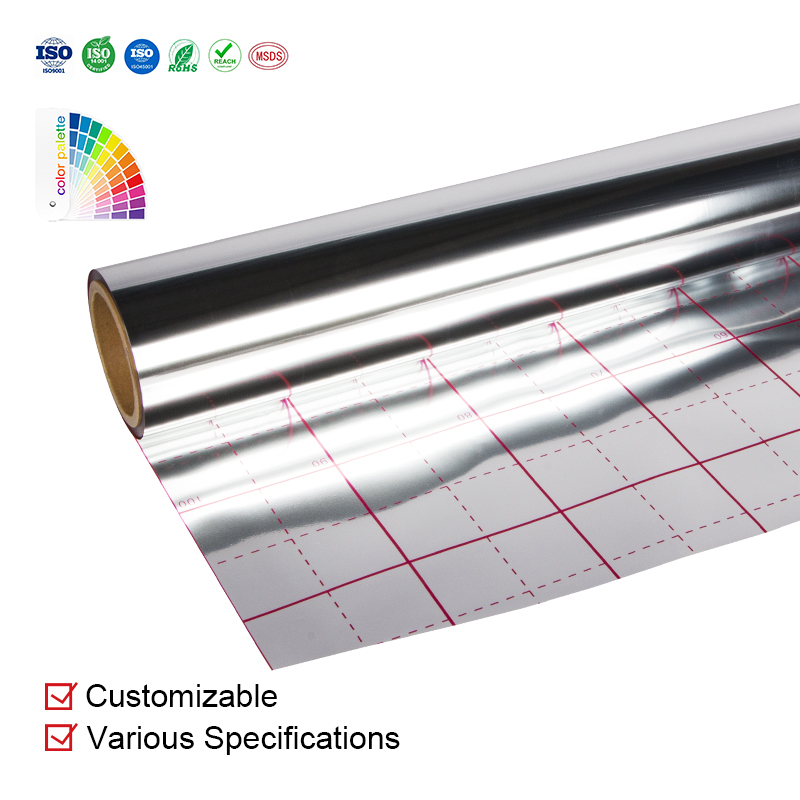
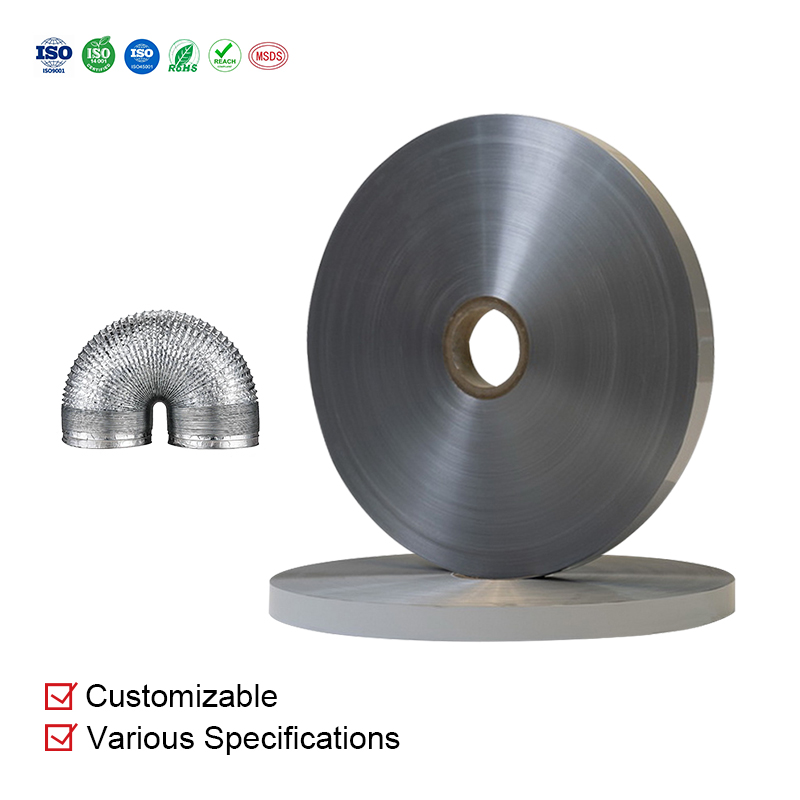
Vacuum aluminum packaging changed the equation. The core principle is straightforward: place the equipment inside a bag made from high-barrier aluminum foil composite film, evacuate the air, and heat-seal the opening. The result is a microenvironment around the equipment that is virtually free of oxygen and water vapor. Aluminum foil woven fabric composite film has emerged as the substrate of choice for this application. The woven fabric layer provides the mechanical backbone — puncture resistance and tear strength. The aluminum foil layer delivers near-zero permeability to gases and moisture. The PE extrusion coating layer enables reliable heat-sealing on the packaging line.
This three-layer sandwich structure — woven fabric, aluminum foil, and PE — achieves moisture protection that traditional wooden crate methods cannot match, all within a total thickness of under 0.3 millimeters. Yet many procurement professionals evaluating these materials still default to a simplistic "does it have foil or not" checklist, overlooking more critical performance parameters that determine real-world outcomes.
Market Forces: Export Growth Driving Packaging Technology Upgrades
China's machinery and equipment exports have sustained double-digit annual growth for several consecutive years. According to customs data, exports of machinery and transport equipment exceeded USD 1.8 trillion in 2025, with construction machinery, power equipment, and precision machine tools collectively accounting for over 40% of that total. These high-value assets demand exceptionally stringent moisture protection — any rust or mold caused by packaging failure translates directly into costly claims and reputational damage.
Compounding the challenge is growing uncertainty in global shipping routes. The Red Sea detour, Panama Canal transit restrictions, and other disruptions have extended typical voyage durations by 15 to 30 days. Packaging materials must now maintain their barrier properties over significantly longer windows without degradation. This places greater demands on the continuity of the aluminum layer and the long-term stability of the PE heat-seal layer under sustained stress.
Three Directions of Material Innovation
Direction One: Precision Control of Aluminum Layer Thickness. Conventional woven fabric aluminum foil composites use a 7-9 micron aluminum foil layer, which performs adequately in standard shipping scenarios. But as voyage durations lengthen and destination climates diversify — from Middle Eastern heat to Nordic humidity — some high-end applications are pushing for aluminum layer thicknesses of 12-15 microns, with pinhole counts held to extremely low levels. This creates new challenges for both aluminum rolling and lamination processes: how to increase foil thickness without significantly raising material weight or compromising heat-seal efficiency.
Direction Two: Functionalization of the PE Extrusion Coating. The PE layer serves dual roles in the composite — heat-sealing and anti-blocking. A notable recent trend is the incorporation of functional additives into the PE layer to impart additional performance attributes. For instance, PE layers infused with VCI (Volatile Corrosion Inhibitor) compounds release corrosion-inhibiting molecules into the vacuum-sealed space, providing active rust protection for metal equipment surfaces. Anti-static PE formulations are tailored for electronic equipment packaging, preventing static charge accumulation that could damage sensitive circuitry.
Direction Three: Lightweight and High-Strength Woven Fabric Substrates. Traditional woven fabrics use 70-100 g/m² PP or PET flat yarns. Next-generation high-strength fibers can reduce basis weight by 20-30% while maintaining equivalent mechanical properties — a direct economic benefit for exporters seeking to reduce freight costs. Additionally, aramid-blend woven fabrics are beginning to see trial adoption in vacuum packaging for ultra-large equipment such as wind turbine blades and large power transformers, offering puncture resistance 3 to 5 times that of conventional woven fabrics.
A Common Selection Pitfall: Thickness Is Not Performance
One pervasive misconception is that "thicker equals better." In reality, the moisture barrier performance of an aluminum foil composite is determined primarily by the continuity of the aluminum layer, not by the total material thickness. A composite with a 9-micron foil layer and an exceptionally low pinhole count can achieve a lower water vapor transmission rate (WVTR) than a product with 12-micron foil but a higher pinhole density. Procurement teams evaluating materials should focus on aluminum layer pinhole count (typically specified as fewer than 5 pinholes per square meter), verified WVTR data (typically under 0.01 g/m²·24h), and heat-seal strength uniformity — rather than relying on a tactile thickness assessment.
Another dimension that is frequently overlooked is web width. Large equipment such as injection molding machines and CNC machining centers can measure 3 to 5 meters in a single dimension. If the material width is insufficient, splicing and welding become necessary, and every splice introduces a potential leak point. Leading suppliers in the industry now offer woven fabric aluminum foil composite film in widths of 2.2 to 2.6 meters, covering the vast majority of mainstream equipment packaging requirements.
From Procurement to Delivery: Supply Chain Adaptability Matters
For export-oriented equipment manufacturers, the stability of the packaging material supply chain directly affects delivery timelines. Peak season pressure — typically June through October — is especially acute. Choosing a raw material supplier with roll-to-roll customization capability (including width slitting, thickness tailoring, and PE coating weight adjustment), rapid sampling (3-5 working days for trial samples), and reliable lead times (7-10 days for standard orders) is the key to de-risking the packaging supply chain.
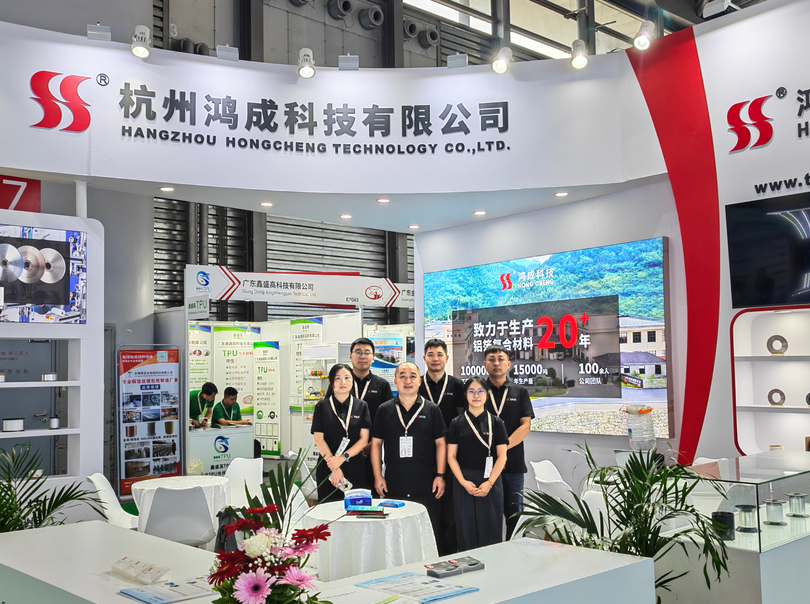
Hangzhou Hongcheng Technology has specialized in aluminum foil composite materials for over a decade, operating multiple woven fabric aluminum foil lamination production lines. We supply a full range of customizable vacuum packaging composite films — web widths from 200 to 2600 mm, aluminum foil layers from 7 to 15 microns, and woven fabric substrates from 40 to 120 g/m². From sample approval through batch delivery, we serve global equipment exporters with consistent quality and dependable lead times.
+86 13758223270、Email: wendy@hcdxcl.com.cn
40G Network Upgrade Drives AL/PET Shielding Tape for Cat6A and Cat7 Cables
How Car Sunshade Materials Block Summer Heat: A Technical Guide to Metallized Film and AL/PE Laminates
Related Article