How to Choose AL/PET Shielding Tape for Data Center and PoE Cables
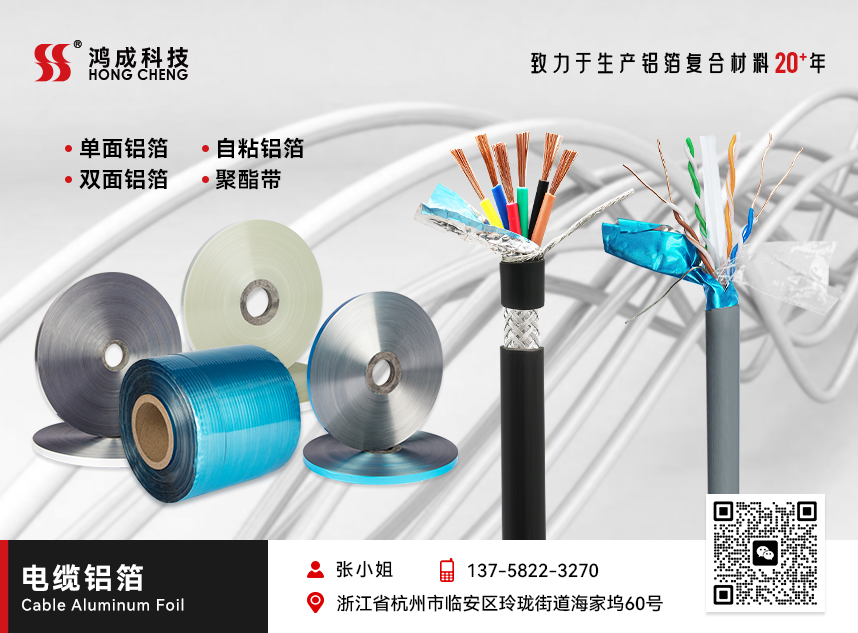
In 2026, the global AI compute infrastructure buildout has entered a new wave, with demand surging for 10G, 40G, and even 100G copper-fiber hybrid cabling. At the same time, PoE (Power over Ethernet) per-port power has jumped from the early 15W and 30W levels to 60W, 90W, and even Type 3/Type 4 high-power applications. Surveillance cameras, 5G small cells, Wi-Fi 7 access points, smart lighting, and medical IoT endpoints are being deployed at scale. Across these two parallel demand drivers, AL/PET aluminum-polyester shielding tape has become a critical raw material for pair shielding and overall shielding. How should cable makers match the right shielding structure to AI data center and PoE applications from the source?
1. Why These Two Applications Both Depend on AL/PET Shielding Tape
Inside AI compute cabinets, cabling density is extremely high, and 25G, 40G, and 100G high-speed Ethernet are highly sensitive to inter-pair crosstalk, return loss, and external EMI. In Cat6A, Cat7, Cat8, and even OM3/OM4 hybrid copper-fiber patch cords, pair shielding and overall foil shielding have become standard. AL/PET shielding tape, with its thin profile, high shielding effectiveness, and excellent wrapping formability, has become one of the preferred shielding materials for high-speed cables.
PoE cable typically runs at Cat5e/Cat6/Cat6A speeds, but because it carries high current for long periods, cable temperature rise, pair imbalance, and signal attenuation all scale with power. The shielding layer must not only provide EMI protection, but also help with heat dissipation and suppress losses caused by skin effect. In PoE++ (Type 3/Type 4) applications, the aluminum layer thickness, PET substrate thickness, and wrapping overlap ratio of AL/PET tape directly affect the cable's power-handling capability and long-term stability.
2. Matching Shielding Structure to Application Scenarios
Category one: high-speed patch cords inside AI cabinets. These cables typically use S/FTP (overall foil + overall braid + pair foil) or F/FTP construction. The pair-shielding portion places three specific demands on AL/PET tape: uniform aluminum layer thickness (typically 7–9 microns), tear-resistant PET substrate (12–23 microns), and wrapping overlap ratio of at least 25%. A thin aluminum layer produces pinholes and creases, causing fluctuations in shielding effectiveness; a PET substrate that is too thin tears easily during high-speed wrapping.
Category two: PoE security and building wiring. Typical constructions are F/UTP or U/FTP, with a single layer of overall foil plus pair shielding sufficient for high-power PoE. These applications demand high continuity in the aluminum layer and stable wrapping tension; otherwise the shield can crack or split during conduit pull and bend installation.
Category three: industrial PoE and outdoor 5G small cells. These scenarios require temperature resistance, weatherability, and UV protection, which raise the bar for PET substrate and adhesive layers. AL/PET shielding tape is typically used with flame-retardant PE jackets, and many projects must pass UL444, CMR, or CMP flame ratings.
3. Four Easily Overlooked Key Parameters
First, aluminum layer resistivity uniformity. AI data centers demand highly continuous pair shielding. Aluminum layer sheet resistance should be controlled within 0.5–1.0 Ω/□; localized thin or thick spots cause signal reflection and crosstalk.
Second, composite peel strength. The bond between the aluminum layer and the PET substrate directly determines wrapping and extrusion yield. Insufficient peel strength causes delamination during extrusion; excessive strength complicates subsequent termination.
Third, wrapping formability. If the tape is too soft, wrinkles appear during wrapping; if too stiff, conformity is poor and shielding becomes discontinuous. AI data center patch cords require precise wrapping angle and overlap ratio, and the tape stiffness must match the cable construction.
Fourth, environmental compliance. Cables exported to North America, the EU, and Japan face increasingly strict requirements for halogen-free, low-smoke, RoHS, and REACH compliance. Whether the adhesive, PET substrate, and aluminum foil in the AL/PET tape meet UL and IEC standards directly affects full-cable certification.
4. Three Common Selection Mistakes
Mistake one: thicker shielding is always better. In AI data center applications, an overly thick AL/PET tape increases cable outer diameter, reduces flexibility, and can actually harm high-density routing and minimum bend radius.
Mistake two: looking only at the aluminum layer, not the PET substrate. PET substrate thickness, stiffness, and temperature resistance determine the wrapping process window and the finished cable's temperature rating. High-power PoE applications especially require long-term PET heat resistance.
Mistake three: ignoring the match between shielding structure and termination process. The strippability of AL/PET shielding tape must be compatible with cable termination; otherwise on-site termination becomes difficult or shielding fails.
5. Controlling Shielding Tape Quality from the Source
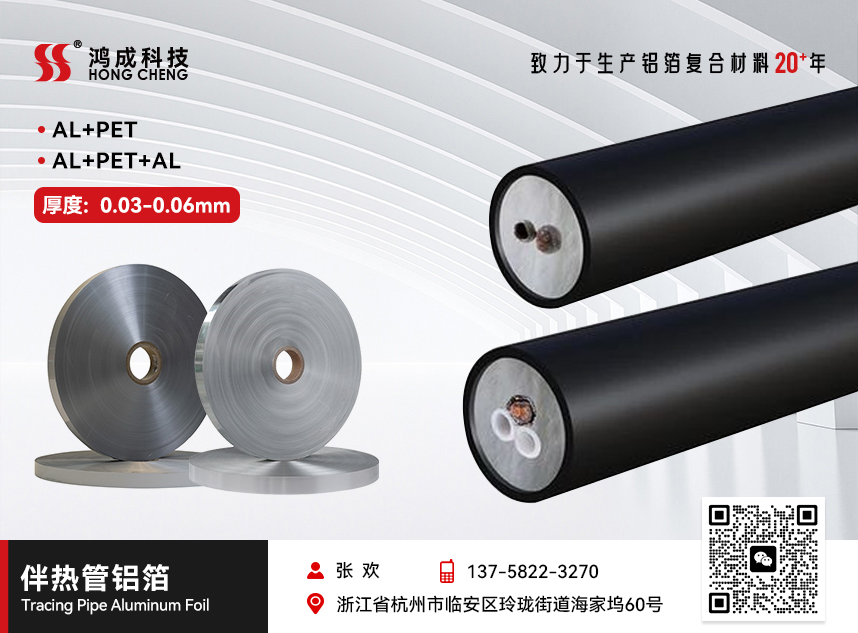
As a specialized manufacturer of aluminum foil composite materials and PE laminated composites, Hongcheng Technology supplies AL/PET aluminum-polyester shielding tape to high-speed data cable, coaxial cable, control cable, network cable, and PoE power-over-Ethernet cable manufacturers. We customize aluminum layer thickness (7–25 microns), PET substrate thickness (12–50 microns), web width (10–500 mm), and lamination structure (single-face AL/PET, double-face, with or without adhesive) to match customer wrapping, extrusion, and certification requirements.
If you are sourcing materials for AI data center patch cords, PoE cabling, or next-generation high-speed wiring projects, please contact us for samples, technical data sheets, and export certification support.
+86 13758223270 | Email: wendy@hcdxcl.com.cn
Techfoil
How AI Data Center Growth Is Reshaping AL/PE and VMPET Flexible Duct Facing Demand
Cold Brew Tea Foil Packaging Guide: Summer RTD Tea Laminate Selection
Related Article