40G Network Upgrade Drives AL/PET Shielding Tape for Cat6A and Cat7 Cables
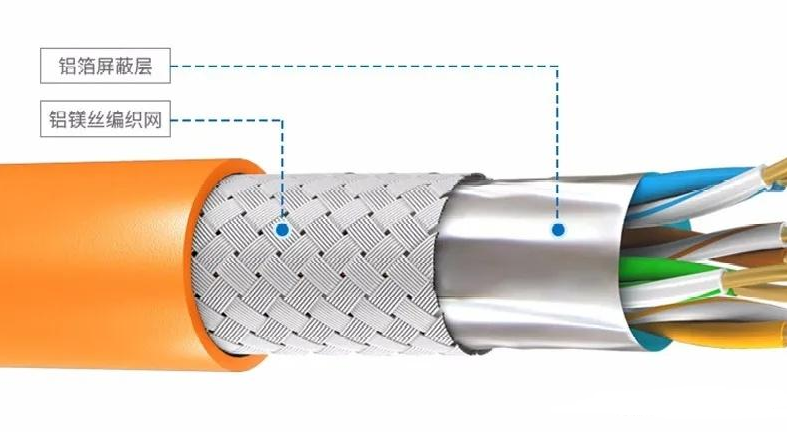
In the second half of 2026, as AI computing center expansion, 5G bearer network upgrades, and smart factory construction enter their peak periods, global data center cabling is accelerating from gigabit toward 10G, 40G, and even 100G Ethernet. This wave of network upgrades has directly driven demand for Cat6A and Cat7 high-end LAN cables, making the AL/PET composite shielding tape, a critical layer inside the cable structure, a "key variable" on the procurement list.
For cable manufacturers, the choice of shielding material directly determines whether the cable can transmit signals stably above 10Gbps while resisting external electromagnetic interference. This article analyzes the application and material selection trends of AL/PET composite shielding tape in Cat6A/Cat7 LAN cables from the perspective of 10G network technical requirements.
I. New Requirements for Shielding Layer in 10G Networks
In the Cat5e era, standard UTP cables were sufficient for gigabit transmission, and shielding was not mandatory. However, with Cat6A (10Gbps@100m) and Cat7 (10Gbps@100m, 600MHz bandwidth), alien crosstalk between cables and external electromagnetic interference (EMI) become particularly critical issues.
From a structural perspective, common Cat6A configurations include F/UTP (overall foil shield plus drain wire), S/FTP (foil pair shield plus braid overall shield), and U/FTP (pair-only foil shield). Cat7 almost universally adopts S/FTP or even more advanced F/FTP structures. All of these rely on a layer of aluminum composite film wrapping the four twisted pairs, which reflects electromagnetic waves and reduces signal attenuation.
For shielding tape suppliers, the core requirements of 10G networks focus on three points: first, the aluminum layer must be dense with no pinhole defects to ensure high reflection efficiency for high-frequency signals; second, the composite film must have excellent flexibility to avoid tearing and wrinkling during high-speed cabling; third, thickness uniformity must be controlled within ±5% tolerance to prevent tension fluctuations during high-speed extrusion.
II. Why AL/PET Composite Shielding Tape Has Become the Mainstream Solution
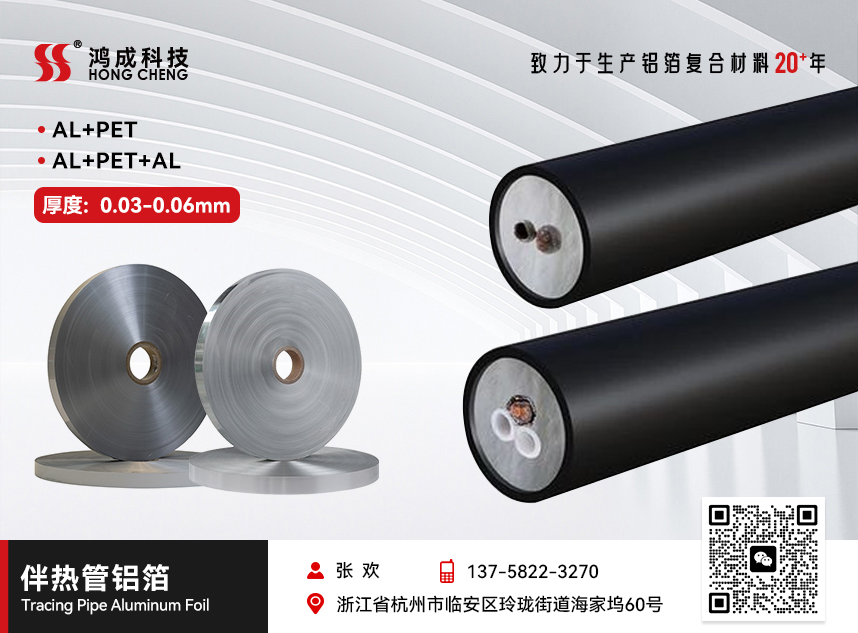
In the pair-shielding (F/UTP, U/FTP) structures of Cat6A/Cat7 cables, the industry mainstream currently adopts AL/PET composite tape, that is, aluminum foil laminated with polyester film through adhesive. Compared with pure aluminum foil, this structure offers three major advantages.
First, higher mechanical strength. The PET film acts as a carrier, providing the shielding tape with good tensile strength and preventing breakage during high-speed automated cabling. Second, more stable temperature resistance. The PET substrate maintains dimensional stability in the range of -40°C to 150°C, meeting the instantaneous high temperatures during cable extrusion. Third, superior shielding effectiveness. The aluminum layer thickness is typically controlled between 7-15 microns, paired with a 12-25 micron PET layer, achieving overall shielding effectiveness above 60dB, fully meeting the anti-interference requirements of 10G networks.
Hongcheng Technology has developed a complete product matrix in the AL/PET composite tape field, with aluminum layer thickness flexibly adjustable between 7-25 microns according to customer cable design requirements, substrate widths covering 10-1000mm, supporting customized structures including single-side aluminum, single-side aluminum plus PET, and double-side aluminum, with products exported to Southeast Asia, Europe, and North America.
III. Differentiated Material Selection for Cat6A vs Cat7
Although both Cat6A and Cat7 belong to the 10G-grade cable category, their cable structures differ, leading to different requirements for AL/PET shielding tape.
Cat6A typically adopts F/UTP or U/FTP structure, where the shielding tape wraps all four twisted pairs together, requiring a balance between flexibility and flatness. Hongcheng Technology recommends selecting a standard AL/PET composite tape with aluminum layer thickness of 9-12 microns and PET thickness of 16-23 microns for Cat6A applications. This specification achieves a good balance between shielding effectiveness and cabling yield.
Cat7, on the other hand, commonly adopts S/FTP or F/FTP structure, where each twisted pair requires individual aluminum foil wrapping, followed by an additional braid shield. This application demands higher thickness uniformity from the shielding tape, typically selecting thin high-strength specifications with aluminum layer thickness of 12-15 microns and PET thickness of 12-19 microns to accommodate the simultaneous wrapping of multiple pair cores.
Additionally, some high-end Cat7A (1000MHz bandwidth) products adopt a double-side aluminum structure, namely aluminum/PET/aluminum three-layer composite, which improves shielding effectiveness by 20%-30% compared to single-side aluminum, particularly suitable for industrial Ethernet, medical imaging, rail transit, and other high-interference scenarios.
IV. Supply Chain and Certification Requirements During the Export Peak Season
July to September each year is the peak construction season for European and American data centers, and also the traditional peak period for LAN cable exports. Since the beginning of this year, North American hyperscale data center construction has entered a new round of expansion, and Europe is also accelerating its computing infrastructure layout following the implementation of the AI Act, bringing significant incremental demand for Cat6A/Cat7 LAN cables and upstream AL/PET shielding tape exports.
For shielding tape suppliers, export orders must not only meet performance specifications but also comply with a series of international certification requirements, including UL certification (United States), CE certification (European Union), RoHS 2.0 directive (restriction of hazardous substances), and REACH regulation (chemical registration and evaluation). All Hongcheng Technology AL/PET composite shielding tape products have obtained the above certifications, and SGS, Intertek, and other third-party test reports can be provided upon customer request to ensure smooth export customs clearance.
V. Material Selection Mistakes and Procurement Recommendations
In actual procurement, some customers are accustomed to ordering based on the principle that "the thicker the aluminum layer, the better," a practice that is not applicable in 10G LAN cable applications. An excessively thick aluminum layer will make the shielding tape too rigid, making it difficult to conform to twisted pairs during cabling, creating new performance fluctuation points. The correct approach is to make a comprehensive judgment based on cable grade, twist pitch, and extrusion process, and request comparative samples of multiple specifications from the supplier when necessary.
Another common mistake is neglecting the bonding strength between the PET layer and the aluminum layer. One of the key performance indicators of AL/PET shielding tape is peel strength, which typically requires reaching 2.5N/15mm or above. If the bonding strength is insufficient, delamination may occur during high-speed cabling or long-term use, leading to degradation of shielding effectiveness.
For manufacturers of Cat6A/Cat7 high-end LAN cables, it is recommended to fully communicate cable structure design drawings, extrusion process parameters, and target performance specifications with the shielding tape supplier before bulk procurement, and request customized AL/PET composite tape solutions from the supplier rather than simply applying generic specifications. This not only helps improve the performance stability of finished LAN cables but also facilitates BOM cost optimization.
With the continued expansion of downstream applications such as AI, data centers, and industrial Internet, Cat6A/Cat7 LAN cables will maintain rapid growth in the next 3-5 years. As a key functional layer in cable structure, AL/PET composite shielding tape will continue to evolve in material innovation and process upgrades. For shielding tape suppliers, seizing the 10G network upgrade window and planning ahead for higher bandwidth, better flexibility, and stronger bonding strength product lines will be the key to winning this round of market growth.
+86 13758223270、Email: wendy@hcdxcl.com.cn
How to Select Antimicrobial VMPET Duct Facing for High-Humidity HVAC Systems
Material Innovation in Heavy Equipment Vacuum Packaging: The Evolution of Aluminum Foil Woven Composite Laminates
Related Article