Why Heat Trace Shielding Tape Changes With Every Installation
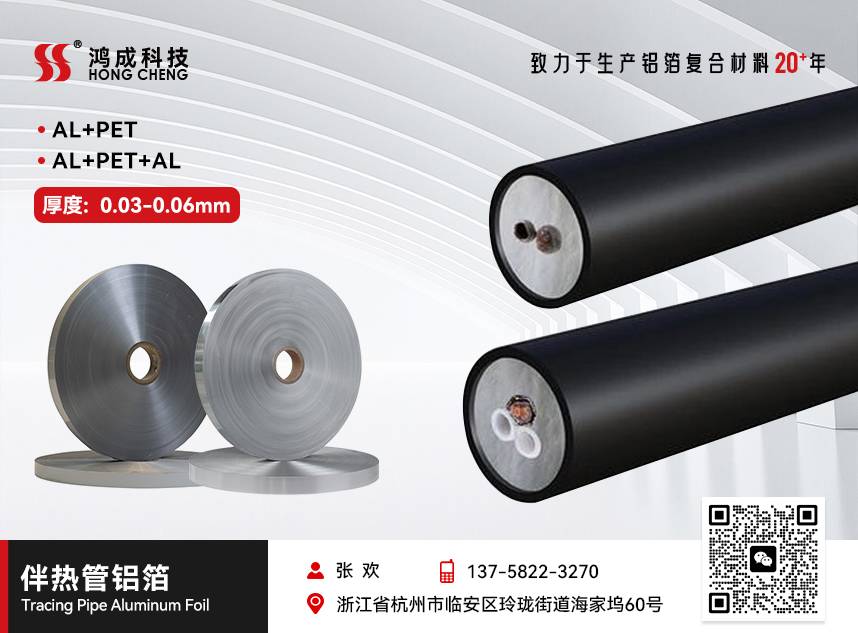
Cable makers who build self-regulating and constant-wattage heat tracing products tend to treat shielding tape as a commodity item. If it wraps cleanly and passes the flame test, it goes on every product line. In practice, two heat trace cables from the same factory — one strapped to a process pipe in a chemical plant, one buried beside a municipal water main outdoors — can require shielding material two grades apart. As a supplier of aluminum foil laminates to heat trace cable and heating tape manufacturers, we see this gap regularly. What follows breaks down the material logic by installation scenario.
What the shield actually does in a heat trace cable
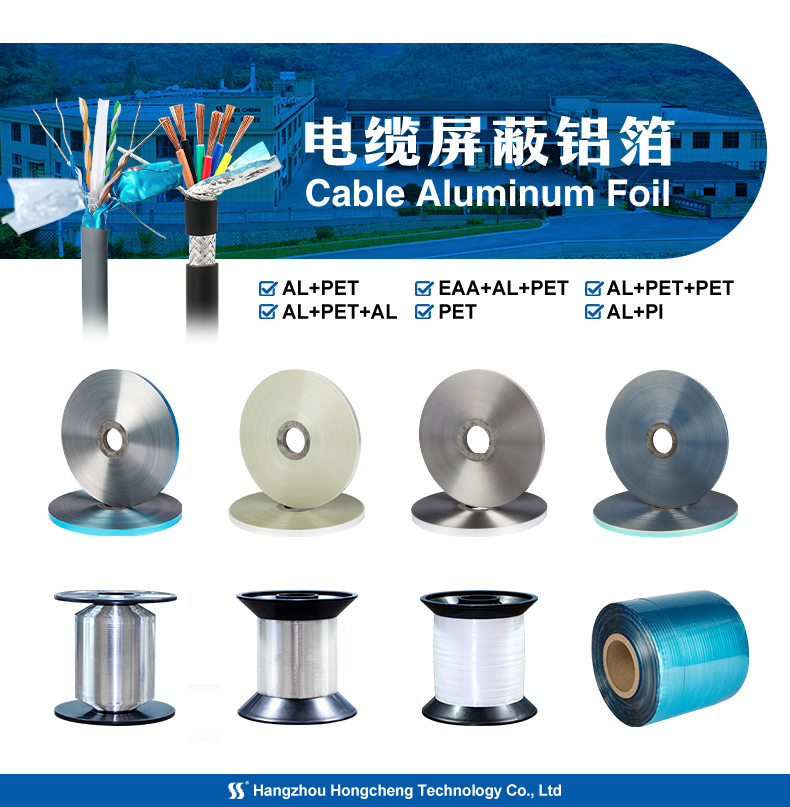
A self-regulating heat trace cable contains two parallel bus wires, a conductive polymer core between them, then an insulation layer, a shielding layer, and a jacket. The shield serves three functions. It confines the electromagnetic field generated by the energized core so nearby signal and instrument cables are not disturbed. It provides a continuous ground path along the entire length so fault current has somewhere to go and the residual current device can operate. And mechanically it restrains the jacket, limiting displacement caused by repeated thermal expansion and contraction.
That means the shield is not simply a metal film. It has to conduct continuously, survive the long-term operating temperature, wrap without breaking or telescoping, and resist the die-head temperature during jacket extrusion. All four properties pass easily on a lab bench. What separates good material from marginal material is the installation scenario.
Scenario one: process pipe tracing in chemical plants
High pipe temperatures, corrosive media risk, and dense instrument cabling characterize this environment. Heat trace cable often spirals along a pipe for tens of meters, so the overlap rate of the shielding tape must stay stable. If it drifts, contact resistance at the overlap rises and the ground path can break somewhere in the middle of the run.
The first choice here is an aluminum foil fiberglass shielding tape. The fiberglass cloth acts as a carrier, providing tensile strength so the tape does not break during wrapping, while the aluminum layer handles conduction and shielding. Aluminum foil is supplied in the conventional 6μm to 9μm range; for long spiral runs and tight bend radii, specify the heavy gauge at 9μm, because thin gauge develops pinholes after repeated flexing. One procurement warning: in explosion-protected areas, the flame rating of the shielding tape and the flame rating of the jacket compound are two separate specifications. Do not use the jacket test report to qualify the tape.
Scenario two: buried and exposed outdoor piping
Water and thermal cycling are the real enemies outdoors. Buried pipe junction chambers stay damp year-round, and exposed pipe heats by day and freezes at night, so jacket shrinkage is far greater than in indoor installations.
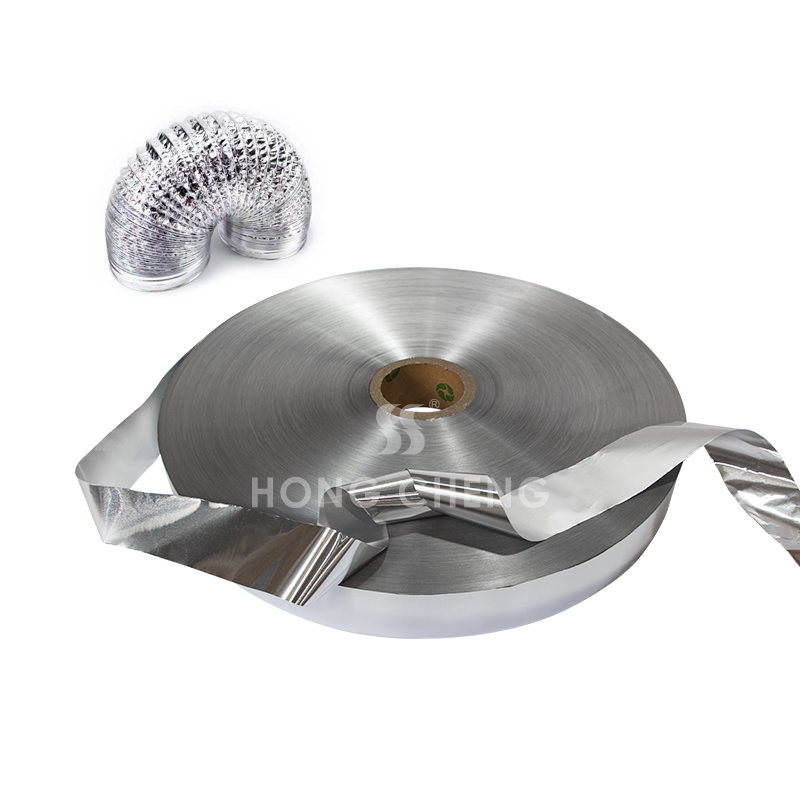
For this scenario, specify aluminum mylar tape (AL/PET) with a heavier jacket, or move directly to a foil fiberglass structure. The value of the PET layer is heat resistance and stiffness: the tape resists edge collapse after wrapping and resists shear deformation during jacket extrusion. A critical detail outdoors is foil orientation. With the aluminum facing inward against the insulation, the foil forms a vapor barrier on the insulation surface. With the aluminum facing outward, condensation enters the overlap seam directly, and over time the overlap oxidizes and whitens. This orientation must be fixed in the process documentation; leaving it to operator judgment is a defect waiting to happen.
Scenario three: tank, valve, and short branch tracing
Tank tracing, valve tracing, and instrument line tracing share a profile: short runs, many branches, many joints, and dense bends. Mechanical demands here actually exceed thermal demands, because every branch requires a fresh wrap start and every joint requires stripping and re-wrapping.
Thin-gauge aluminum mylar tape works well here, provided the slitting quality is good. Slit narrow tape should hold width tolerance within ±0.2mm with no burrs or adhesive squeeze-out at the roll edge. On high-speed narrow-width wrapping machines, edge defects catch and break the tape, and yield drops immediately. This is the question we hear most from heating tape manufacturers, because they have run the numbers: one break costs the shift a measurable slice of output.
Scenario four: long-distance pipeline tracing
Long-distance line pipe tracing runs to thousands of meters, usually powered in sections, each with an independent grounding design. Two requirements dominate: conduction continuity and batch-to-batch consistency.
Conduction continuity depends on the aluminum layer having no through-pinholes and on roll lengths long enough to reduce mid-run splices. Batch consistency depends on the supplier. One project is typically delivered across several batches, and if peel strength or aluminum thickness drifts between them, a tape that passed incoming inspection in March will fail in June. Our practice is to retain a first-piece sample from every batch until the project closes, so a dispute can be settled by direct comparison rather than argument.
Four questions procurement should ask
First, what is the long-term operating temperature of this heat trace cable, and is the tape selected against the jacket temperature or the core temperature? The answer is always the stricter of the two.
Second, what overlap rate is required, and does the tape width support it? If the width falls short, the only remedy is running the machine slower, and that lost output ends up inside the material cost anyway.
Third, is foil orientation specified in the process documentation? If it is not, the variable has been handed to the operator.
Fourth, is there peel strength data after heat aging? Passing peel strength at room temperature is not difficult. Passing it after extended exposure at operating temperature is the real test.
A closing note
Heat trace cable and trace heating tube look like standardized products, but shielding tape selection depends heavily on where the product will be installed. The same film that works on a chemical plant pipe can fail on a buried outdoor run. As a material supplier, we would rather customers describe the installation, operating temperature, and wrapping method at the inquiry stage. That makes structural recommendations meaningful instead of reducing the conversation to a price per square meter.
Hangzhou Hongcheng Technology specializes in aluminum foil laminates and PE extrusion coatings. Aluminum foil fiberglass shielding tape and aluminum mylar tape are available custom in width, thickness, and structure.
+86 13758223270 Email: wendy@hcdxcl.com.cn
Duct Foil Costing: Get the Aluminum Gauge and Laminate Ratio Right First
Choosing Aluminum Plastic Film for Insulated Cooler Box Liners