Hongcheng Technology at wire China 2026
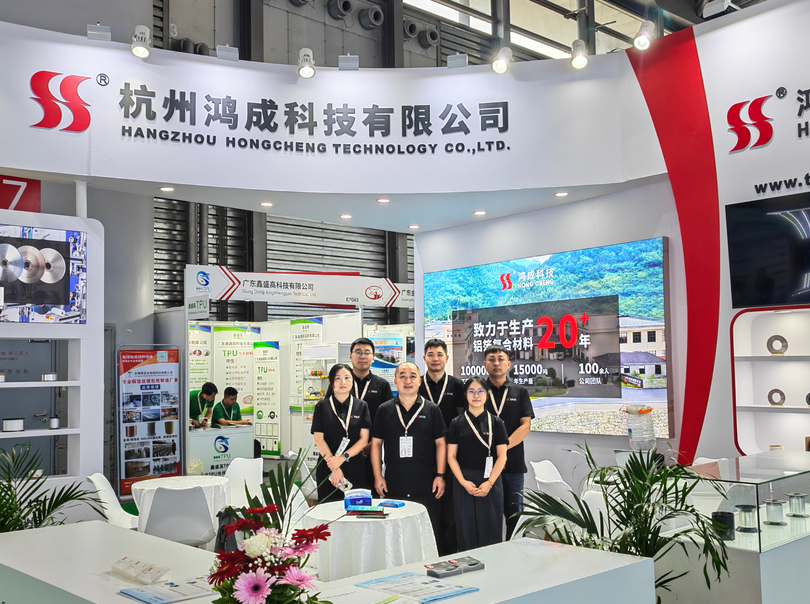
wire China 2026, the International Wire & Cable Industry Trade Fair, opened on 21 September at the Shanghai New International Expo Centre and runs through 24 September. Hangzhou Hongcheng Technology Co., Ltd. is exhibiting at Booth E7F63, presenting aluminum mylar tape, AL/PET shielding tape, and other aluminum foil laminates and PE-coated composite materials for cable shielding, meeting with cable manufacturers, wire harness makers, and trading companies from China and overseas.
What Visitors Are Asking at the Booth
Across the first two days, the visitors stopping by E7F63 have been mainly procurement and technical staff from cable and harness factories. Their questions have been specific and practical, and three topics keep coming up.
First: how to define foil thickness and structure for shielding tape. Shielding requirements vary widely from one cable type to another. Coaxial and control cables are judged mainly on shielding effectiveness. Network cables are judged on consistency and processing compatibility. Automotive harnesses are more sensitive to temperature resistance and flexibility. We brought sample rolls with different foil thicknesses to the booth so visitors can compare them directly against their own cable construction and test requirements. Aluminum foil is commercially supplied in 6 μm to 9 μm; the 9 μm heavy grade offers better shielding effectiveness and better flex-crack resistance, while 6 μm already meets most requirements for cost-sensitive standard cables. The point is to match the structure to the actual working conditions, not to assume thicker is always better.
Second: slitting quality and machine compatibility. Shielding tape runs continuously through taping machines. Burrs on the slit edge or uneven winding tension cause tape breaks and line stoppages at high speed. Many visitors picked up the sample rolls and immediately checked the edge finish and winding tightness by hand. Our slitting samples can be customized to the reel diameter and width of the customer's taping equipment, so they can be trial-run on the machine directly.
Third: consistency between samples and production batches. Several visitors said the same thing: a supplier's samples pass, but the bulk shipment shows performance variation. Our approach, explained at the booth, is to record the process parameters confirmed at sampling, run production to those same parameters, and ship test data on peel strength and thickness with the goods so customers can cross-check during incoming inspection.
Shielding Materials on Display
The cable shielding laminates featured at the booth this year include the following.
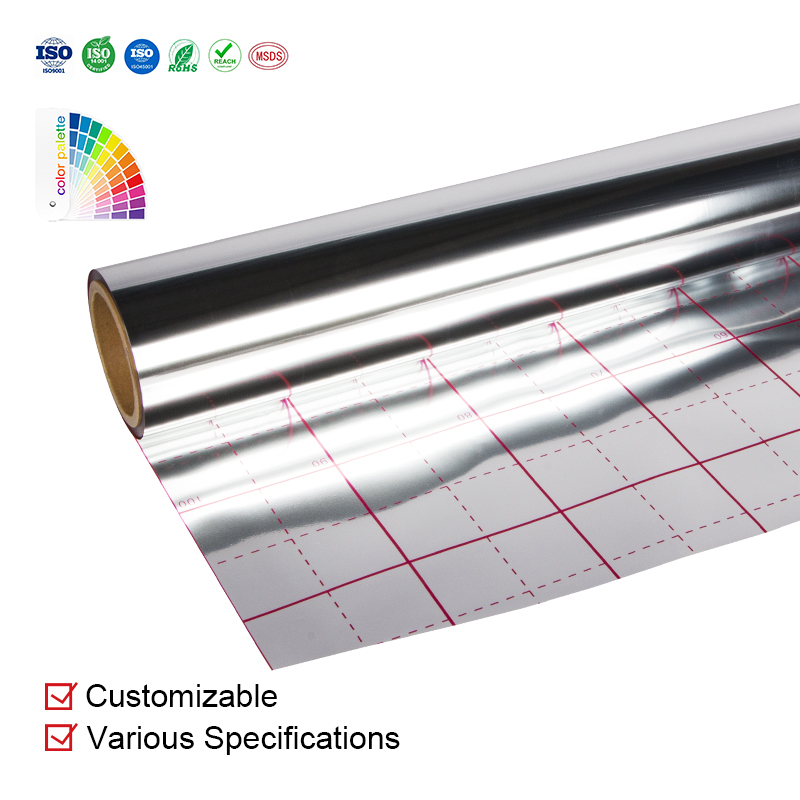
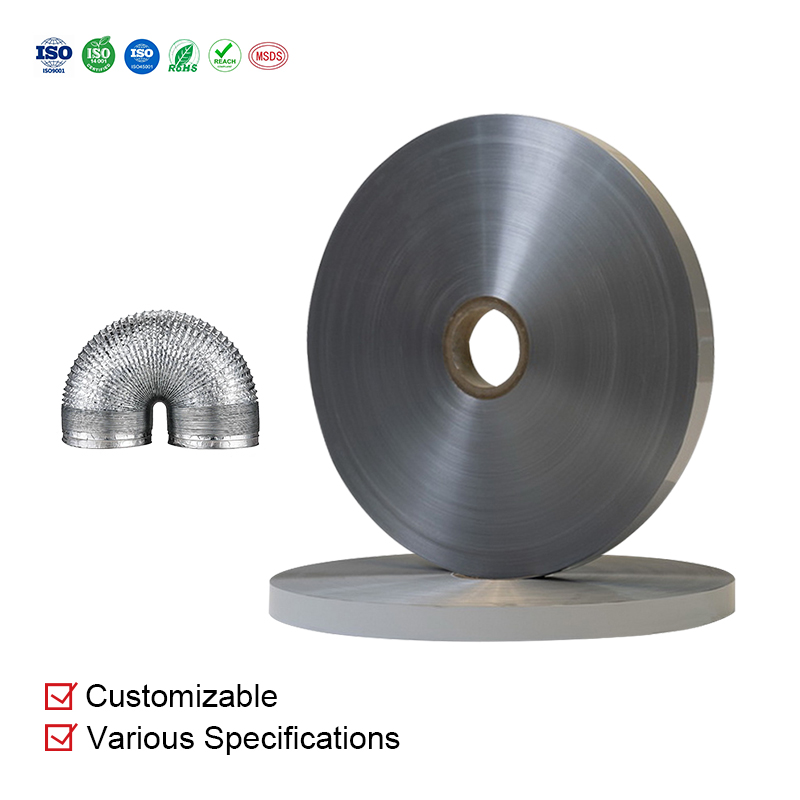
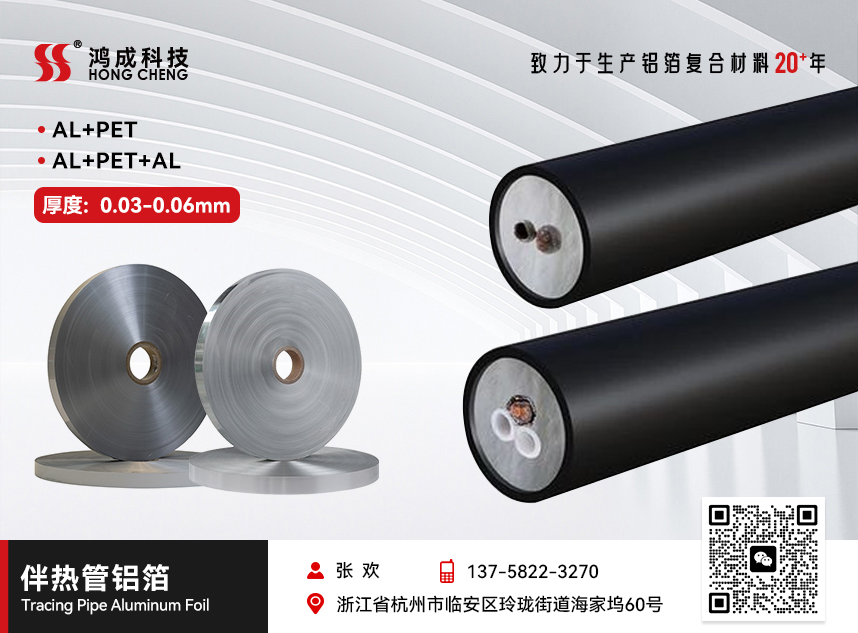
Aluminum mylar tape (AL/PET shielding tape). The classic foil-and-PET construction, balancing shielding effectiveness with mechanical strength. It is one of the highest-volume structures in pair shielding and data cable applications, used in coaxial and control cables, network cables, and high-speed data lines.
Thin-profile AL/PET shielding film. For high-speed data lines and precision cables with small diameters and tight thickness budgets. By controlling the ratio of the aluminum layer to the PET layer, shielding effectiveness is maintained while reducing overall thickness, making it easier to place the shield within a limited cable cross-section.
Automotive-grade aluminum mylar tape. Developed for automotive harness applications, with a focus on temperature class, flexibility, and adhesive compatibility to handle the different conditions found in the engine bay and elsewhere in the vehicle body.
The booth also displays our aluminum foil laminates and PE-coated composite materials for building insulation and industrial packaging, so visitors can review our composite processing capability in one place.
Why Cable Makers Source Shielding Tape at the Material Level
A recurring theme in the conversations at E7F63 is where shielding tape fits in the supply chain. Shielding tape is not an end product; it is a raw material that cable factories convert on their own taping lines. That changes what buyers should look at. A cable maker does not simply purchase "tape" — it purchases a laminate whose aluminum layer, PET layer, adhesive system, and slitting quality all have to work together on a specific cable construction and a specific taping machine.
This is why the technical discussion at the booth tends to move quickly past the price per kilogram. The useful comparison is structural: what foil thickness, what PET grade, what total thickness, what slit width and reel diameter, and what evidence the supplier can provide on peel strength and batch-to-batch consistency. When those are defined, price comparison becomes meaningful — and only then.
It also explains why converters value a source manufacturer. When laminating, slitting, and testing all happen under one roof, the process parameters confirmed at sampling can be carried forward into production. When several parties are involved between the foil and the finished roll, those parameters get re-interpreted at each step, and consistency is the first thing to suffer.
Where These Materials Are Used
The laminates on display map onto several mainstream cable categories:
- Coaxial and control cables — shielding effectiveness and dimensional stability are the primary requirements, typically met with AL/PET tape in standard gauges.
- Network cables (Cat5e through Cat7) — pair shielding demands tight consistency and clean processing, since tape runs at high speed over long lengths.
- High-speed data lines (HDMI, USB, DisplayPort) — small diameters and tight thickness budgets call for thin-profile AL/PET constructions.
- Automotive harnesses — temperature class, flexibility, and adhesive compatibility drive the material choice, and the requirements differ between the engine bay and the vehicle body.
Each application pulls the specification in a different direction, which is why we encourage visitors to bring their cable construction and test requirements to the booth rather than selecting from a catalog.
Visit Us at Booth E7F63
The show closes on 24 September, leaving two more days. If you are sourcing shielding tape for cable products, or want to discuss structure design, slitting specifications, or supply consistency for volume orders, you are welcome at Booth E7F63, Shanghai New International Expo Centre, where our technical and sales staff will be on hand.
If you cannot attend in person, contact us directly through the details below. We will arrange samples and technical follow-up based on your cable type, taping equipment, and volume requirements — no booth visit required.
Hangzhou Hongcheng Technology specializes in the development and production of aluminum foil laminates and PE-coated composite materials, supplying aluminum mylar tape and AL/PET shielding tape to the cable shielding, building insulation, and industrial packaging industries, with custom widths, thicknesses, and structures available.
+86 13758223270 Email: wendy@hcdxcl.com.cn
Material Selection Guide for Aluminum-Foil-Glass-Fiber Composite Shielding Tape in Heat-Tracing Applications
Shade Net Material Selection by Application: A Buyer's Guide for Greenhouses and Outdoor Covers
Related Article