Low-VOC and Halogen-Free Are Becoming the New Benchmarks for Duct Facing Materials
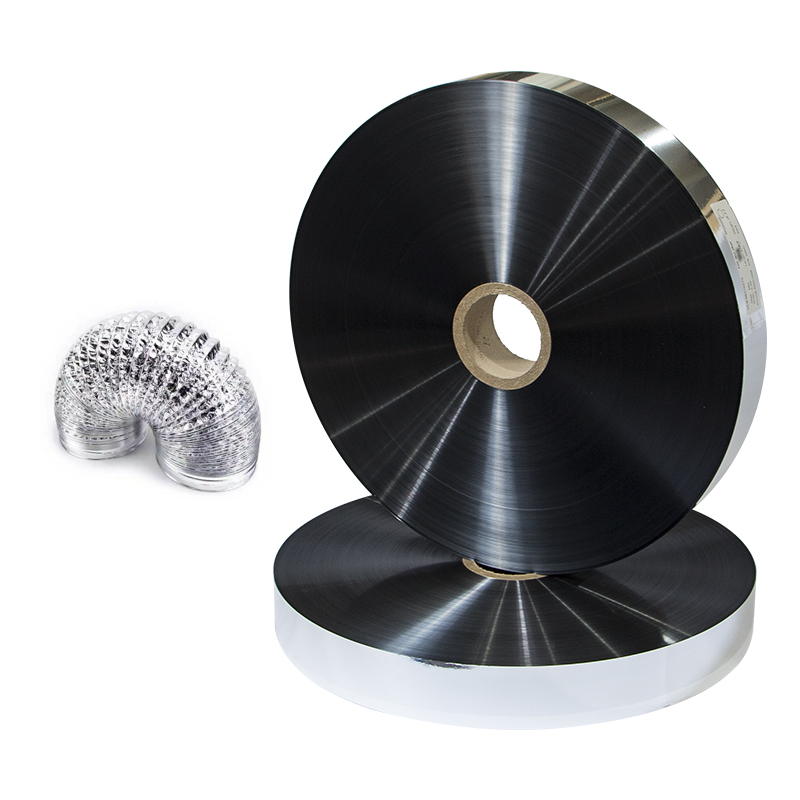
Low-VOC and Halogen-Free Are Becoming the New Benchmarks for Duct Facing Materials — How Flexible Duct Sourcing Is Quietly Changing
As August draws to a close, the HVAC industry is wrapping up its peak export season, yet many flexible duct manufacturers' procurement teams have noticed a new keyword appearing in overseas inquiries: low-VOC. Driven by tightening indoor air quality and fire-safety regulations across the EU and North America, the outer-layer facing material of ventilation ducting — a seemingly mature category — is undergoing a quiet, compliance-led upgrade.
Not long ago, buyers evaluated duct facing on three things: foil reflectivity, material stiffness, and whether it could be laminated efficiently on the production line. Today, a growing share of export orders write VOC emissions, halogen content, and flame-retardant rating directly into the technical agreement. For duct manufacturers, this means the choice of raw-material supplier is shifting from "price-driven" to "compliance-plus-performance" driven.
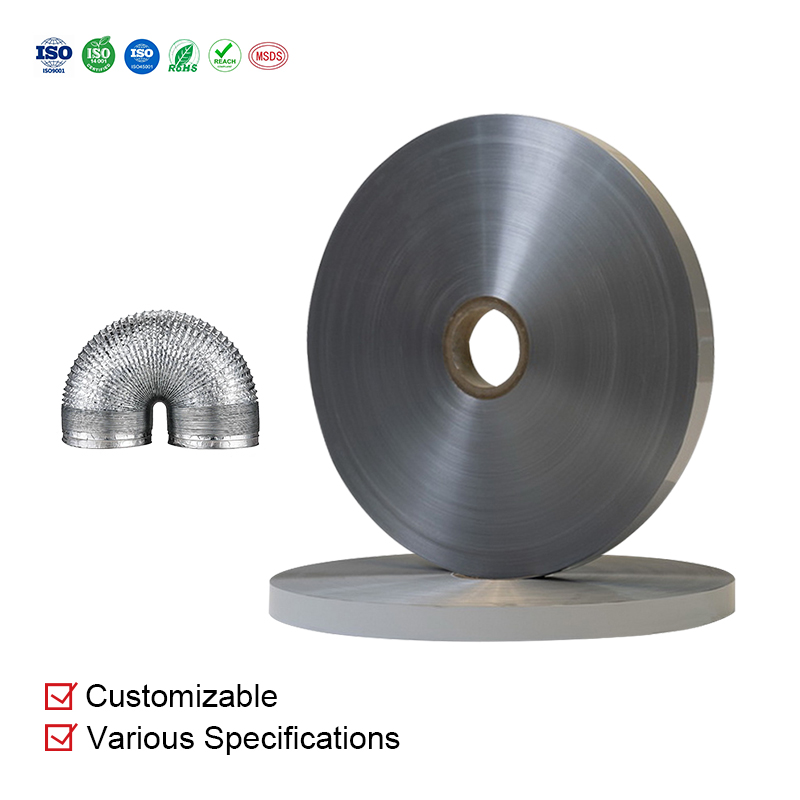
Start with VOC. Once installed, flexible ducting sits in a constant airflow. If excessive low-molecular-weight solvents or plasticizers remain in the facing material, they release slowly into the moving air, causing the familiar "new-room odor" and potentially affecting sensitive occupants. Low-VOC VMPET duct facing and AL/PE duct facing achieve their performance through strict control of the coating and extrusion-lamination process — reducing solvent residue and favoring low-migration polyethylene and adhesive systems to keep total volatile organic compounds at a lower level from the source. This is exactly why more duct factories now ask suppliers a pointed question up front: "Do you have a low-VOC test report for this material?"
Then there is halogen-free flame retardancy. Halogenated flame retardants are efficient and inexpensive, but they emit corrosive gases and dense smoke when burned, which is why they are increasingly rejected in densely occupied public buildings, hospitals, and data centers. Halogen-free duct wrap materials instead use phosphorus-based, nitrogen-based, or inorganic flame-retardant systems, achieving the same rating with lower smoke emission and reduced smoke toxicity. For duct factories aiming at the European market, this is no longer a question of "whether to do it" but "when it becomes mandatory."
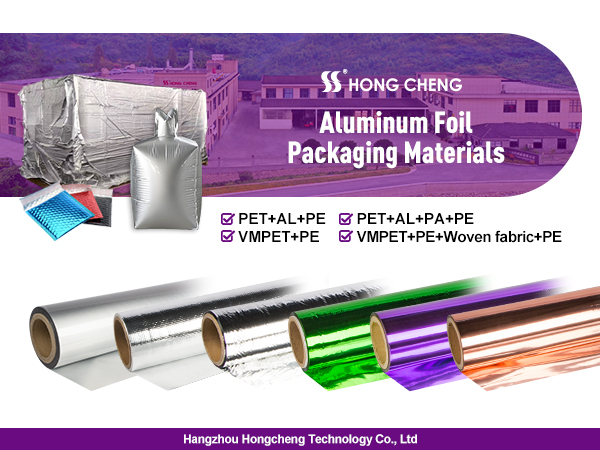
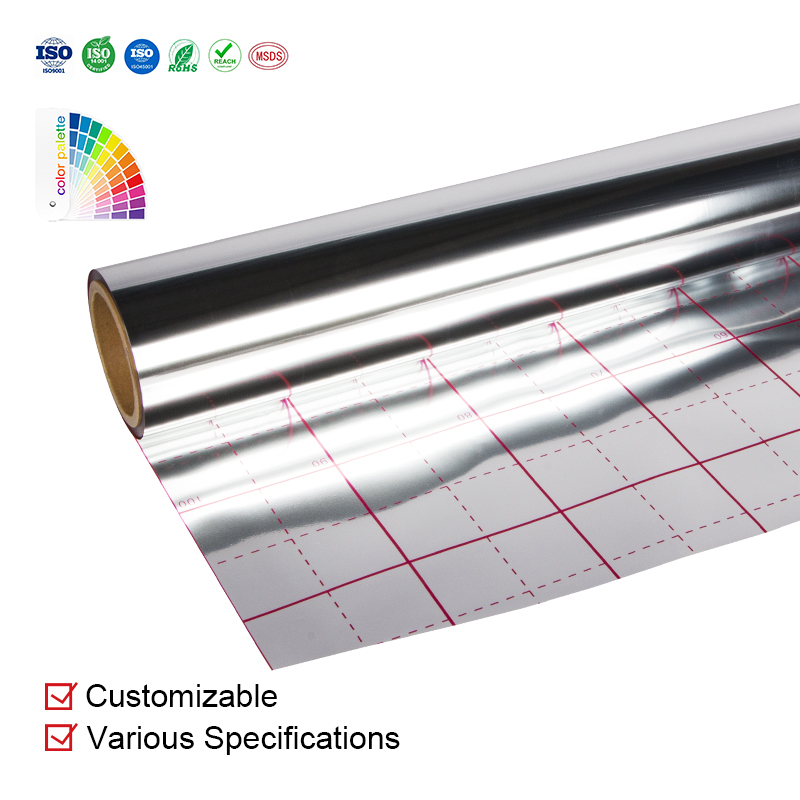
In terms of material structure, there are two main routes for duct outer facing today. The first is the VMPET route, which uses polyester film as the base, applies a vacuum-metallized aluminum layer for metallic appearance and reflective insulation, and then extrusion-laminates with PE. It balances light weight, flexibility, flex resistance, and good bonding, making it the primary choice for flexible duct outer layers. The second is the AL/PE route, which laminates aluminum foil with polyethylene; the thicker aluminum layer delivers stronger barrier and reflective performance, suiting ducting scenarios that demand higher strength and insulation. These two routes are not substitutes — they are combined and selected according to duct diameter, air pressure, and operating conditions.
So what parameters should buyers verify when sourcing? First, aluminum-layer thickness and metallization adhesion, which directly determine reflectivity and flex-life. Second, the coating weight and melt index of the PE lamination layer, which affect line speed and peel strength. Third, the VOC and halogen test reports, with clear reference to the applicable standard and testing body. Fourth, the flame-retardant rating — whether it merely meets basic flame resistance or targets a specific European (EN 13501) or North American (UL) classification. Only when all four are locked into written reports can buyers avoid the trap of "verbal compliance" that fails to match the actual material.
One common misconception also deserves correction: the belief that metallized film is merely a cheap substitute and always performs worse than solid foil. In reality, for most flexible ducting, VMPET's balance of light weight, flexibility, flex resistance, and cost often fits real-world conditions better than thickening solid foil. What matters is the stability of the base film and the metallization process, not the name of the material itself.
It is reasonable to expect that, within the next two years, low-VOC and halogen-free requirements will shift from "nice-to-have" to "must-have." For duct manufacturers, the earlier they lock in a facing-material supplier with stable compliance capability, the sooner they can seize the advantage in the peak export season and the window before new regulations take effect.
Hangzhou Hongcheng Technology Co., Ltd., as a professional manufacturer of aluminum foil composite and PE extrusion-lamination materials, has long supplied VMPET duct facing and AL/PE duct facing raw materials to the flexible duct industry. We provide customized production according to customers' differentiated requirements for low-VOC, halogen-free, aluminum-layer thickness, and width structure, ensuring stable supply for global duct customers.
+86 13758223270、Email: wendy@hcdxcl.com.cn
Summer Renovation Season Sourcing Guide: How to Choose Building-Grade Aluminum Foil Tape Facing Substrate
How to Choose AL/PET Shielding Tape for PV DC Cables: Matching 1500V Solar System Requirements
Related Article