Warm Edge Spacer Foil Facing Selection Guide
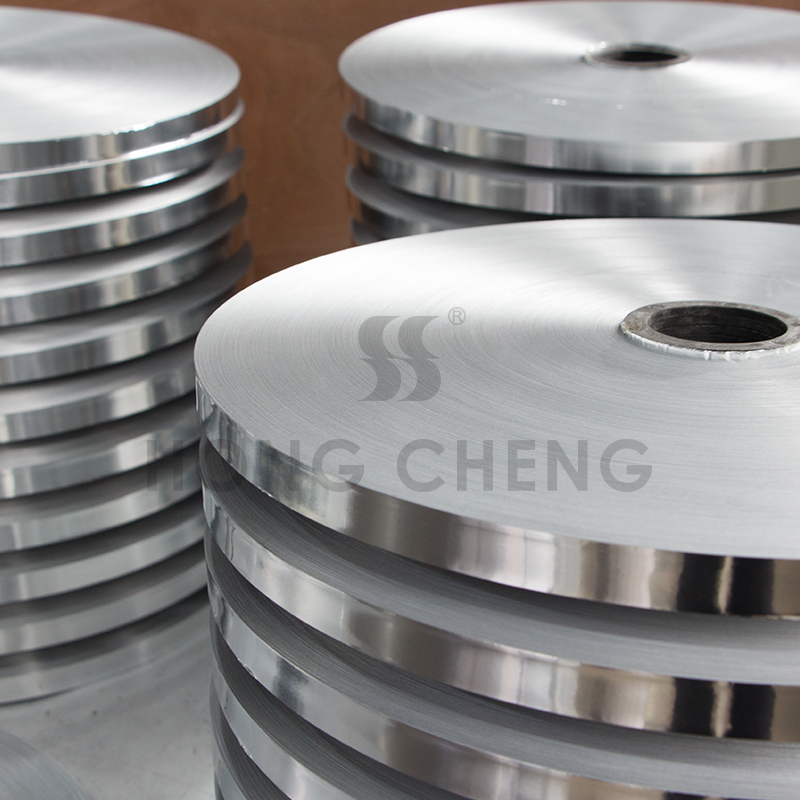
The linear thermal bridge at the edge of insulated glass units (IGUs) is the weakest link in whole-window thermal performance. Traditional aluminum spacer bars conduct heat at roughly 160 W/(m·K), causing condensation and mold growth on the indoor glass edge during winter. Warm edge spacer technology replaces metal with low-conductivity materials, reducing the linear thermal transmittance (Ψ-value) from 0.8 W/(m·K) to below 0.03 W/(m·K). The foil facing laminated on the spacer exterior — a thin-profile AL/PET composite film — directly determines the spacer's weathering resistance, low-emissivity insulation performance, and bonding reliability with IGU sealants.
As a raw material supplier of aluminum foil laminates, we have learned from long-term collaboration with warm edge manufacturers that facing material selection errors cause IGU seal failures more frequently than spacer substrate issues. This article systematically explains the selection logic for thin-profile AL/PET composite films across four dimensions: window type, climate zone, spacer substrate, and compliance certification.
1. Match by Window Type: Residential, Commercial, and Passive House Requirements Differ Significantly
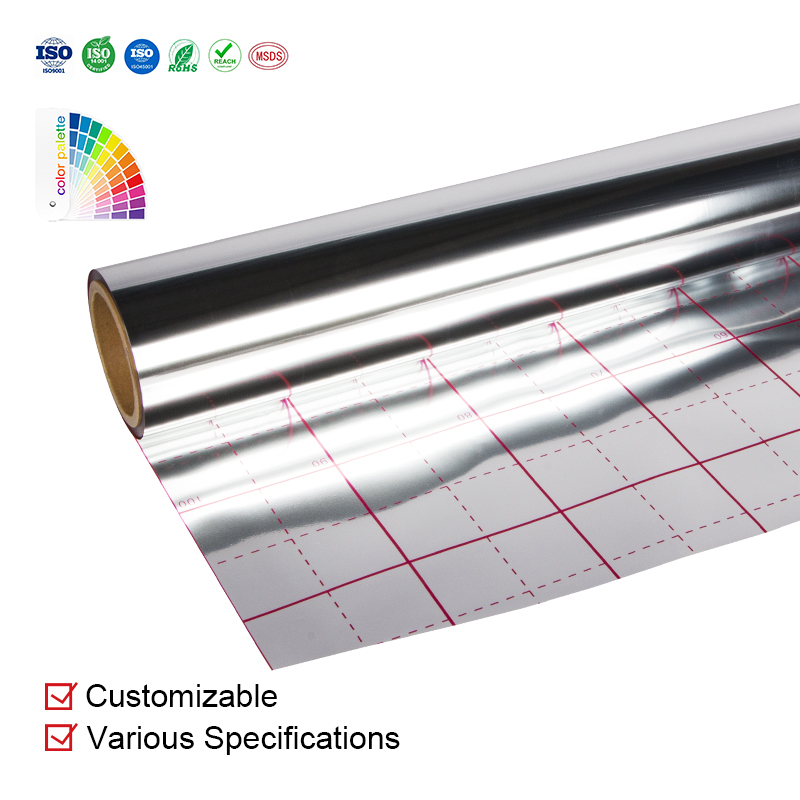
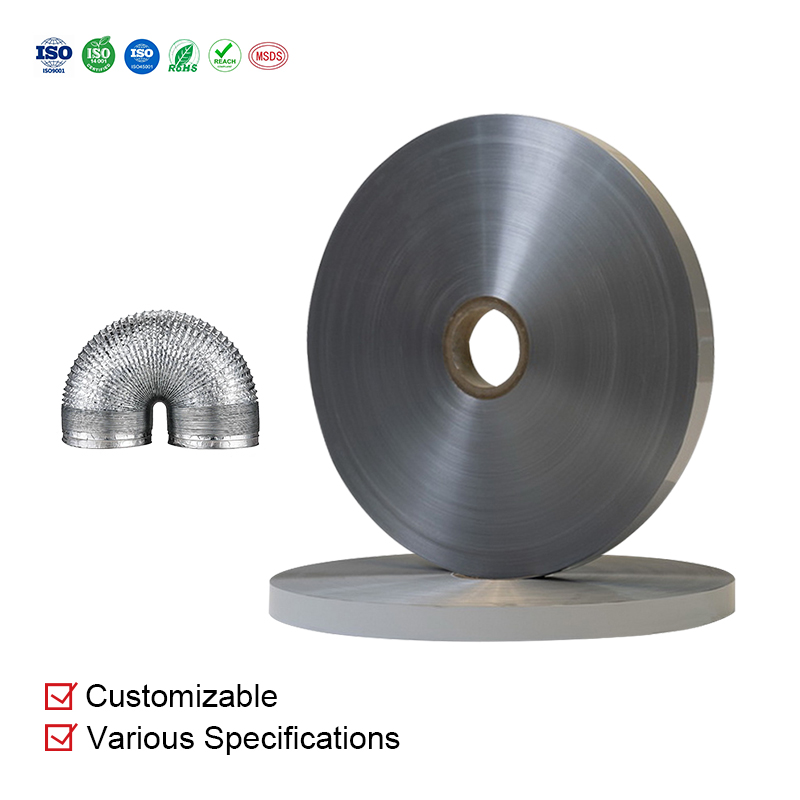
Residential energy-efficient windows (U-value 2.0–2.3 W/(m²·K)): The core requirements for warm edge facing are cost-effectiveness and basic weathering resistance. A single-sided AL/PET composite film is recommended, with aluminum foil at 6–9μm, PET substrate at 12–23μm, and total thickness of 25–40μm. Emissivity ε≤0.1 is sufficient, with peel strength ≥1.5 N/15mm to ensure adequate initial tack with butyl sealant. These facings are supplied in roll form, commonly in widths of 100mm and 150mm, compatible with semi-automatic wrapping equipment.
Commercial curtain walls and large skylights: IGU panels in curtain walls are large, with wide sealant joints and high wind loads, demanding significantly higher mechanical strength and long-term weathering from the facing. A double-sided composite structure — AL/PET/PE three-layer or symmetric AL/PET/AL — is recommended, with total thickness of 40–60μm. The PE outer layer forms more stable chemical bonding with structural silicone sealants, while the double-foil structure ensures low emissivity regardless of which side faces outward. Peel strength should be ≥2.0 N/15mm, with no chalking after 1000 hours QUV exposure.
Passive house and nearly zero-energy building windows (U-value ≤0.8 W/(m²·K)): These projects demand extremely stringent Ψ-values (≤0.03 W/(m·K)), requiring facing materials that are maximally thin with ultra-low emissivity. We recommend aluminum foil at 6μm (approaching the rolling limit), PET substrate at 12μm, total thickness controlled within 20μm, and emissivity ε≤0.05. The material must also pass EN 1279-3 long-term durability testing for IGUs, with peel strength degradation not exceeding 20% after combined heat-humidity aging (52°C/95%RH) and UV irradiation.
2. Match by Climate Zone: Cold, Severe Cold, Hot-Summer Cold-Winter, and Mild Regions
Severe cold regions (Northeast and Northwest China, extreme winter lows below -30°C): At low temperatures, butyl sealant viscosity increases and facing flexibility decreases, creating a high-risk scenario for edge seal failure. Facing materials require excellent low-temperature bend performance. We recommend PET substrates with low-Tg modified grades (glass transition temperature Tg≤-20°C), and aluminum foil thickness moderately increased to 9–12μm to compensate for low-temperature brittleness. Low-temperature peel strength at -20°C must be verified.
Cold regions (North and Central China, winter lows -15°C to -5°C): Standard single-sided AL/PET composite film meets requirements, but attention must be paid to edge condensation risk from large indoor-outdoor temperature differences during the heating season. Emissivity should be controlled at ε≤0.08 to minimize radiative heat loss at the glass edge. For triple-glazed units, the outer warm edge facing may use reduced specifications while the inner layer maintains high standards.
Hot-summer cold-winter regions (Yangtze River Basin, hot humid summers and cold damp winters): The primary challenge is sealant aging and aluminum foil corrosion under high temperature and humidity. Facing must use chrome-free passivation (Cr⁶⁺-free), compliant with REACH restrictions on hexavalent chromium. The PET substrate must maintain dimensional stability under high humidity (water absorption ≤0.5%), preventing blistering and delamination during the plum rain season.
Mild regions (South and parts of Southwest China): Small annual temperature range but strong UV exposure. Selection priority shifts from low-temperature resistance to UV aging resistance. We recommend PET substrates with UV absorbers and aluminum foil passivation layers ≥50nm thick, ensuring emissivity degradation does not exceed 10% after 500 hours QUV exposure.
3. Match by Spacer Substrate: Stainless Steel Composite, FRP, and All-Polymer Routes
Stainless steel profile + polymer composite spacers: Stainless steel provides structural strength while polymers (PP or PA66) provide thermal insulation. When wrapping the facing around the spacer exterior, the facing must bond reliably to the polymer surface. Due to the low surface energy of PP, conventional PET facing cannot bond directly — a maleic anhydride grafted PE (MAH-g-PE) tie layer must be added to the composite structure, or corona-treated PET substrate must be used. Aluminum foil at 6–9μm is sufficient; thicker foil tends to crack at wrapping bend points.
Fiber-reinforced plastic (FRP) spacers: Glass-fiber reinforced nylon or polyester substrates have higher surface roughness, requiring better conformability and coverage uniformity from the facing. We recommend more ductile aluminum foil (soft O-temper, tensile strength ≥50 MPa, elongation ≥2%), with PET substrate thickness increased to 23–36μm for adequate mechanical support. These spacers are commonly used in passive house projects, where facing must simultaneously satisfy low emissivity and high gas-tightness requirements.
All-polymer spacers (such as TPS thermoplastic spacers): These spacers contain no metal but still require facing on the exterior to provide a low-emissivity surface and bonding interface with sealants. Due to the soft TPS material, the composite film must have excellent flexibility and thermal lamination adaptability. We recommend an ultra-thin structure (aluminum foil 6μm + PET 12μm, total thickness ≤20μm), with a wide thermal lamination temperature window (120–160°C) and no wrinkles or bubbles after bonding.
4. Match by Compliance Certification: EN 12898 Emissivity, REACH Chrome-Free, EN 1279-3 Gas Tightness
EN 12898 Emissivity Certification: This standard specifies test methods for emissivity of low-emissivity coatings on building glass. The aluminum foil layer of warm edge facing serves as the functional surface, and its emissivity directly affects radiative heat transfer at the window edge. Suppliers should provide third-party test reports for ε-value, tested at wavelength range 5–25μm and temperature 283K (10°C). Note the distinction between "specular emissivity" and "hemispherical emissivity" — warm edge applications use hemispherical emissivity.
REACH Regulation and Chrome-Free Passivation: EU REACH Annex XVII restricts hexavalent chromium compounds in numerous products. Aluminum foil surface treatment using chromate passivation (yellowing) carries export compliance risks. Procurement must require suppliers to provide chrome-free (Cr-free) passivation declarations and verify passivation film composition (typically zirconium-titanium or silane-based systems). While domestic projects may not mandate REACH compliance, chrome-free passivation represents higher environmental standards and more stable corrosion resistance.
EN 1279-3 IGU Long-Term Durability: This standard subjects IGU edge seal systems to rigorous testing including high temperature and humidity (58°C/95%RH, 4 weeks), UV irradiation, and climate cycling (-18°C to +53°C). As a critical component of the seal interface, warm edge facing must maintain peel strength retention, aluminum foil corrosion status, and PET substrate yellowing index (ΔYI≤3) after these aging conditions. We recommend prioritizing warm edge manufacturers with full EN 1279-3 window certification and tracing their facing raw material supplier qualifications.
5. Three Common Procurement Pitfalls
Pitfall 1: Focusing only on foil thickness while ignoring PET hydrolysis resistance Aluminum foil thickness affects emissivity and mechanical strength, but PET substrate hydrolysis resistance in hot-humid environments is the key determinant of facing lifespan. Standard PET (e.g., PET-C) degrades significantly after 500 hours at 60°C/95%RH, while hydrolysis-resistant PET (e.g., PET-CN) tolerates over 2000 hours. Procurement should explicitly specify PET hydrolysis resistance grade and require post-hydrothermal-aging peel strength data from suppliers.
Pitfall 2: Pursuing lowest emissivity without considering sealant compatibility Theoretically, lower emissivity yields better radiative insulation. However, aggressively pursuing low emissivity typically means smoother, denser aluminum foil surfaces, which may reduce mechanical interlocking and chemical bonding with butyl or silicone sealants. Practical selection should balance emissivity and peel strength — we recommend ε≤0.1 with peel strength ≥1.5 N/15mm (butyl) or ≥2.0 N/15mm (silicone).
Pitfall 3: Neglecting roll width compatibility with wrapping equipment Warm edge facing is supplied in roll form, commonly in widths of 50mm, 100mm, 150mm, and 200mm. Procurement must confirm your wrapping equipment's unwinding width, tension control range, and thermal lamination roller temperature zone. Mismatched width causes frequent roll changes and edge waste; improper tension control causes aluminum foil stretching and emissivity non-uniformity; lamination temperature exceeding the PET softening point (approximately 70–80°C) causes wrinkling. We recommend requesting samples for machine trial runs before bulk procurement.
6. Quick Specification Reference Table
| Application | Foil Thickness | PET Thickness | Total Thickness | Emissivity ε | Peel Strength | Special Requirements |
|---|---|---|---|---|---|---|
| Residential windows | 6–9μm | 12–23μm | 25–40μm | ≤0.10 | ≥1.5 N/15mm | Standard chrome-free passivation |
| Commercial curtain walls | 9–12μm | 23–36μm | 40–60μm | ≤0.08 | ≥2.0 N/15mm | Double-sided or PE outer layer |
| Passive house windows | 6μm | 12μm | ≤20μm | ≤0.05 | ≥1.5 N/15mm | EN 1279-3 certified |
| Severe cold regions | 9–12μm | 23μm (low-Tg PET) | 35–45μm | ≤0.08 | ≥1.5 N/15mm (tested at -20°C) | Low-temperature bend pass |
| Hot-summer cold-winter | 6–9μm | 12–23μm (low moisture absorption PET) | 25–40μm | ≤0.08 | ≥1.5 N/15mm | Chrome-free + high-humidity stability |
| Stainless steel composite spacer | 6–9μm | 12–23μm (MAH-g-PE tie layer) | 25–40μm | ≤0.10 | ≥1.5 N/15mm | Compatible with PP/PA66 |
| All-polymer spacer | 6μm | 12μm | ≤20μm | ≤0.10 | ≥1.0 N/15mm | Wide thermal lamination window |
Conclusion
Selecting warm edge spacer foil facing is a multi-factor coupled decision process. Window type determines the performance baseline, climate zone adjusts the weathering priority, spacer substrate constrains the bonding system, and compliance certification sets the entry threshold. As a professional raw material supplier of AL/PET composite films, we offer a full range of roll products from 6μm ultra-thin to 12μm standard series, supporting chrome-free passivation and hydrolysis-resistant PET substrate customization, with roll widths from 50–200mm cut to equipment requirements.
If you are evaluating warm edge facing material upgrades or new supplier qualification, we welcome your request for samples to conduct machine validation and accelerated aging comparison tests.
+86 13758223270、Email: wendy@hcdxcl.com.cn
Peak Season Luggage Lining Film Selection: VMPET Woven Laminate Spec Guide
Global Green Building Codes Tighten: What It Means for HVAC Duct Facing Materials
Related Article