How to Judge High-Temperature Shield Tape for Motor Lead Wire
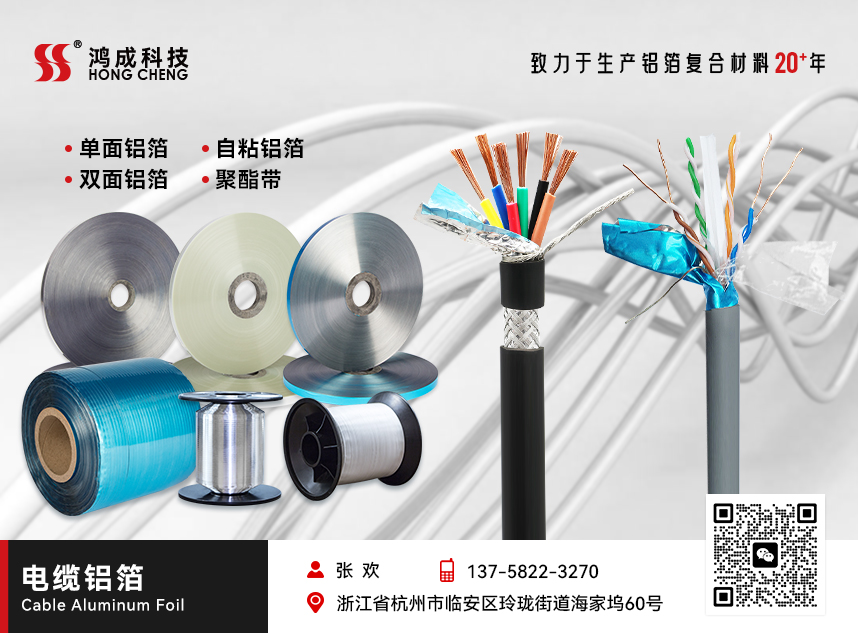
Motor lead wire spends its whole life in a hot environment. Inside the terminal box, temperatures routinely exceed 100°C, and the shielding tape wrapped around the conductor is baked right along with the winding. Cable factories know the failure pattern: the tape passes every room-temperature check on arrival, but after months of service inside the motor, the shield delaminates, turns brittle, or flakes off—and the complaint lands on the cable maker's desk. The raw material is usually the culprit. For high-temperature aluminum foil shield tape, "passing at room temperature" is not the same as "passing in service." This article breaks quality judgment down into five hard checks you can apply directly at incoming inspection.
Check 1: The Aluminum Layer — Full Thickness, Transverse Uniformity, Controlled Pinholes
Shielding performance comes from the foil layer. High-temperature foil shield tape is commonly supplied with foil thickness in the 6μm-9μm range; more demanding applications use the 9μm heavy grade. Verify three things:
- Actual thickness vs. claimed thickness: require batch-by-batch thickness measurement records and specify negative tolerance limits in the contract;
- Transverse uniformity: foil that varies across the width delivers unstable shielding after wrapping, and performance can even differ between the head and tail of one roll;
- Pinholes: unroll the tape against a strong backlight. A batch with dense light-through spots should be rejected—the shield layer is thin to begin with, and a foil full of pinholes lets high-frequency interference straight through.
Check 2: Peel Strength After Heat Aging — the Decisive Test
This is where high-temperature shield tape separates itself from ordinary shield tape. Room-temperature peel strength is only the entry ticket (a reasonable baseline is 1.5N/15mm or better, subject to your contract terms). The real dividing line is how much strength remains after heat aging:
- Ask the supplier for heat-aging data: an oven test at the rated temperature class—for example, Class F at 155°C held for 168 hours—followed by a peel retest, with the drop in strength kept within agreed limits;
- Simplified on-site verification: bake a sample at the class temperature, let it cool, then tear the laminate by hand. If it separates easily, if the adhesive turns brittle or powdery, or if adhesive transfers onto the PET face, the temperature rating is probably not real.
Tape that retains most of its peel strength after aging is the tape that survives long-term service inside a motor.
Check 3: Temperature Class Matching — the Foil Is Fine; PET and Adhesive Are the Weak Links
Aluminum foil itself tolerates heat very well. The weak links in a laminated tape are the PET film and the adhesive layer. Match the tape to the insulation class of the finished lead wire: for Class B (130°C) applications, confirm the corresponding rating; for Class F (155°C), the adhesive must genuinely be rated for 155°C—standard laminating adhesives turn brittle and migrate at temperature, and peel strength falls off a cliff; for Class H (180°C), confirm the complete structure with the supplier before ordering. Write the adhesive type and temperature class into the contract—not just the words "high temperature."
Check 4: Slitting and Winding Quality — How It Runs on Your Wrapping Head
Shield tape is slit into narrow widths and wrapped at high speed. Burr edges, collapsed reel faces, and inconsistent winding tension translate directly into tape breaks, wrinkles, and tension fluctuation on the machine. During inspection: check edge quality and face flatness, verify width against the agreed tolerance (±0.2mm is typical for narrow slit tape), and confirm that splice count per roll is limited and clearly marked. Better still, run a trial roll for half an hour on your own line—more informative than ten pages of test reports.
Check 5: Batch-to-Batch Consistency — Three Steps
Run a small-batch trial with your actual line tension and tooling through the full wrapping process. Confirm the first production batch against retained samples. Then inspect every incoming batch for thickness, peel strength, and other key items, and archive the data into a supplier record. Scale up volume only after three consecutive stable batches.
The Three Most Common Quality Traps
Trap 1: Room-temperature-only documentation. A thick stack of test reports with no heat-aging data at all—yet heat aging is precisely the core metric for this material. Treat batches without aging data as non-conforming.
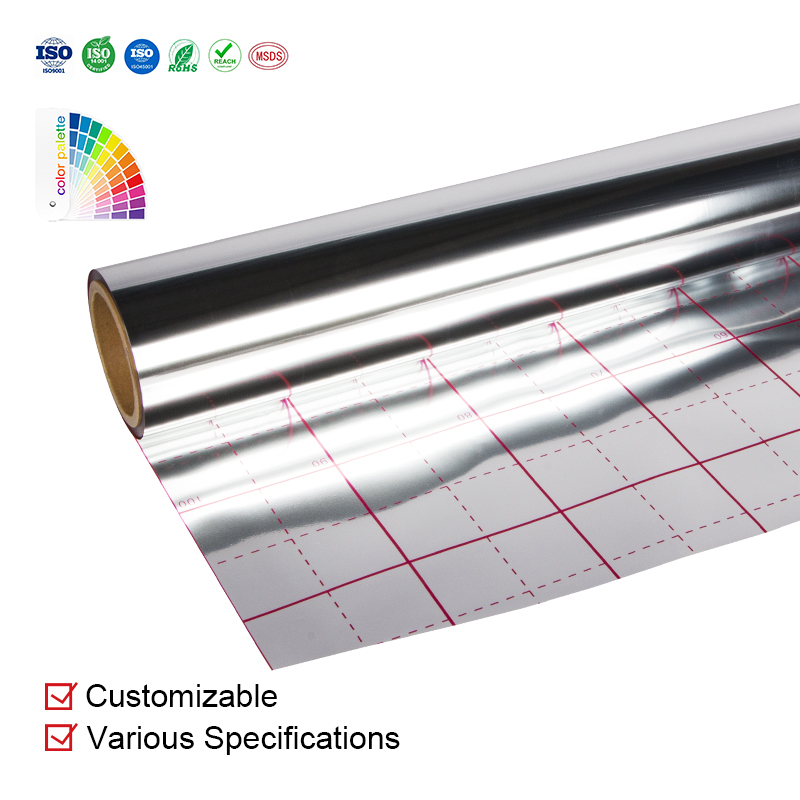
Trap 2: Metallized film (VMPET) sold as pure foil laminate. VMPET looks similar and costs less, but its vapor-deposited aluminum layer is only nanometers thick—an order of magnitude behind in shielding effectiveness—and it can oxidize and darken under heat. Identification: measure surface resistance with a multimeter (pure foil reads low and uniform), or tear the laminate open and inspect the cross-section. VMPET is a fine material for packaging and reflective insulation—just the wrong material for motor lead wire shielding.
Trap 3: Standard adhesive passed off as high-temperature adhesive. Invisible to the eye. The only reliable defense is heat-aging verification plus a written declaration of adhesive type and temperature class from the supplier.
Closing
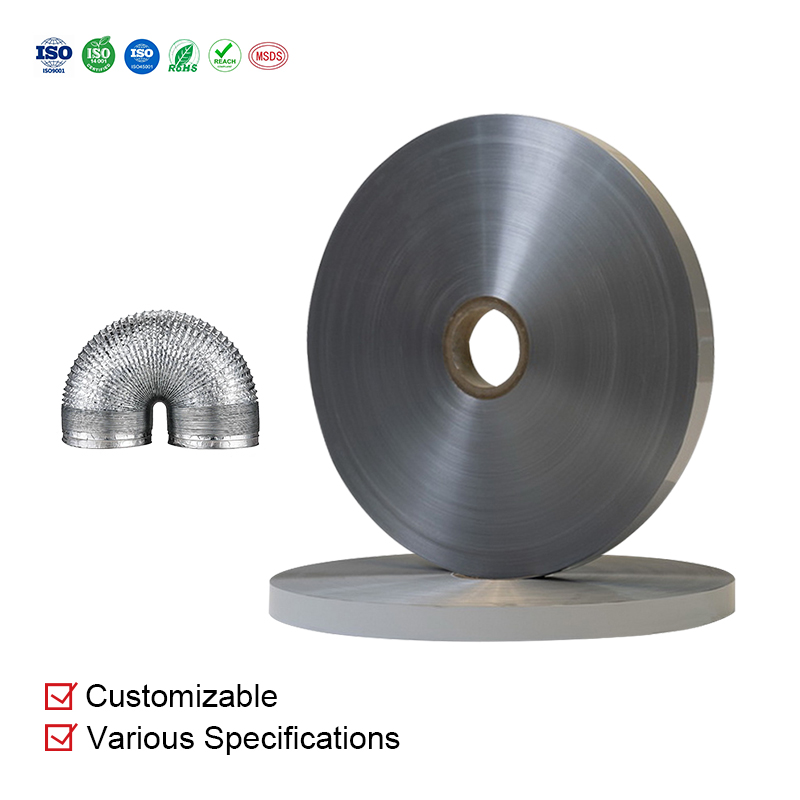
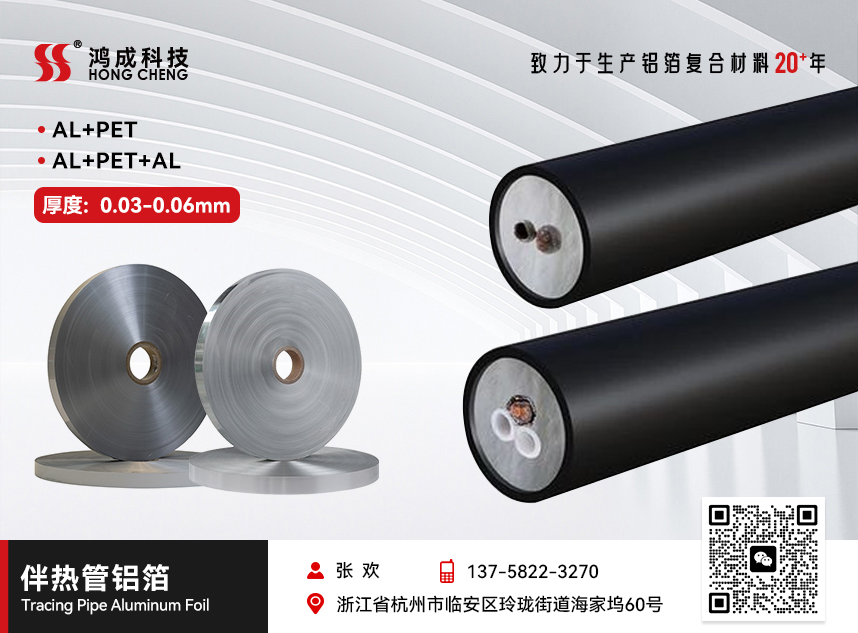
Choosing high-temperature foil shield tape ultimately means choosing a source factory willing to put heat-aging data into its reports and adhesive type and temperature class into its contracts. Hongcheng Technology specializes in aluminum foil composite materials, with complete production lines for high-temperature foil shield tape, aluminum mylar tape, and AL/PET shield tape. Foil thickness, width, and temperature class are all customizable, with stable batch quality. Cable makers are welcome to request samples and specification sheets.
+86 13758223270、Email: wendy@hcdxcl.com.cn
How Is Flexible Duct Facing Laminate Made?
Luggage Bag Lining Material Buying Guide: How to Avoid VMPET Woven Fabric Traps
Related Article