The Role of Shielding Aluminum Foil in Network Cables and How to Distinguish Its Quality
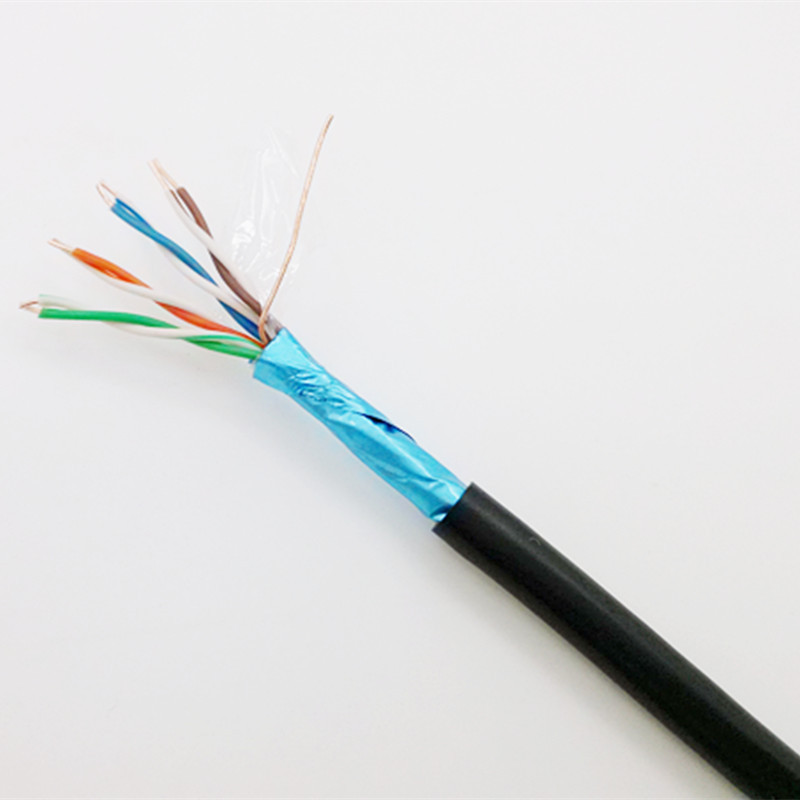
In the digital age, network cables serve as the core carrier for data transmission, and their transmission stability directly affects the quality of network communication. Especially in environments with strong electromagnetic interference (EMI) such as hospitals, factories, and data centers, shielding aluminum foil has become an indispensable "protective barrier" for network cables. It is not just a simple metal sheet, but a key component ensuring signal purity, and its function and quality directly determine the anti-interference ability and service life of network cables.
In terms of functions, the core value of shielding aluminum foil focuses on three major dimensions. Firstly, it blocks high-frequency electromagnetic interference (EMI). In modern environments, industrial equipment, wireless base stations, household appliances, and other devices continuously radiate high-frequency electromagnetic waves. Without shielding, these waves will penetrate the insulation layer of network cables, generate induced currents with internal signal lines, and cause bit errors in data transmission. With excellent electrical conductivity, shielding aluminum foil can adsorb high-frequency electromagnetic waves on its surface in accordance with Faraday's Law of Electromagnetic Induction, and conduct the induced current to the ground through the ground wire in the network cable, cutting off the interference path from the source. Secondly, it reduces crosstalk. When multiple network cables are laid densely, signals from adjacent cables will permeate each other, a phenomenon known as "crosstalk". Shielding aluminum foil can form an independent electromagnetic isolation layer outside a single network cable, avoiding cross-interference between signals, which is particularly important for local area networks (LANs) that need to transmit large amounts of data simultaneously. Finally, it protects signal integrity. For high-speed network cables above 1 Gigabit, signals are prone to attenuation or delay due to external interference during transmission. Shielding aluminum foil can reduce signal loss, ensure stable data transmission rates, and meet high-frequency scenarios such as high-definition video conferences and large file transfers.
To distinguish the quality of shielding aluminum foil, a comprehensive judgment should be made from four aspects: appearance, physical properties, process details, and professional testing. In terms of appearance, high-quality aluminum foil should have a uniform metallic luster on its surface, with no obvious scratches, creases, or oxidation spots. Scratches will damage the integrity of the shielding layer, leading to "leakage" of interference; oxidation spots will reduce electrical conductivity and weaken the shielding effect. At the same time, the thickness of the aluminum foil should be uniform, which can be judged by comparing the edge thickness of different samples. Too thin aluminum foil is easy to break during construction, while too thick aluminum foil may affect the flexibility of the network cable.
In terms of physical properties, the first priority is to check flexibility and tear resistance. High-quality aluminum foil should not break or have obvious wrinkles after being bent or pulled. This can be tested by manually folding it 10-15 times: if there are no cracks after folding and it can still return to a flat state, the material's toughness meets the standard; if it breaks with a single fold, it is likely that the aluminum foil has insufficient purity or contains excessive impurities. The second aspect is adhesion. For aluminum foil with a laminated layer (such as aluminum foil composite with PET film), it is necessary to check the bonding degree between the aluminum foil and the base material. Scrape the laminated layer gently with a fingernail—if the aluminum foil does not fall off, the composite process is qualified; otherwise, it is easy to delaminate during long-term use, losing the shielding effect.
In terms of process details, focus should be placed on observing the "overlap rate" of the aluminum foil. Shielding aluminum foil for network cables is usually wrapped spirally or longitudinally. The overlapping part of high-quality products should be no less than 25% (which can be estimated by measuring the gap width after wrapping). Insufficient overlap rate will lead to "gaps" in the shielding layer, and high-frequency interference can easily penetrate through these gaps. In addition, if the aluminum foil has a hot-melt adhesive layer (such as the hot-melt aluminum foil Mylar mentioned earlier), check the uniformity of the adhesive layer—uneven adhesive layers will cause the aluminum foil to fit loosely with the cable core, which not only affects the shielding effect but may also loosen when the temperature changes.
In terms of professional testing, if conditions permit, instruments can be used to test shielding effectiveness (SE). According to industry standards, for network cable shielding aluminum foil used in high-interference environments, the shielding effectiveness should be no less than 60 dB (decibels) in the frequency range of 100 KHz to 3 GHz. The higher the value, the stronger the anti-interference ability. At the same time, the electrical conductivity of the aluminum foil can be tested by measuring its resistivity with a multimeter. The resistivity of high-quality aluminum foil is usually less than 2.8×10⁻⁸ Ω·m. Excessively high resistivity indicates impure material, which will affect the efficiency of induced current conduction.
In conclusion, shielding aluminum foil is the core guarantee for the "anti-interference ability" of network cables, and its quality is directly related to the stability and reliability of network transmission. When selecting network cables, effective identification of aluminum foil quality can be achieved through appearance observation, physical testing, and necessary professional testing, avoiding network failures caused by inferior shielding components and providing a solid foundation for stable communication in various scenarios.
The Material Revolution in the Digital Energy Era: How Aluminum-Plastic Film Supports the Intelligent World 2035?
How to Choose Shielding Aluminum Foil for Automotive Cables?
Related Article